
Beyond P/E: Using EV/EBITDA to Find Hidden Gems in the Energy Sector
 Aime Summary
When investors look for value in the stock market, the Price-to-Earnings (P/E) ratio is often the first metric they check. However, in the energy sector, P/E can be misleading. Why? Because energy companies often carry significant debt to fund expensive infrastructure like pipelines, rigs, and refineries. This debt skews net income, making a company appear cheaper or more expensive than it truly is. To get a clearer picture of value, savvy investors turn to a more robust metric: Enterprise Value to Earnings Before Interest, Taxes, Depreciation, and Amortization, commonly known as EV/EBITDA.
Understanding EV/EBITDA requires breaking down its two components. Enterprise Value (EV) represents the total cost to buy a company. It is calculated by taking the company’s market capitalization (the value of its shares) and adding its total debt, then subtracting its cash reserves. Essentially, EV answers the question: "How much would it cost to acquire this entire business, assuming I took on all its debt?" EBITDA, on the other hand, serves as a proxy for the company’s core operating cash flow. By ignoring interest, taxes, and non-cash accounting charges like depreciation, EBITDA allows investors to compare the operational profitability of different companies, regardless of their capital structure or tax situations.
The ratio itself is straightforward: you divide the Enterprise Value by the EBITDA. A lower EV/EBITDA ratio generally suggests that a company is undervalued relative to its earnings power. For example, if Company A has an EV/EBITDA of 5 and Company B has a ratio of 15, Company A might be offering more value for every dollar of operating cash flow it generates. This metric is particularly powerful in the energy sector because it neutralizes the impact of different financing strategies. One energy firm might be debt-heavy, while another is cash-rich; EV/EBITDA allows for an apples-to-apples comparison of their operational efficiency.
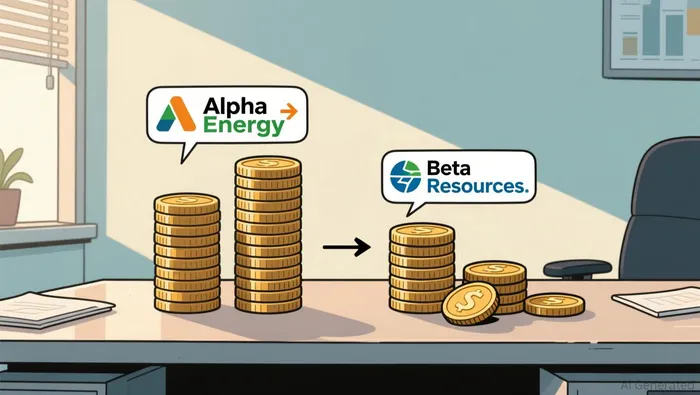
Consider the case of two mid-cap energy firms, Alpha Energy and Beta Resources, during the 2020 market downturn. Both reported similar net incomes. However, Alpha Energy had taken on substantial debt to maintain operations, while Beta Resources had paid down its liabilities. Looking only at P/E ratios, both might have appeared similarly valued. But when investors analyzed EV/EBITDA, Beta Resources showed a significantly lower multiple. This indicated that, despite similar profits, Beta was generating more operational cash flow relative to its total acquisition cost. Investors who relied on EV/EBITDA recognized Beta as the safer, more undervalued bet, and indeed, Beta’s stock outperformed Alpha as the market recovered, rewarding those who looked past the noise of debt and interest expenses.
However, relying solely on EV/EBITDA carries risks. A low ratio does not always mean a stock is a good buy; it might indicate that the market anticipates a future decline in earnings due to falling oil prices or regulatory changes. Additionally, high capital expenditure requirements in the energy sector mean that EBITDA may overstate the actual cash available to shareholders. To mitigate these risks, investors should use EV/EBITDA as part of a broader analysis. Always cross-reference it with free cash flow, debt maturity schedules, and commodity price forecasts. Furthermore, consider the industry cycle; energy stocks are highly cyclical, and valuation multiples can expand or contract rapidly based on global supply and demand dynamics.
In conclusion, EV/EBITDA is a vital tool for navigating the complexities of the energy market. By focusing on operational cash flow and total enterprise cost, it provides a clearer lens through which to view undervalued opportunities. While it should not be used in isolation, combining this metric with thorough fundamental research and risk management strategies can help investors identify true value and make more informed, confident decisions in a volatile sector.

Stay ahead of the market.
Get curated U.S. market news, insights and key dates delivered to your inbox.


AInvest
PRO
AInvest
PRO




Comments
No comments yet