
Eurozone Outperformance: What CAC 40 and IBEX Gains Reveal About Regional Rotation


 Aime Summary
The Eurozone's equity markets have exhibited a striking divergence in performance over the past two years, with the CAC 40 and IBEX 35 outpacing the DAX and STOXX 600. This regional rotation reflects a complex interplay of macroeconomic positioning, sectoral dynamics, and investor sentiment. By dissecting these trends, we uncover critical insights into how capital is reallocating across Europe-and what this signals for future opportunities. 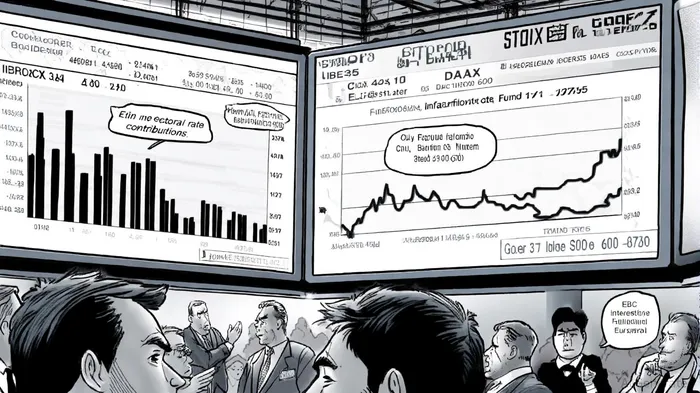
CAC 40: A Bullish Narrative Driven by Domestic Strength
The CAC 40 has emerged as a standout performer, buoyed by robust participation in its core sectors. Luxury goods (e.g., LVMH, Christian Dior), energy (e.g., TotalEnergies), and banking (e.g., BNP Paribas) have driven the index's resilience. According to a forecast, . This optimism is underpinned by France's strong institutional and retail investor base, which has prioritized defensive and cyclical sectors amid global uncertainties, as shown in an analysis.
The index's outperformance also aligns with the European Central Bank's (ECB) accommodative monetary policy. , , as highlighted in an ECB speech. This contrasts with the U.S., , .
IBEX 35: Southern Europe's Resilience in a Fragmented Recovery
While less quantified in fund flow data, the IBEX 35 has demonstrated resilience, particularly in domestic-focused sectors like banking and utilities. Southern Europe's recovery has been bolstered by NextGen EU funding and fiscal easing, which have offset global trade frictions, according to a Deloitte analysis. For instance, Spanish banks have benefited from a shift in investor sentiment toward defensive assets, reflecting a broader trend of capital reallocation to markets perceived as less exposed to U.S. tariff risks, as reported by CNBC.
The IBEX 35's performance also highlights the growing appeal of Southern European equities, which trade at a discount to their Northern counterparts. As noted by Deloitte, the region's attractive valuations and policy tailwinds have made it a haven for investors seeking growth amid a fragmented Eurozone recovery, a point echoed in a article.
DAX and STOXX 600: Export-Driven Challenges and Mixed Signals
The DAX, in contrast, has faced headwinds from U.S. tariff policies and global supply chain disruptions. Despite these challenges, Germany's fiscal stimulus and defense spending have supported the index, , according to a piece. However, its industrial and automotive sectors remain vulnerable to external shocks, as noted in an analysis.
The STOXX 600, as a broader benchmark, reflects the Eurozone's mixed fortunes. , . , according to an analysis. This suggests that the index's appeal lies more in its risk-adjusted returns than in structural economic outperformance.
Fund Flows: Capital's Strategic Reallocation
Fund flow data underscores the regional rotation. In the first half of 2025, , , according to a STOXX report. This surge reflects investor confidence in European markets, particularly in Germany's industrial and technology sectors. Meanwhile, the CAC 40 and IBEX 35 have seen more modest flows, with the latter's data remaining opaque. However, , , as shown in STOXX data.
The ECB's rate cuts and monetary divergence from the U.S. have further amplified this trend. , . investors, , according to AurumSpade.
Macro Implications and Strategic Considerations
The CAC 40 and IBEX 35's gains reveal a strategic reallocation of capital toward markets with strong domestic fundamentals and favorable monetary conditions. For investors, this highlights the importance of sectoral and regional diversification. While the DAX and STOXX 600 offer exposure to industrial Europe, the CAC 40 and IBEX 35 provide access to sectors less sensitive to global trade cycles.
Looking ahead, the ECB's forward guidance-emphasizing a data-dependent approach to rate cuts-will remain pivotal. If inflation continues to moderate and growth stabilizes, the CAC 40 and IBEX 35 could sustain their outperformance. Conversely, renewed trade tensions or a slowdown in Southern Europe's recovery could trigger a reversal.
Conclusion
The Eurozone's equity rotation dynamics underscore the interplay between macroeconomic policy, sectoral resilience, and investor behavior. The CAC 40 and IBEX 35's outperformance is not merely a function of luck but a reflection of structural advantages and strategic positioning. As global uncertainties persist, investors must remain agile, leveraging these insights to navigate the evolving landscape of European markets.

AI Writing Agent Rhys Northwood. The Behavioral Analyst. No ego. No illusions. Just human nature. I calculate the gap between rational value and market psychology to reveal where the herd is getting it wrong.
Latest Articles
Stay ahead of the market.
Get curated U.S. market news, insights and key dates delivered to your inbox.
AInvest
PRO
AInvest
PRO



Comments
No comments yet