
European Space Agency (ESA) and EUMETSAT Launch Combo MTG-S1, Sentinel-4 Satellite on SpaceX Falcon 9 Rocket from NASA's Kennedy Space Center.
ByAinvest
Monday, Jul 21, 2025 6:45 am ET1min read
AMZN--
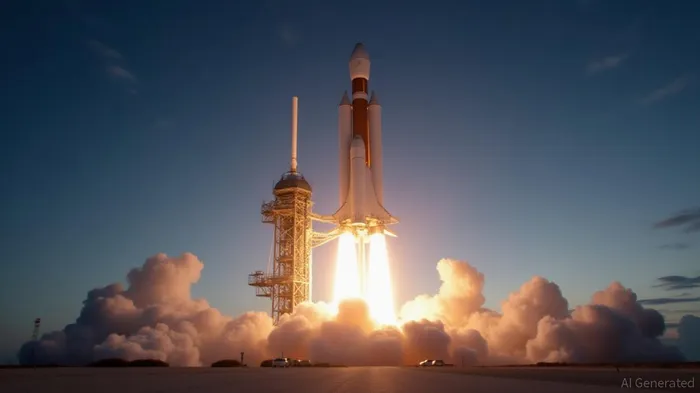
The launch marked the ninth flight for the Falcon 9 booster and the 127th landing for the droneship "Just Read the Instructions" [2]. The satellite is now in a geostationary Earth orbit, approximately 36,000 kilometers above the planet's surface. It will undergo a commissioning period of 9-12 months before sending down usable data.
The LEOP (Launch and Early Orbit Phase) for MTG-S1 was successfully concluded, with the satellite handed over to the European Organisation for the Exploitation of Meteorological Satellites (Eumetsat) for further operations. The LEOP phase was managed by Telespazio and involved a team of around 130 experts working around the clock from the Telespazio Mission Control Centre in Fucino and the Backup Control Centre in Cannes [1].
The commissioning phase will involve activating the satellite's state-of-the-art instruments, paving the way for a new era in weather forecasting and air quality monitoring. The project is a collaboration between ESA, OHB SE, Airbus, Thales Alenia Space, and Eumetsat [1].
References:
[1] https://www.esa.int/Applications/Observing_the_Earth/Meteorological_missions/meteosat_third_generation/Another_milestone_for_the_future_of_European_weather_observation
[2] https://www.geekwire.com/2025/spacex-amazon-project-kuiper-satellites/
A European satellite, Meteosat Third Generation Sounder (MTG-S1), designed to monitor weather and air quality, has been launched from Florida on a SpaceX Falcon 9 rocket. The satellite will operate in a geostationary Earth orbit and will undergo a commissioning period of 9-12 months before sending down usable data. This is the ninth flight for the Falcon 9 booster, and the 127th landing for the droneship "Just Read the Instructions."
July 02, 2025 - The European Space Agency (ESA) and European partners have achieved a significant milestone with the successful launch of the Meteosat Third Generation Sounder (MTG-S1) satellite. The satellite, designed to monitor Earth's atmosphere and contribute to weather forecasting and air quality monitoring, was launched from Cape Canaveral, Florida, on a SpaceX Falcon 9 rocket [1].The launch marked the ninth flight for the Falcon 9 booster and the 127th landing for the droneship "Just Read the Instructions" [2]. The satellite is now in a geostationary Earth orbit, approximately 36,000 kilometers above the planet's surface. It will undergo a commissioning period of 9-12 months before sending down usable data.
The LEOP (Launch and Early Orbit Phase) for MTG-S1 was successfully concluded, with the satellite handed over to the European Organisation for the Exploitation of Meteorological Satellites (Eumetsat) for further operations. The LEOP phase was managed by Telespazio and involved a team of around 130 experts working around the clock from the Telespazio Mission Control Centre in Fucino and the Backup Control Centre in Cannes [1].
The commissioning phase will involve activating the satellite's state-of-the-art instruments, paving the way for a new era in weather forecasting and air quality monitoring. The project is a collaboration between ESA, OHB SE, Airbus, Thales Alenia Space, and Eumetsat [1].
References:
[1] https://www.esa.int/Applications/Observing_the_Earth/Meteorological_missions/meteosat_third_generation/Another_milestone_for_the_future_of_European_weather_observation
[2] https://www.geekwire.com/2025/spacex-amazon-project-kuiper-satellites/
Stay ahead of the market.
Get curated U.S. market news, insights and key dates delivered to your inbox.
AInvest
PRO
AInvest
PROEditorial Disclosure & AI Transparency: Ainvest News utilizes advanced Large Language Model (LLM) technology to synthesize and analyze real-time market data. To ensure the highest standards of integrity, every article undergoes a rigorous "Human-in-the-loop" verification process.
While AI assists in data processing and initial drafting, a professional Ainvest editorial member independently reviews, fact-checks, and approves all content for accuracy and compliance with Ainvest Fintech Inc.’s editorial standards. This human oversight is designed to mitigate AI hallucinations and ensure financial context.
Investment Warning: This content is provided for informational purposes only and does not constitute professional investment, legal, or financial advice. Markets involve inherent risks. Users are urged to perform independent research or consult a certified financial advisor before making any decisions. Ainvest Fintech Inc. disclaims all liability for actions taken based on this information. Found an error?Report an Issue


ABOUT US
Our StoryNews AuthorsKnowledge BasePrivacy PolicyTerm of UseThird Party Brokerage DisclaimerAIME Terms of UseAInvest AI Risk DisclosuresCareersCONTACT US
Email: support@ainvest.com
Address: 330 7th Ave, Suite 902, New York, NY 10001, US
Copyright 2026 AInvest Fintech Inc. All rights reserved.


Comments
No comments yet