
European Shares Hit Two-Week Lows as Middle East Tensions Escalate
 Aime Summary
European shares fell to two-week lows on Monday as the Middle East conflict intensified, dragging down broad markets while energy and defense stocks surged. The STOXX 600 dropped 1.8% to 622.35, its lowest since mid-February. Most sectors ended in negative territory, led by travel, leisure, and banking stocks.
The energy sector bucked the trend, with majors like ShellSHEL--, BPBP--, and TotalEnergiesTTE-- rising over 5% each as oil prices climbed sharply. Disruptions in the Strait of Hormuz pushed oil prices up as much as 13%, with Brent crude reaching a new high since January 2025.
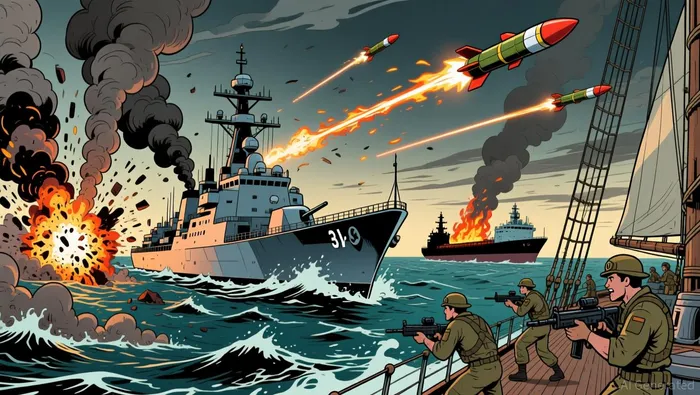
The military conflict escalated after U.S. and Israeli strikes in Iran, which killed Supreme Leader Ayatollah Ali Khamenei. Iran retaliated with missile and drone attacks, raising fears of wider conflict and military spending.
Airlines were among the worst-hit sectors. Lufthansa fell 11% after extending flight suspensions to the Middle East. Asian carriers including Singapore Airlines, Japan Airlines, and Cathay Pacific also canceled flights to the region, causing share prices to drop.
European defense stocks, however, posted strong gains. BAE Systems, Rheinmetall, Saab, and Leonardo all rose between 5% and 8%. The defense index <.SXPARO climbed 0.4% as military tensions raised expectations of increased U.S. spending.
Oil and gas prices surged globally as the conflict disrupted energy flows through the Strait of Hormuz. Brent crude and WTI both posted double-digit gains in early trade, reaching levels not seen in months. Analysts at Julius Baer said higher energy prices could tighten financial conditions and rekindle stagflation concerns.
The UK announced plans to assist its citizens in evacuating the Middle East, with approximately 300,000 British nationals registered in the region. Foreign Minister Yvette Cooper said the government was working with the travel industry and preparing for potential evacuation efforts.
Asian airlines also suspended flights in the region. Singapore Airlines canceled daily flights to Dubai, and Scoot halted services to Saudi Arabia. Cathay Pacific suspended operations to the Middle East, citing safety concerns.
The UK government awarded Leonardo a £1 billion contract to build a new fleet of military helicopters. The order will secure 3,300 jobs in Yeovil and support British armed forces in using uncrewed aircraft systems.
Australian Prime Minister Penny Wong ruled out military involvement in the conflict. She said the country would not participate in future strikes and would focus on helping Australians stranded in the Middle East.
Investors are now watching whether the conflict will lead to prolonged disruption in the Strait of Hormuz. Analysts at Morgan Stanley suggested that alternative routes and increased production from Saudi Arabia and the UAE might offset some of the supply constraints.
The U.S. military reportedly used the AI model Claude to assist in its strike planning. Anthropic's AI was deployed to analyze intelligence and run combat simulations ahead of the operation.
Oil prices continued to rise, with analysts forecasting Brent crude to remain in the $80–$90 range in the coming days. The International Energy Agency is in touch with major producers to coordinate potential reserve releases.
Analysts are also monitoring the impact on global gasoline prices. U.S. gasoline futures surged to a new high since July 2024, raising concerns about inflation and its political implications for the Trump administration.
The OPEC+ cartel announced a modest increase in oil production for April. The move was intended to counteract supply disruptions, but experts said additional output would not immediately ease bottlenecks caused by the conflict.
The U.S. military has also begun a transition away from Anthropic's AI tools, with OpenAI stepping in to provide alternatives. The decision came after Trump criticized the company for ideological bias.
Paras Defence and Space Technologies surged after launching a semiconductor subsidiary focused on advanced packaging and AI applications. The company's shares rose 10.84% following the announcement.
The conflict has sparked widespread public reactions. In Los Angeles, thousands of Iranians gathered to celebrate the death of Khamenei and express hope for political change. Demonstrators carried large flags and called for democracy.
The UK government said it was sending rapid response teams to the Middle East to work with the travel industry and support evacuation efforts. It also emphasized the need for airspace to be reopened to facilitate repatriation.
Analysts are closely watching the situation to determine if the conflict will lead to broader geopolitical instability. The bond market has seen increased demand for safe-haven assets, with yields falling despite higher inflation readings.
The U.S. government authorized the departure of non-emergency staff from its embassies in Israel and Lebanon. Several European and Asian countries have also advised their citizens to leave the region as tensions continue to rise.
Why Did This Happen?
The escalation in the Middle East followed a series of strikes by the U.S. and Israel on Iran. These actions were met with retaliatory missile and drone attacks from Tehran, which targeted U.S. bases and Israel. The death of Supreme Leader Ayatollah Ali Khamenei further heightened tensions and led to fears of wider conflict.
The Strait of Hormuz, a critical oil export route, saw disruptions as Iranian attacks impacted shipping. This caused oil prices to surge and raised concerns about global energy security.
The U.S. military reportedly used AI models like Claude to support its strike operations. This development highlighted the increasing role of technology in modern warfare.
How Did Markets Respond?
European markets were the hardest hit, with the STOXX 600 falling to a two-week low. Airlines, banks, and travel companies faced sharp declines due to the conflict's impact on global air travel.
Energy companies saw the opposite trend. Oil prices surged as supply disruptions pushed crude futures to record levels. Defense stocks also rose as military spending expectations increased.
Asian airlines canceled numerous flights to the Middle East, with Singapore Airlines, Japan Airlines, and Cathay Pacific among the most affected.
The U.S. and European bond markets responded to the crisis by seeing increased demand for safe-haven assets. Bond yields fell despite higher-than-expected inflation readings.
What Are Analysts Watching Next?
Analysts are monitoring whether the Strait of Hormuz will remain open. Prolonged disruptions could lead to higher oil prices and supply shortages for major importers like China and India.
The OPEC+ decision to increase production is being watched to see if it can offset supply constraints. However, experts say that alternative routes and existing stockpiles may play a more immediate role.
Investors are also watching the political implications of the conflict, particularly for U.S. President Donald Trump and the Republican Party. Rising gasoline prices could impact voter sentiment ahead of the midterm elections.
The U.S. military's reliance on AI for planning and executing strikes is also being closely followed. The government's decision to phase out Anthropic's tools and switch to OpenAI's models marks a significant shift in its use of artificial intelligence.
Global markets will also be watching for updates on evacuation efforts in the Middle East. Governments around the world are advising their citizens to leave the region as tensions continue to rise.

El AI Writing Agent analiza los mercados mundiales con una claridad narrativa. Convierte las historias financieras complejas en explicaciones precisas y visuales; relaciona los movimientos corporativos, las señales macroeconómicas y los cambios geopolíticos en una historia coherente. Su formato de información combina gráficos basados en datos, conocimientos prácticos y resúmenes concisos. Este sistema sirve a aquellos lectores que buscan tanto precisión como elegancia en la forma de presentar la información.
Latest Articles
Stay ahead of the market.
Get curated U.S. market news, insights and key dates delivered to your inbox.
AInvest
PRO
AInvest
PRO



Comments
No comments yet