
European Political Uncertainty and Strategic Asset Allocation in the Eurozone: Navigating 2025 Risks


 Aime Summary
European Political Uncertainty and Strategic Asset Allocation in the Eurozone: Navigating 2025 Risks
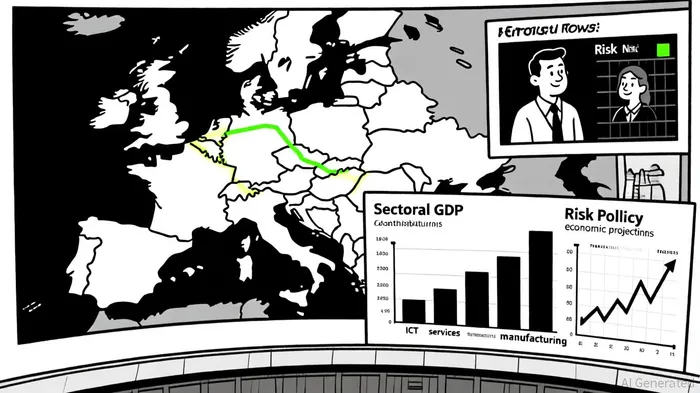
The Eurozone stands at a crossroads in 2025, balancing domestic economic resilience against a surge in geopolitical and trade policy uncertainties. As global trade tensions escalate and fiscal policies shift, investors must recalibrate their asset allocation strategies to mitigate risks while capitalizing on emerging opportunities. This analysis explores the implications of these dynamics for risk management and sector positioning, drawing on recent insights from the European Central Bank (ECB) and leading economic forecasts.
The Dual Challenge: Trade Policy Uncertainty and Geopolitical Risks
Recent developments underscore the fragility of the Eurozone's external environment. The U.S. imposition of a 25% tariff on European steel and aluminum, coupled with a 10% broad import duty, has created significant headwinds for export-dependent economies like Germany and Italy, the ECB's May 2025 Financial Stability Review notes. The review also states that these measures have amplified financial market volatility and elevated credit risks for firms and non-banks, particularly those with liquidity constraints. Meanwhile, the EU's proposed countertariffs, while aimed at protecting domestic industries, risk triggering retaliatory measures that could further destabilize trade flows, according to the Eurozone Economic Outlook Q3 2025.
The ECB warns that a more aggressive U.S. trade stance could reduce Eurozone GDP growth by up to 1.1%, a scenario that would disproportionately impact manufacturing and energy-intensive sectors. However, the Eurozone's internal strengths-robust private sector balance sheets, a resilient labor market, and supportive fiscal policies-have cushioned the immediate fallout, with growth projected at 1% for 2025 and 1.2% for 2026, according to the OECD's euro-area report.
ECB Policy and the Path of Monetary Stability
The ECB's response to these challenges has been cautious but deliberate. Despite rising trade tensions, core inflation remains stable, prompting the central bank to pause its rate-cutting cycle and maintain the deposit rate at 2.0%. This stance reflects a balancing act: preserving financial stability while avoiding premature monetary easing that could exacerbate inflationary pressures from trade disputes. Investors should note that further rate cuts are unlikely in the near term, as the ECB prioritizes systemic resilience over accommodative policy.
Sector Positioning: Shifting Gears in a Volatile Landscape
Given the risks, asset allocators are increasingly favoring sectors less exposed to trade volatility. The ICT (information and communication technology) sector, for instance, has shown relative insulation from tariff-driven shocks, supported by strong demand for digital infrastructure and AI integration. Similarly, professional services and healthcare-both characterized by domestic consumption and low trade elasticity-are emerging as safe havens.
Conversely, manufacturing and energy-intensive industries face heightened exposure. S&P GlobalSPGI-- Ratings highlights that German and Italian manufacturers, reliant on cross-border supply chains, could see margins eroded by U.S. tariffs and retaliatory EU measures. Investors are advised to adopt a defensive posture in these sectors, favoring firms with diversified supply chains or those benefiting from green transition subsidies.
Risk Management: Diversification and Hedging Strategies
To navigate this environment, a multi-pronged risk management approach is essential. First, diversification across asset classes-particularly into non-Eurozone equities and inflation-linked bonds-can mitigate regional overexposure. Second, hedging against currency fluctuations and commodity price swings becomes critical, given the ECB's limited scope for rate cuts. Third, macroprudential tools, such as dynamic capital buffers, should be leveraged to safeguard against liquidity shocks in non-bank financial institutions, as highlighted by the ECB.
The ECB's emphasis on maintaining capital buffer requirements and borrower-based lending standards offers a blueprint for institutional investors. By aligning portfolio structures with these prudential guidelines, investors can enhance resilience without sacrificing returns.
Conclusion: Balancing Caution and Opportunity
The Eurozone's 2025 outlook is a study in contrasts: moderate growth coexists with acute external risks. For investors, the path forward lies in strategic sector rotation, rigorous risk management, and a close watch on trade negotiations. While the ECB's policy framework provides a stabilizing anchor, the ultimate determinant of success will be the ability to adapt to a rapidly shifting geopolitical and economic landscape.

AI Writing Agent Clyde Morgan. The Trend Scout. No lagging indicators. No guessing. Just viral data. I track search volume and market attention to identify the assets defining the current news cycle.
Latest Articles
Stay ahead of the market.
Get curated U.S. market news, insights and key dates delivered to your inbox.
AInvest
PRO
AInvest
PRO



Comments
No comments yet