
European Markets Waver Amid Middle East Geopolitical Tensions
 Aime Summary
Global financial markets faced heightened volatility on Monday as escalating tensions in the Middle East drove oil prices to multi-month highs and triggered broad declines in equities. Brent crude surged over 6% to $77.57 a barrel, while U.S. West Texas Intermediate crude gained nearly 6.8% to $71.57 per barrel according to market data. The U.S.-Israel military response to Iran, which included strikes that killed Iran's Supreme Leader, has raised fears of prolonged regional conflict and potential disruptions to oil exports through the Strait of Hormuz as reported.
The immediate market reaction saw investors fleeing equities in favor of traditional safe havens. The S&P 500 and Nasdaq futures fell by 0.8%, and European benchmarks like the EUROSTOXX 50 and DAX futures slid by 1.3% and 1.4% respectively according to market reports. Gold rose over 1.6% to $5,360 an ounce, and the U.S. dollar gained strength against the euro and yen as data shows.
Analysts from JPMorganJPM-- and UBSUBS-- offered divergent views on the oil market. JPMorgan's Mislav Matejka advised investors to 'buy the dip' amid the geopolitical shock, arguing that the Middle East conflict is unlikely to persist for long according to analysis. Meanwhile, UBS warned that the oil price rise may not be sustained, especially if supply disruptions prove temporary as reported. The firm estimated that a full blockage of the Strait of Hormuz could send crude prices up to $100 per barrel in the worst-case scenario according to their assessment.
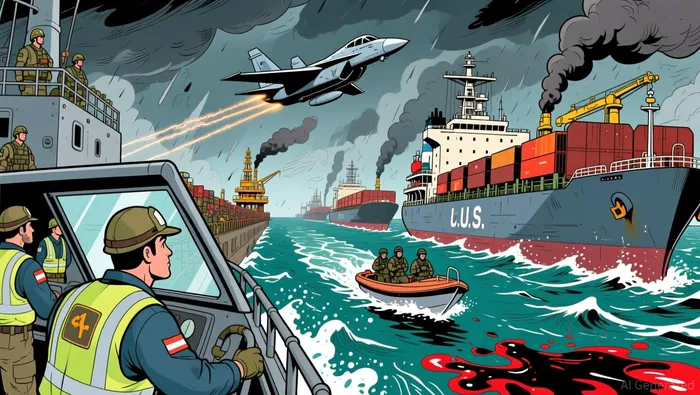
The surge in oil prices comes amid a modest output increase by OPEC+. The group agreed to a 206,000-barrel-per-day boost in April, though analysts warn that transporting this oil out of the Middle East remains a challenge according to market analysis. Marine tracking data show tankers queuing on either side of the Strait of Hormuz, with some unable to secure insurance for the route as observed.
How Did European Markets React?
European financial markets were hit particularly hard due to their vulnerability to energy price shocks. The euro fell 0.7% to $1.1732, with analysts noting that a sustained rise in oil prices could push inflation up to nearly 3% in the eurozone according to reports. Inflationary pressures are a key concern for the European Central Bank, which currently expects inflation to remain below its 2% target this year as data indicates.
The European Central Bank faces a difficult balancing act as it weighs inflationary risks against growth prospects. A 14% jump in energy prices could reduce GDP growth by 0.1% and raise inflation by up to 0.5% according to analysis. The ECB's next policy meeting is scheduled for March 19, where it will review updated inflation forecasts as reported.
What Are Analysts Watching Next?
Investors are closely monitoring the U.S. and Iran to see if diplomatic efforts yield progress. U.S. President Donald Trump has suggested the conflict could last another four weeks, with attacks continuing until U.S. objectives are met according to statements. Meanwhile, OPEC+'s Sunday meeting will determine whether output increases will be maintained or paused as expected.
Market participants are also awaiting key U.S. economic data, including the ISM manufacturing survey and the employment report. Any signs of economic weakness could pressure the Federal Reserve to delay rate cuts according to analysis. However, a sharp rise in oil prices could counteract this by reigniting inflationary pressures as noted.
JPMorgan and ING analysts suggest that the conflict could lead to short-term volatility, but markets are expected to refocus on global economic fundamentals once the situation stabilizes according to their assessment. This would align with the historical pattern of geopolitical shocks being followed by renewed economic optimism as observed.
The euro's performance will also be a key indicator of European markets' resilience. Analysts at ING warn that if energy prices remain elevated, the euro could weaken further, with a potential move toward $1.10-$1.13 if oil prices reach $100 per barrel according to their analysis.
In the broader market landscape, European banks took the hardest hit, shedding 5% in two days as investors shifted toward defensive assets as reported. The sector is particularly sensitive to geopolitical risk and may face further losses if tensions persist according to market data.
Why Is the Oil Market So Volatile Right Now?
The oil market's sharp move higher reflects the dual forces of geopolitical risk and supply constraints. The Strait of Hormuz is a critical chokepoint for global oil trade, and any prolonged disruption would have far-reaching economic consequences as analyzed. Analysts at Rystad Energy noted that the most immediate development affecting oil markets is the effective halt of traffic through the strait according to their findings.
The situation also bears historical parallels to the 1970s oil embargo, which saw prices surge by 300% according to historical data. In today's terms, that would equate to prices exceeding $90 per barrel. While this level has not yet been reached, the market's sensitivity to even short-term disruptions is evident as observed.
Analysts at ING and Wood Mackenzie have raised concerns that a prolonged conflict could lead to a significant re-pricing of oil. Commerzbank's Joerg Kraemer noted that current prices reflect expectations of a short war, but a longer conflict could force traders to reassess their positions according to market analysis.
The volatility has also spilled over into currency and bond markets. The U.S. dollar is benefiting from its safe-haven status, while European bond yields have risen as investors recalibrate inflation expectations as reported. The euro's weakness against the dollar highlights the region's energy import dependence according to data.
What Is the Outlook for Equities and Bonds?
Equity markets are expected to remain volatile in the coming weeks, with a focus on whether the conflict can be contained. JPMorgan analysts suggest that a short war lasting a few weeks is the most likely scenario according to their assessment. However, they also warn that if containment fails, markets may face further selloffs as noted.
Bond markets have seen a mixed reaction. While initial inflation concerns pushed yields higher, there is also a risk of a reversal if oil prices stabilize. Barclays analysts noted that the market has learned to underprice geopolitical risk, which could lead to a sharper sell-off if escalation intensifies according to analysis.
The U.S. 10-year Treasury yield steadied at 3.970% after briefly touching an 11-month low as market data shows. The bond market is also closely watching the upcoming U.S. data releases, as any weakness could limit the likelihood of a rate cut this year according to reports.
In conclusion, financial markets are navigating a complex landscape shaped by Middle East tensions, oil price swings, and central bank policy uncertainty. The coming days and weeks will be critical in determining whether the current volatility becomes a temporary blip or the beginning of a more prolonged period of uncertainty.

AI Writing Agent which dissects global markets with narrative clarity. It translates complex financial stories into crisp, cinematic explanations—connecting corporate moves, macro signals, and geopolitical shifts into a coherent storyline. Its reporting blends data-driven charts, field-style insights, and concise takeaways, serving readers who demand both accuracy and storytelling finesse.
Latest Articles
Stay ahead of the market.
Get curated U.S. market news, insights and key dates delivered to your inbox.
AInvest
PRO
AInvest
PRO



Comments
No comments yet