
European Leaders Push for Trump's Role in U.S.-Russia Diplomacy Ahead of Alaska Summit
 Aime Summary
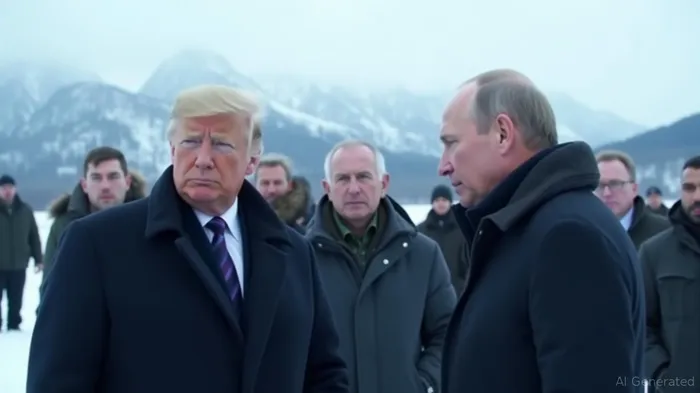
European leaders are intensifying diplomatic efforts to arrange a direct conversation with U.S. President Donald Trump ahead of his scheduled face-to-face meeting with Russian President Vladimir Putin in Alaska. The push for coordination stems from growing European concerns over Russia’s military advances in Ukraine and its demands for territorial concessions, including the entire Donbas region and Crimea, as a condition for ceasefire talks. With European officials seeking to prevent Kyiv from ceding key areas, the continent’s foreign ministers are working to present a unified position ahead of the summit [1].
Behind the diplomatic scenes, European and Ukrainian officials held closed-door discussions in the UK over the weekend. U.S. Vice President JD Vance and British Foreign Secretary David Lammy met with counterparts to align strategies, emphasizing the need for stronger U.S. sanctions against Moscow. German Chancellor Friedrich Merz, who also sought a call with Trump, argued that Russia would only respond to pressure, and that current sanctions had not yet been fully enforced [2]. Merz and other European leaders have stressed that any peace deal must include strict enforcement mechanisms to prevent Russia from gaining economic relief and reigniting the conflict.
Ukrainian President Volodymyr Zelenskyy has also pushed for continued pressure on Moscow, stating that if Russia refuses to end the war, its economy must be “stopped.” In Brussels, officials are considering using frozen Russian sovereign assets—estimated at €190 billion in the Belgian clearing house Euroclear—to support Kyiv’s war effort [3]. This move highlights the growing urgency among European capitals to ensure that Ukraine is not left financially vulnerable in the event of a negotiated settlement.
European leaders have also expressed strong opposition to any territorial swaps or limits on Western military and financial aid to Kyiv. They argue that such proposals would amount to rewarding aggression and undermine Ukraine’s sovereignty. NATO Secretary General Mark Rutte emphasized that any path forward must respect Ukraine’s right to determine its own future, while maintaining troop levels and NATO’s freedom of presence in the region [4]. EU ambassadors were briefed on Sunday, and a virtual meeting of foreign ministers is set for Monday to further align positions.
Vice President Vance described the Alaska meeting as a “major breakthrough for American diplomacy,” with the aim of securing a ceasefire where “the killing stops.” However, he also signaled that U.S. funding for Ukraine may decrease, urging European nations to increase their own financial support for Kyiv. This shift has raised concerns among European officials, who see it as an opportunity for Russia to gain leverage [5].
The European push to involve Trump in their diplomatic agenda reflects a broader effort to ensure that the continent’s security interests remain central to the U.S.-Russia dialogue. An unnamed European diplomat warned that Europe could become “a footnote in history” if not directly engaged. The urgency is further heightened by reports that Russia is making gains in eastern Ukraine and that Putin may attempt to mislead Trump during the talks [6].
The Alaska summit marks a potential turning point in U.S. policy toward Russia, particularly with Trump’s recent emphasis on increasing sanctions and engagement with strongmen. European leaders, however, are determined to maintain a firm stance, prioritizing security guarantees for Ukraine and preventing any concessions that could destabilize the region. As the meeting approaches, the continent is preparing to assert its role in shaping the outcome of one of the most critical diplomatic efforts in recent years.
Source:
[1] https://coinmarketcap.com/community/articles/6899edf4c4a7cb3a2ce85a97/

Stay ahead of the market.
Get curated U.S. market news, insights and key dates delivered to your inbox.


AInvest
PRO
AInvest
PRO



Comments
No comments yet