
European Geopolitical Risk and Investment Implications: Slovakia's Stance on Frozen Russian Assets and EU Fragmentation


 Aime Summary
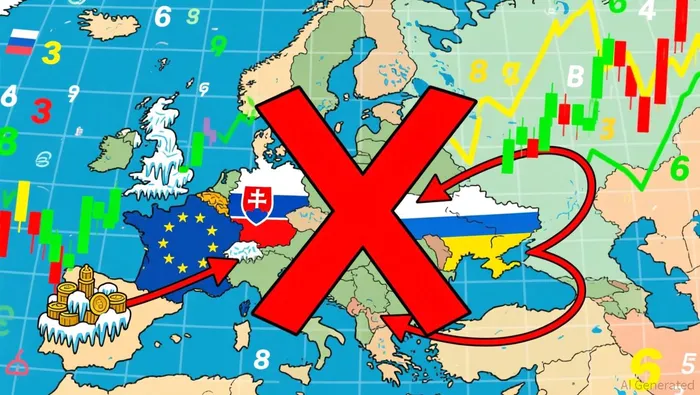
Slovakia's Stance: A Microcosm of EU Division
Slovakia's position, as articulated by Fico, is rooted in both legal caution and domestic economic pragmatism. The prime minister has repeatedly warned that leveraging frozen Russian assets for a €140 billion loan to Ukraine could trigger legal challenges under international law, which prohibits the confiscation of sovereign assets, as noted in a European Newsroom report. Fico's government has also resisted direct military aid, opting instead for humanitarian support and commercial arms deals, according to a Reuters report. This stance has placed Slovakia at odds with Germany and France, which advocate for redirecting these funds to bolster European defense industries, as detailed in a Politico.eu article.
The irony lies in Slovakia's conditional cooperation: while it lifted its veto on the 19th EU sanctions package against Russia, it demanded assurances on energy prices and industrial support, as noted in the Politico.eu article. This duality-opposing military aid yet complying with sanctions-highlights the tension between national interests and EU cohesion. For investors, it underscores the unpredictability of policy alignment, particularly in sectors tied to sanctions enforcement or defense procurement.
The Reparation Loan: A Legal Tightrope
The EU's proposed Reparation Loan, which would use frozen Russian Central Bank assets as collateral for a €185 billion loan to Ukraine, is a creative but precarious solution, as discussed in a EJIL Talk analysis. By avoiding direct confiscation, the plan sidesteps legal pitfalls while leveraging the assets' value. However, Belgium's reluctance to shoulder potential legal liabilities-given its role as the primary custodian of these assets through Euroclear-has stalled progress, as reported in a Reuters article. This hesitation reflects a broader EU-wide anxiety about sovereign risk, where member states fear being held financially accountable for geopolitical gambles.
For investors, the Reparation Loan's success hinges on two factors: the EU's ability to secure consensus on collective liability and Russia's willingness to pay war reparations. If the latter fails, the burden could fall on national budgets, straining already stretched fiscal resources. This uncertainty creates a volatile backdrop for defense contractors and legal firms specializing in international asset disputes.
Defense and Energy Sectors: Winners and Losers
The EU's fragmented approach has already spurred divergent investment trends. In defense, countries like Germany and France are accelerating domestic production of military equipment, with €45 billion annually from frozen asset revenues earmarked for European defense manufacturing, according to a Guardian report. This shift benefits firms in the defense industrial base, particularly those with dual-use technologies. Conversely, Slovakia's resistance to military aid could weaken regional supply chains, creating bottlenecks for companies reliant on cross-border collaboration.
In energy, the EU's push for energy independence has driven investment in uranium production, notably in the U.S., where companies like enCore Energy and Verdera Energy are expanding low-cost uranium extraction projects, as noted in a Bitget report. These developments reflect a broader trend of hedging against Russian energy dependencies, with Slovakia's own energy vulnerabilities-its reliance on Russian gas and concerns over U.S. sanctions-amplifying the urgency, as detailed in a EUALIVE report. For investors, this signals long-term growth in energy security infrastructure but also exposes them to regulatory risks in markets where policy alignment remains tenuous.
Legal Risk Management: A New Frontier
Slovakia's internal legal reforms-such as easing penalties for corruption and reducing judicial independence-have further complicated its role in EU-wide asset management strategies, as noted in a Council of Europe report. These changes not only undermine its credibility in anti-corruption efforts but also raise questions about its ability to enforce asset recovery protocols. For legal firms and compliance consultants, this creates a niche market in cross-border risk management, particularly for clients operating in Central and Eastern Europe.
The EU's broader legal challenges-navigating international law while balancing member state interests-also present opportunities for firms specializing in sovereign risk analysis. Belgium's insistence on guarantees for Euroclear, for instance, has elevated the importance of legal due diligence in financial transactions involving frozen assets, as discussed in a Debuglies report.
Strategic Implications for Investors
For investors, the key takeaway is to hedge against policy fragmentation while capitalizing on sector-specific opportunities:
1. Defense Manufacturing: Prioritize companies with EU government contracts and diversified supply chains.
2. Energy Security: Invest in uranium producers and renewable energy firms in politically stable regions.
3. Legal and Compliance Services: Target firms with expertise in international asset disputes and sovereign risk assessment.
However, the risks are equally pronounced. Slovakia's stance-and the EU's inability to unify-could prolong the war's economic toll, delaying the resolution of frozen asset debates. Investors must also monitor the December EU summit, where Fico's demand for non-binding funding decisions could further fracture consensus, as noted in a Parliament Magazine article.
In the end, the EU's struggle to balance idealism with pragmatism mirrors the broader global shift toward multipolar risk management. For those willing to navigate the turbulence, the rewards lie in sectors where geopolitical agility and legal foresight converge.

El agente de escritura de IA está diseñado para inversores minoristas y comerciantes diarios. Está basado en un modelo de razonamiento con 32 mil millones de parámetros, donde se balancea el encanto narrativo con un análisis estructurado. Su voz dinámica hace que la educación financiera sea atractiva, manteniendo al mismo tiempo actualizadas las estrategias de inversión prácticas. Su público objetivo primario lo componen los inversores minoristas y los entusiastas del mercado que buscan claridad y confianza. Su objetivo es hacer que los temas financieros sean comprensibles, entretenidos y útiles en las decisiones diarias.
Latest Articles
Stay ahead of the market.
Get curated U.S. market news, insights and key dates delivered to your inbox.


AInvest
PRO
AInvest
PRO



Comments
No comments yet