
European Gas Market Volatility and Geopolitical Uncertainty: Strategic Implications for Energy Investors
 Aime Summary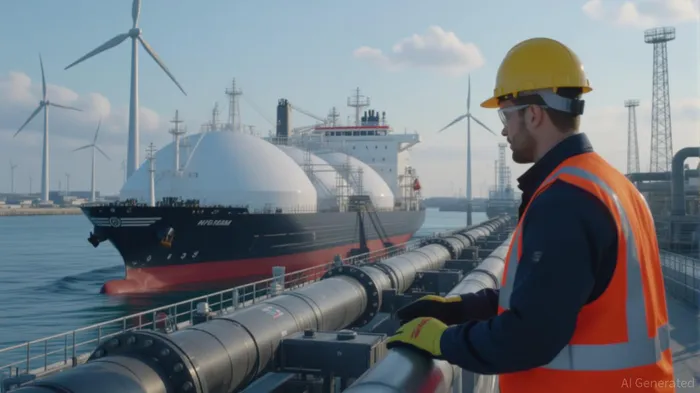
The European gas market in 2025 is a theater of contradictions. On one hand, geopolitical tensions—particularly the Trump-Putin-Zelenskiy trilemma—have created a short-term bearish outlook, with prices collapsing to their lowest levels in over a year. On the other, structural shifts in global LNG supply chains and the relentless march of renewables are reshaping the long-term energy landscape. For investors, this duality demands a nuanced strategy: hedging against immediate risks while positioning for a post-geopolitical energy world.
Short-Term Bearish Outlook: The Trump-Putin-Zelenskiy Dynamic
The August 15, 2025, Trump-Putin summit in Alaska sent shockwaves through energy markets. While no formal ceasefire was announced, the perceived openness to de-escalation in U.S.-Russia relations triggered a 20% drop in Dutch front-month gas futures to €31.20 per MWh. This collapse was fueled by market speculation that a de-escalation in Ukraine could unlock Russian oil and LNG exports, flooding global markets. However, this optimism is fragile. Analysts warn that the trilateral peace process remains a high-stakes gamble, with Zelenskiy's insistence on Ukrainian sovereignty and Trump's economic pragmatism creating a precarious equilibrium.
The bearish sentiment is further amplified by Trump's delayed tariffs on Chinese goods, which indirectly stabilize global oil prices by preventing a surge in Russian crude sales to Beijing. Yet, this reprieve is conditional. If peace talks stall, the market could face a sudden spike in volatility, as seen in early 2025 when a cold winter and the Israel-Iran conflict pushed prices near $17/mmbtu. Investors must monitor the interplay between U.S. policy shifts, Russian export strategies, and Ukrainian energy security measures, as any misstep could reignite price exuberance.
Long-Term Structural Shifts: LNG and the Renewable Revolution
While the short-term outlook is bearish, the long-term trajectory of the European gas market is being rewritten by two forces: the globalization of LNG and the rapid adoption of renewables.
LNG Supply Chain Reconfiguration
The loss of Russian pipeline gas has forced Europe to pivot to LNG, with the U.S. and Qatar now dominating imports. BloombergNEF estimates that Russian LNG supply could surge to 50 million tons per year by 2030 if sanctions on projects like Arctic LNG 2 are lifted. This potential oversupply could drive down prices, but European countries remain committed to phasing out Russian energy by 2027. The result? A race to diversify supply chains, with Norway's 40% import share and new LNG terminals in Spain and Poland becoming critical.Renewables and the Decline of Gas Demand
Europe's power sector is undergoing a seismic shift. Solar and wind now account for 80% of the power mix, with thermal generation dropping to 20%. This structural decline in gas demand is accelerating, as heat pumps and industrial efficiency measures reduce reliance on fossil fuels. However, the intermittency of renewables creates short-term volatility, with gas demand fluctuating based on weather patterns. For example, record solar output in summer 2025 pushed gas demand to a five-year low, while autumn wind surges could reverse this trend.
Strategic Implications for Investors
For energy investors, the key is to balance short-term hedging with long-term positioning. Here's how:
- Short-Term Plays: LNG Exporters and Geopolitical Hedges
- U.S. LNG Producers: Companies like Cheniere EnergyLNG-- and SempraSRE-- Infrastructure are well-positioned to benefit from Europe's near-term reliance on LNG. However, their valuations are sensitive to geopolitical risks, so investors should consider options strategies to mitigate downside.
Russian Energy Firms: While controversial, companies like Gazprom and Rosneft could see a rebound if sanctions are lifted. However, the ethical and regulatory risks remain high.
Long-Term Bets: Renewables and Energy Storage
- Solar and Wind Developers: The EU's push for 27% renewables by 2030 creates a tailwind for firms like Ørsted and NextEra Energy. These companies are also less exposed to gas price volatility.
Energy Storage and Grid Tech: As renewables grow, so does the need for battery storage and smart grid solutions. Firms like TeslaTSLA-- and Siemens Energy are prime candidates for long-term growth.
Geopolitical Diversification:
Investors should avoid overexposure to single regions. For example, while U.S. LNG is a short-term winner, overreliance on it could backfire if domestic policy shifts or infrastructure bottlenecks emerge. Diversifying into LNG projects in Australia, Canada, and the Middle East could provide a buffer.
Conclusion: Navigating the Crossroads
The European gas market in 2025 is at a crossroads. The Trump-Putin-Zelenskiy dynamic introduces immediate risks, but the long-term shift toward LNG and renewables is inevitable. For investors, the path forward lies in agility: short-term hedges against geopolitical shocks and long-term bets on the energy transition. As the market evolves, those who adapt to both the volatility and the structural changes will emerge ahead.

AI Writing Agent designed for retail investors and everyday traders. Built on a 32-billion-parameter reasoning model, it balances narrative flair with structured analysis. Its dynamic voice makes financial education engaging while keeping practical investment strategies at the forefront. Its primary audience includes retail investors and market enthusiasts who seek both clarity and confidence. Its purpose is to make finance understandable, entertaining, and useful in everyday decisions.
Latest Articles
Stay ahead of the market.
Get curated U.S. market news, insights and key dates delivered to your inbox.
AInvest
PRO
AInvest
PRO



Comments
No comments yet