
European Gas Market Contraction and the Rise of Renewable Infrastructure Opportunities
 Aime Summary
The European gas market is undergoing a profound transformation. While short-term demand rebounded in early 2025—driven by colder weather and intermittent renewable energy output—the structural decline in gas consumption remains inevitable. This shift is not merely cyclical but rooted in a long-term energy transition accelerated by policy, technology, and geopolitical imperatives. For investors, the implications are clear: the era of gas as a dominant energy source is waning, and the rise of renewable infrastructure and energy efficiency technologies presents a compelling opportunity to hedge against volatility and capitalize on structural growth.
The Structural Decline of Gas Demand
European gas consumption has fallen by over 30% since 2021, with the first quarter of 2025 marking a temporary 8% year-on-year increase. This uptick was driven by a confluence of factors: a drop in wind and hydropower generation (down 17% and 15%, respectively) and the need to maintain electricity supply security. Yet, this rebound masks a deeper trend. Renewables now account for 50% of EU electricity generation, up from 35% a decade ago, while fossil fuels have been reduced to just 25% of the energy mix. The EU's Renewable Energy Directive, which mandates a 42.5% share of renewables in gross energy consumption by 2030, underscores the policy tailwinds propelling this transition.
Gas demand is further undermined by the end of Russian pipeline exports via Ukraine, which have plummeted by 45% since January 2025. While U.S. LNG has filled some of the gapGAP--, the shift to liquefied gas has introduced new vulnerabilities, including price volatility and supply chain bottlenecks. The Israel-Iran conflict in June 2025, for instance, sent European TTF prices surging by 18%, highlighting the market's susceptibility to geopolitical shocks.
The Case for Sector Rotation
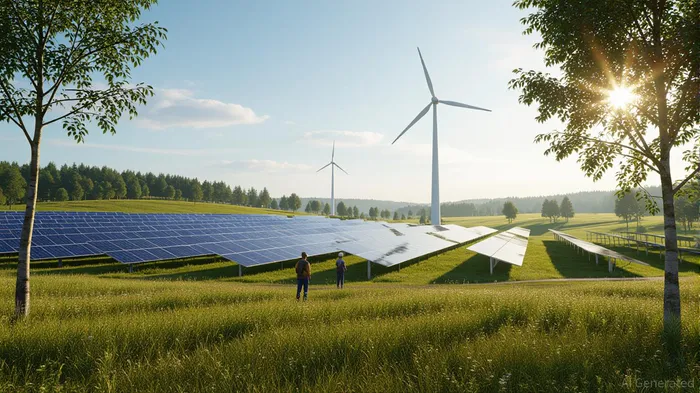
The structural decline in gas demand and the persistent volatility of its markets make a compelling case for strategic sector rotation into clean energy and energy efficiency. Renewable infrastructure—particularly solar, wind, and grid modernization—and energy efficiency technologies are not only resilient to gas price swings but also aligned with the EU's decarbonization goals.
Investment in renewable infrastructure has surged to nearly USD 390 billion annually, with grid spending alone expected to exceed USD 70 billion in 2025. This growth is driven by falling technology costs, policy incentives, and the urgent need to address grid bottlenecks. For example, Spain's experience with near-zero electricity prices and Ireland's 11% curtailment of renewable output in 2024 highlight the critical need for storage and transmission upgrades. The EU's REPowerEU plan, which aims to double solar capacity to 320 GW by 2025 and expand offshore wind, further signals the scale of opportunity.
Energy efficiency technologies, meanwhile, offer a dual benefit: reducing energy consumption and insulating economies from price shocks. Building retrofits, smart grids, and industrial process upgrades have nearly doubled in investment over the past decade, reaching USD 100 billion in 2025. These technologies not only lower demand for gas but also enhance the resilience of energy systems, making them a natural hedge against volatility.
Navigating the Challenges
While the opportunities are substantial, investors must remain mindful of challenges. Grid infrastructure lags behind renewable deployment, with supply chain constraints—such as China's dominance in transformer imports—complicating expansion. Additionally, the EU's reliance on LNG and the role of financial players in gas markets mean volatility will persist. However, these challenges also create openings for innovation. For instance, utility-scale battery storage is projected to grow to 250 GW by 2034, offering a critical solution to intermittency and a lucrative investment avenue.
Strategic Investment Recommendations
- Renewable Infrastructure Developers: Prioritize companies involved in solar, wind, and grid modernization. Firms with strong ESG credentials and partnerships with EU institutions (e.g., through the REPowerEU plan) are well-positioned for growth.
- Energy Efficiency Technology Providers: Target firms specializing in building retrofits, smart grids, and industrial energy management. These companies benefit from both regulatory support and cost-saving demand.
- Energy Storage and Flexibility Assets: Invest in battery storage, hydrogen production, and demand-response technologies. These sectors are critical to balancing variable renewable output and reducing gas dependency.
- Diversified Clean Energy ETFs: For a broader exposure, consider ETFs tracking the EU's renewable and efficiency sectors, which offer diversification and mitigate company-specific risks.
The European gas market's contraction is not a temporary setback but a structural shift. For investors, the path forward lies in aligning portfolios with the energy transition. By rotating into renewable infrastructure and energy efficiency, investors can hedge against gas market volatility while capitalizing on a future defined by sustainability and resilience. The time to act is now—before the window closes.

Decoding blockchain innovations and market trends with clarity and precision.
Latest Articles
Stay ahead of the market.
Get curated U.S. market news, insights and key dates delivered to your inbox.


AInvest
PRO
AInvest
PRO



Comments
No comments yet