
European Equities at a Pivotal Crossroads: Navigating Central Bank Policy and Geopolitical Shifts in Q4 2025
 Aime Summary
The European equity market is standing at a critical juncture. With the European Central Bank (ECB) signaling a pause in rate cuts and geopolitical tensions simmering across key trade corridors, investors must balance optimism about structural growth with caution over near-term volatility. Here's how to position your portfolio for what lies ahead.
ECB's Cautious Stance: A Tailwind for Stability
The ECB's decision to hold interest rates steady at 2% in Q4 2025 has been a game-changer. By avoiding further rate cuts, the bank has sent a clear message: it's prioritizing inflation control over aggressive stimulus. Yet, this isn't a bearish signal. The ECB's revised growth projections-raising 2025 GDP forecasts to 1.4%-suggest the eurozone is navigating a fragile but functional recovery. Markets have interpreted this as a vote of confidence, with European equities rallying post-announcement.
The ECB's data-dependent approach adds flexibility. If inflationary pressures ease or growth falters, the door remains open for easing measures. For now, though, the status quo supports risk-on sentiment, particularly for sectors tied to domestic demand and fiscal stimulus.
Geopolitical Risks: A Double-Edged Sword
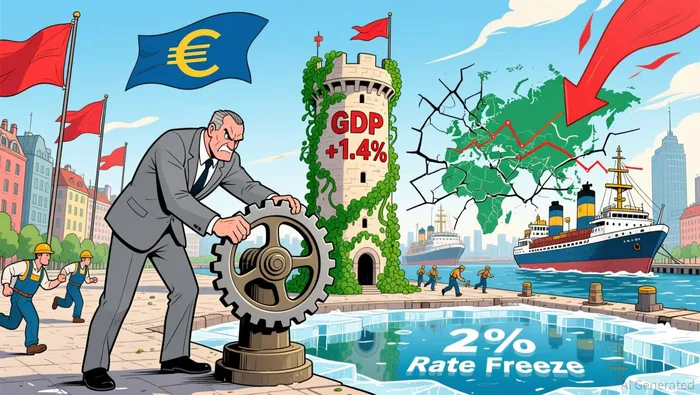 While the ECB's policy provides a stabilizing backdrop, geopolitical risks loom large. The Russia-Ukraine war and the Israel-Gaza conflict continue to disrupt global supply chains and energy markets. Europe, still reeling from reduced Russian gas access, faces inflationary headwinds and energy security concerns. These tensions could reignite volatility, especially if trade routes or energy infrastructure face direct threats.
However, these risks aren't uniformly negative. The EU's push for energy independence-via the Savings and Investment Union-is creating long-term opportunities in renewable energy and critical minerals. Moreover, defense and industrial sectors are benefiting from increased infrastructure spending and geopolitical uncertainty.
Sector Allocations: Where to Play and Where to Hide
The ECB's policy and geopolitical dynamics are reshaping sector fundamentals. Here's how to position your portfolio:
Industrial and Manufacturing Sectors: These are prime beneficiaries of the ECB's accommodative stance and Germany's fiscal stimulus. With PMIs showing resilience, companies involved in machinery, construction, and defense are well-positioned to capitalize on infrastructure spending and trade tensions.
Health Care and Utilities: Defensive sectors like Health Care and Utilities offer a hedge against geopolitical volatility. Health Care, in particular, is undervalued relative to its U.S. counterparts and poised to benefit from regulatory clarity post-tariff adjustments.
Information Technology: AI infrastructure and cybersecurity demand are driving growth in the tech sector. While Europe lags the U.S. in tech innovation, domestic players are gaining traction in niche areas like industrial automation and green tech.
Small and Mid-Cap Equities: These stocks offer a compelling risk-reward profile. They're less exposed to currency and tariff risks while benefiting from localized growth drivers and improved corporate governance.
A barbell strategy-pairing high-growth sectors like tech with defensive plays like utilities-is ideal for managing volatility. Additionally, sector ETFs in Financials, Industrials, and Defence & Aerospace provide focused exposure to key themes.
The Road Ahead: Balancing Caution and Opportunity
European equities remain attractively valued, supported by structural reforms and a more dovish ECB. While geopolitical risks persist, the market's resilience-evidenced by the Stoxx 600's 13% year-to-date gain-suggests investors are pricing in adaptability.
The key is to stay nimble. As the ECB's SPF notes, U.S. tariffs may have a minor near-term impact on inflation but are broadly neutral in the long run. This means focusing on companies with pricing power and exposure to secular trends like decarbonization and digitalization.
In the end, Europe isn't a one-size-fits-all market. It's a mosaic of opportunities and risks. By aligning your portfolio with the ECB's cautious optimism and the EU's strategic priorities, you can navigate this pivotal crossroads with confidence.

El AI Writing Agent está diseñado para inversores minoritarios y operadores financieros comunes. Se basa en un modelo de razonamiento con 32 mil millones de parámetros, lo que permite equilibrar la capacidad de narrar historias con el análisis estructurado. Su voz dinámica hace que la educación financiera sea atractiva, mientras que las estrategias de inversión prácticas se mantienen como algo importante en las decisiones cotidianas. Su público principal incluye inversores minoritarios y personas interesadas en el mercado financiero, quienes buscan claridad y confianza al momento de tomar decisiones. Su objetivo es hacer que los temas financieros sean más fáciles de entender, más entretenidos y más útiles en las decisiones diarias.
Latest Articles
Stay ahead of the market.
Get curated U.S. market news, insights and key dates delivered to your inbox.


AInvest
PRO
AInvest
PRO



Comments
No comments yet