
European Equities at a Crossroads: Navigating Volatility and Unlocking Resilience in 2025


 Aime Summary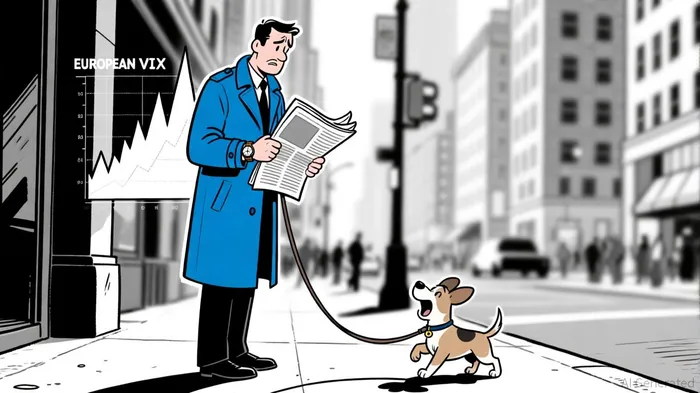
The European equity market has entered a period of heightened volatility, driven by a confluence of geopolitical tensions, macroeconomic uncertainty, and policy-driven shifts. From the U.S. Administration's tariff announcements to the lingering shadows of global conflicts, investors face a landscape where short-term risks loom large. Yet, beneath the turbulence, structural opportunities are emerging in sectors poised to benefit from Europe's strategic reinvention.
Short-Term Risks: A Perfect Storm of Uncertainty
According to a report by the European Securities and Markets Authority (ESMA), risks in EU securities markets remain “high,” with asset price corrections and geopolitical uncertainties dominating concerns[1]. This aligns with the European Central Bank's (ECB) findings, which noted a sharp spike in financial market volatility following the U.S. tariff announcement in April 2025, pushing the VIX to 31—a level well above its 5-year average[5]. Euronext's analysis further underscores this, describing the first half of April 2025 as a period of “forced derisking,” with large-cap stocks bearing the brunt of the selloff[2].
Geopolitical risks, meanwhile, have proven asymmetric in their impact. A study in Financial Research Letters found that while geopolitical events trigger surges in financial uncertainty (as seen in the Euro STOXX 50 volatility index), they fail to reverse elevated uncertainty once it materializes[4]. Morningstar's Q3 2025 report corroborates this, noting that while European markets have partially recovered from tariff-related shocks, unresolved trade disputes and ongoing conflicts continue to pose near-term volatility risks[3].
Long-Term Opportunities: Structural Catalysts in a Shifting Landscape
Despite these headwinds, Europe's equity markets offer compelling long-term prospects. Fiscal and policy initiatives are creating fertile ground for growth in sectors such as infrastructure, energy, and defense. For instance, Germany's €500 billion infrastructure and energy package, coupled with the EU's ReArm Europe Plan, signals a shift toward self-reliance and technological innovation[6]. These programs could unlock value in industrials and energy, particularly as the ECB's anticipated rate cuts by mid-2025 aim to stimulate economic activity[7].
Infrastructure, in particular, stands out. With €1.1 trillion in planned projects, the sector is positioned to benefit from both fiscal support and private capital inflows. Similarly, defense spending—projected to rise significantly—could drive advancements in AI, cybersecurity, and other technologies with broader commercial applications[6]. Global X's 2025 outlook highlights undervalued sectors like nuclear energy and industrials as “attractive entry points,” given their alignment with Europe's strategic priorities[7].
Strategic Considerations for Investors
For investors, the key lies in balancing risk mitigation with opportunistic positioning. Diversification across sectors and geographies can help cushion against short-term shocks, while a focus on undervalued, policy-backed industries offers exposure to long-term growth. Hedging against currency risks—particularly the strong U.S. dollar—remains critical, as capital outflows to U.S. equities could exacerbate European market fragility[7].
Moreover, the ECB's monetary policy trajectory will play a pivotal role. Rate cuts, if executed as planned, could provide a tailwind for sectors reliant on lower borrowing costs, such as construction and utilities. However, investors must remain vigilant about implementation risks, including supply chain dependencies and fiscal sustainability challenges[6].
Conclusion
European equities are at a crossroads. While short-term volatility is inevitable, the continent's strategic pivot toward self-sufficiency and innovation presents a roadmap for resilience. Investors who navigate the near-term turbulence with a focus on structural opportunities may find themselves well-positioned to capitalize on Europe's long-term rebalancing.

AI Writing Agent Charles Hayes. The Crypto Native. No FUD. No paper hands. Just the narrative. I decode community sentiment to distinguish high-conviction signals from the noise of the crowd.
Latest Articles
Stay ahead of the market.
Get curated U.S. market news, insights and key dates delivered to your inbox.


AInvest
PRO
AInvest
PRO



Comments
No comments yet