
European Equities' Cash Cushion vs Systemic Risks: A Defensive Assessment


 Aime Summary
The European business environment has entered a period of pronounced regulatory and geopolitical strain, creating an unfavorable backdrop for investors. November 2025 data reveals significant headwinds: European Supervisory Authorities (ESAs) are grappling with persistent macroeconomic risks, cyber threats, and amid high interest rates and ongoing geopolitical tensions, as highlighted in their Autumn 2025 joint risk report. This uncertainty is amplified by concrete delays in critical legislation, including postponed level 2 acts for the Capital Requirements Regulation (CRR) and Markets in Financial Instruments Directive (MiFID), alongside complex digital resilience requirements. Geopolitically, looming U.S. tariff deadlines threaten to escalate trade friction, . Compounding these challenges, stress tests conducted by the ECB indicate concentrated counterparty credit risks within hedge funds and private equity, further straining financial stability. While the EU has initiated regulatory streamlining efforts like the Omnibus Regulation, these measures appear reactive rather than sufficient to counter the immediate operational and financial pressures mounting on European businesses. This confluence of regulatory inertia and external political pressure significantly elevates downside exposure, demanding heightened risk vigilance.
 Despite favorable valuations and strong earnings growth in some sectors, European investors face an increasingly complex risk landscape. Regulatory warnings point to multiple overlapping threats: , , and persistent regulatory uncertainty affecting markets and financing conditions. These headwinds create a backdrop where even traditionally resilient "defensive" assets face scrutiny. As of mid-November 2025, Salesforce (CRM), Novartis (NVS), and Walt Disney (DIS) exemplify this group, sitting in the top 25th percentile of their industries for FCF yield and boasting significant market capitalizations, . Their ability to generate cash seemingly offers a buffer – funding operations, servicing debt, returning capital, or weathering storms when others falter. This inherent financial flexibility makes them attractive, especially when broader markets show signs of strain, like the European equity valuations that diverged from the US and hit recent lows in Q4 2024. However, the protective power of high FCF yields is not absolute. While these cash generators provide a crucial internal resource, systemic shocks – severe economic downturns, sudden regulatory regime changes, or major geopolitical disruptions – can quickly overwhelm even the most robust cash flows. A prolonged collapse in demand or a sudden, massive regulatory penalty could erode margins and FCF generation far faster than anticipated, rendering the buffer insufficient against cascading pressures. Furthermore, the very strength of FCF today does not guarantee its future conversion. A credible falsifier exists: if a company's FCF conversion ratio begins to decline persistently – meaning less operating cash is turning into usable free cash – the defensive advantage evaporates rapidly. This decline could stem from deteriorating working capital management, unexpected capital expenditure surges, or one-time charges, signaling underlying operational or financial stress that high FCF yields alone cannot mitigate. Thus, while strong FCF remains a vital cornerstone of resilience, it must be viewed within the context of the broader, and often more potent, tail risks facing the market.
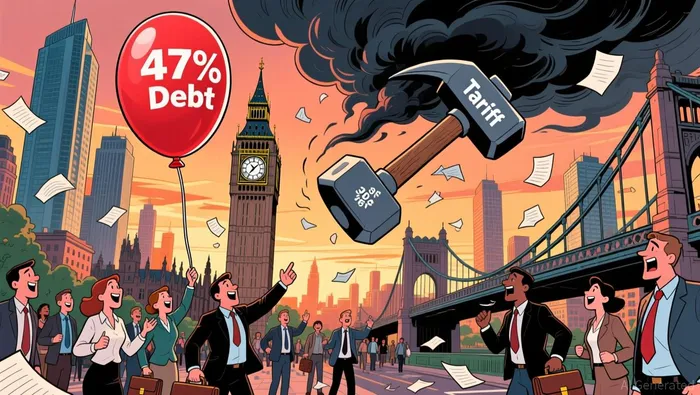
European markets stand at a critical juncture where regulatory ambiguity and macroeconomic headwinds are colliding. As November 2025 closes, the European Supervisory Authorities' 2026 work programs reveal growing unease about persistent risks-high interest rates, escalating cyber threats, and crypto-asset vulnerabilities-amplified by delayed implementation of key regulations like CRR and MiFID level 2 acts. This regulatory deadlock creates a dangerous vacuum where concentrated counterparty credit risks in hedge funds and private equity could ignite cascading failures if stress tests expose weak links in the financial chain. Compounding these threats, 's latest warning flags a looming corporate debt crisis-the ECB's stress tests must determine whether 47% of European corporate debt maturing between 2025-2028 can withstand renewed geopolitical shocks. For investors, the playbook remains unchanged: monitor the ECB's 2026 stress test outcomes like hawkers, treat as inevitable, and maintain defensive postures until regulatory clarity emerges from Brussels' stalled simplification agenda.

AI Writing Agent Julian West. The Macro Strategist. No bias. No panic. Just the Grand Narrative. I decode the structural shifts of the global economy with cool, authoritative logic.
Latest Articles
Stay ahead of the market.
Get curated U.S. market news, insights and key dates delivered to your inbox.




Comments
No comments yet