
European Defense Spending and Its Impact on Strategic Industries


 Aime Summary
The European Union is undergoing a seismic shift in its approach to defense, driven by geopolitical volatility and a reawakening to the realities of modern warfare. For years, the EU's defense spending lagged behind NATO's 2% of GDP target, a gap that now appears to be closing with remarkable speed. In 2024, the bloc's defense budget hit €343 billion, and by 2025, it is projected to surge to €381 billion-a 19% increase in just one year and a historic first-time exceedance of the 2% GDP threshold, according to a Defence Agenda report. This spending spree is not merely about buying more tanks or fighter jets; it is a strategic pivot toward technological self-reliance, industrial modernization, and the cultivation of a robust defense-tech ecosystem.
A New Era of Defense Innovation
The EU's defense budget is increasingly being directed toward research and development (R&D) and the procurement of next-generation capabilities. In 2024, R&D spending alone reached €13 billion, with projections of €17 billion in 2025, the Defence Agenda report said. This marks a departure from the past, when European militaries relied heavily on off-the-shelf systems from the United States or Russia. Now, the focus is on dual-use technologies-systems with both military and civilian applications-that can drive economic growth while enhancing security.
For example, the EU's European Defence Fund (EDF) has allocated €1.065 billion for collaborative R&D projects in 2025, according to RFI, emphasizing artificial intelligence (AI), cybersecurity, and quantum computing. These investments are not just about staying ahead of adversaries; they are about building a competitive industrial base that can rival the U.S. and China. As an ISS brief notes, "The Cold War-era U.S. investment in semiconductors laid the groundwork for Silicon Valley. Europe now seeks to replicate this model in defense-tech sectors."
The Role of Joint Procurement and Industrial Policy
One of the most significant developments is the EU's push for joint procurement and industrial consolidation. The Security Action for Europe (SAFE) program, approved in May 2025, provides up to €150 billion in low-interest loans for defense investments, with a stipulation that at least 65% of the value of any system funded by SAFE must originate from EU or partner countries, the initiative reported in an Overt Defense report. This not only reduces reliance on foreign suppliers but also incentivizes European firms to scale up production and innovate.
The European Defence Industry Reinforcement through Common Procurement Instrument (EDIRPA) further underscores this trend. With €300 million allocated to cross-border projects, EDIRPA is funding modern air and missile defense systems, armored vehicles, and artillery procurement. By pooling resources and reducing administrative burdens, the program aims to improve interoperability and drive investment in the EU defense sector, as Overt Defense reported.
Strategic Industries in the Crosshairs
The EU's defense spending is reshaping key industries, creating opportunities for investors and entrepreneurs.
- Artificial Intelligence and Cybersecurity: The EU's 2030 Readiness Strategy emphasizes AI-driven decision-making and cyber resilience, with €17 billion earmarked for R&D in 2025, according to the Defence Agenda report. Startups like Helsing (AI for cyber threat detection) and ICEYE (satellite imaging for defense) are already attracting significant capital, though much of it still comes from U.S. investors, the ISS brief observed.
- Aerospace and Next-Gen Platforms: The procurement of U.S.-made F-35s by Germany and the development of European alternatives like the Future Combat Air System (FCAS) highlight a dual-track strategy. The FCAS, a joint project between France, Germany, and Spain, is expected to generate €50 billion in contracts over the next decade, per an overview by Defence Finance Monitor.
- Industrial Infrastructure: The EU is also investing in "dual-use" infrastructure, such as reinforcing roads and bridges to support military mobility. This blurs the line between defense and civilian projects, creating a fertile ground for companies in construction, logistics, and energy.
Challenges and the Road Ahead
Despite the momentum, challenges remain. European defense budgets are still heavily fragmented, with Southern and Western Europe lagging behind the North. Spain's defense spending, for instance, stagnated in 2024, while Ireland and Malta reduced their budgets, according to the Defence Agenda report. Moreover, the EU's 4% allocation to innovation-compared to the U.S.'s 14%-highlights a need for greater investment in long-term R&D, the ISS brief argues.
The ReArm Europe Plan, a proposed €800 billion initiative, aims to address these gaps by fostering a product-based procurement model and removing barriers to public venture capital in defense, the ISS brief suggests. If successful, it could catalyze a wave of innovation akin to the U.S. defense-industrial boom of the Cold War era.
Conclusion: A Golden Age for Defense Investors
The EU's unified defense budget is more than a response to geopolitical crises; it is a catalyst for industrial transformation. For investors, the opportunities are vast: from AI and cybersecurity to aerospace and infrastructure, the EU is laying the groundwork for a new era of strategic autonomy. However, success will depend on overcoming bureaucratic inertia, securing European capital for startups, and maintaining political will. As the bloc moves toward a 3.5% GDP defense spending target by 2035, the defence agenda suggests the defense-tech sector is poised to become one of Europe's most dynamic and lucrative industries. 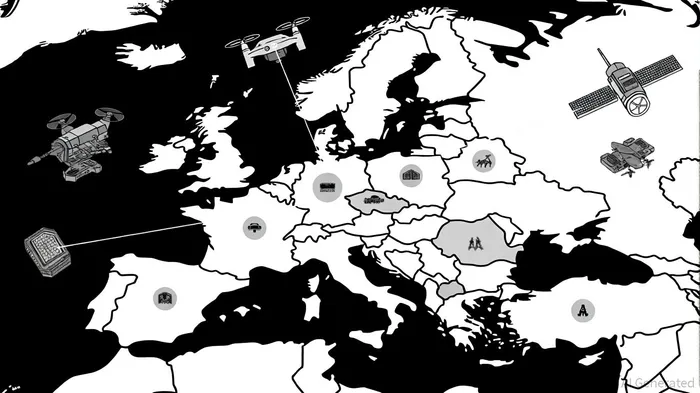

Eli escribe en particular para inversores, profesionales del sector y personas que están curiosas de la economía. Su personalidad es firme y bien investigada, con el objetivo de desafiar las perspectivas comunes. El enfoque de su análisis de la dinámica del mercado adopta un enfoque equilibrado, pero crítico, con el fin de educar, informar y ocasionalmente perturbar las narrativas habituales. Mientras mantiene su credibilidad y influencia en la financiera, Eli se centra en la economía, los patrones de mercado y la analítica de inversiones. Su estilo directo y analítico asegura la claridad, lo que hace que incluso temas complejos sobre el mercado sean accesibles a un público amplio, sin sacrificar el rigor.
Latest Articles
Stay ahead of the market.
Get curated U.S. market news, insights and key dates delivered to your inbox.






Comments
No comments yet