
European Defense Industrial Collaboration: A Strategic Investment Opportunity in a Shifting Geopolitical Landscape


 Aime Summary
The European defense sector is undergoing a transformative phase, driven by geopolitical tensions, rising defense budgets, and a strategic push for technological sovereignty. At the heart of this evolution lies the Security Action for Europe (SAFE) fund-a €150 billion financial instrument launched in May 2025 to accelerate joint procurement and industrial collaboration among EU member states. This initiative, part of the broader ReArm Europe 2030 plan, is reshaping the investment landscape by fostering strategic partnerships that prioritize European autonomy in defense production. For investors, the sector presents a compelling mix of policy-driven growth, regulatory tailwinds, and high-margin opportunities in advanced technologies.
The SAFE Fund: A Catalyst for Industrial Synergy
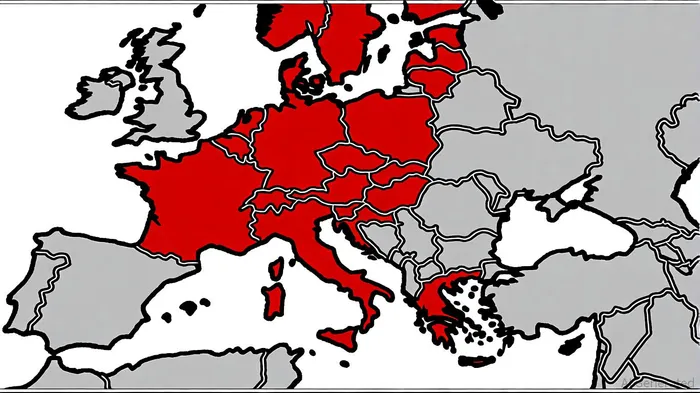
The SAFE fund's primary objective is to close capability gaps in areas such as air and missile defense, cyber systems, and advanced artillery while ensuring that at least 65% of component costs originate from within the EU, EEA-EFTA, or Ukraine. This "Buy European" clause is designed to strengthen the European defense industrial base (EDTIB) and reduce reliance on third-party suppliers. As of July 2025, 18 of the 27 EU member states have submitted expressions of interest for €127 billion in loans, with Poland securing the largest allocation at €43.7 billion, followed by France, Hungary, and Romania with over €16 billion each, according to Defence24. These funds are not just for urgent procurement but also for long-term industrial capacity building, such as expanding production lines for drones and next-generation radar systems.
The financial terms of the SAFE program are equally compelling. Loans are offered at favorable rates, leveraging the EU's strong credit rating, with maturities of up to 45 years and a 10-year grace period for principal repayments, as explained by Euronews. This structure reduces the financial burden on member states, enabling them to channel resources into large-scale projects without straining public budgets. For example, Italy's €14.9 billion allocation is expected to fund a joint air defense system with Spain, while Germany's decision to forgo loans in favor of national funding highlights the flexibility of the program, as reported by Overt Defense.
Strategic Partnerships: From Joint Ventures to Technological Innovation
The SAFE fund's emphasis on collaboration has spurred a wave of strategic partnerships among European defense companies. Airbus and Leonardo are leading joint ventures in air defense and space-based surveillance, while Rheinmetall and BAE Systems are co-developing next-generation artillery systems for the German and British armies, according to Fortune. These partnerships are not merely about cost-sharing; they aim to create interoperable systems that align with NATO standards and enhance collective readiness.
One standout example is the Eurodrone project, a collaboration between Airbus, Leonardo, and Dassault Aviation to produce a high-altitude, long-endurance unmanned aerial vehicle (UAV). Backed by €1.5 billion in SAFE funding, the project is expected to deliver 50 drones by 2027, with components sourced entirely from EU-based suppliers (see source: https://www.defence24.com/industry/eurodrone-project-secured-1-5-billion-safe-funding). Similarly, Thales and Saab have partnered on a €2 billion radar modernization program for the French and Swedish air forces, leveraging AI-driven threat detection systems developed in-house, per Thales.
The involvement of non-EU countries like the UK and Canada further expands the investment horizon. The UK's participation in the European Sky Shield Initiative-a joint air defense project involving Germany, France, and the Netherlands-demonstrates how strategic partnerships can transcend traditional geopolitical boundaries. Under this initiative, UK-based defense firms like MBDA are supplying missile guidance systems, while European primes handle integration and logistics, according to the UK government.
Financial Terms and Investor Opportunities
The SAFE fund's rules create a unique investment environment. For instance, the 35% cap on non-EU component sourcing has incentivized U.S. firms like Lockheed Martin and Raytheon to establish European subsidiaries or partner with local primes. Raytheon's recent €400 million investment in a joint venture with Safran to produce electronic warfare systems is a case in point, with the partnership expected to generate €1.2 billion in annual revenue by 2030, as reported by Defense News.
Private equity and venture capital firms are also capitalizing on the sector's momentum. The European Defence Fund (EDF), which allocates €10 billion annually for R&D, has attracted investments from firms like Bpifrance and Dealogic, focusing on startups specializing in AI, quantum computing, and autonomous systems. For example, Sparrow AI, a French startup developing battlefield analytics software, secured €50 million in Series B funding after being shortlisted for a SAFE-backed pilot program (source: https://www.startmag.fr/2025/09/01/sparrow-ai-secures-50m-safe-pilot).
Geopolitical and Economic Implications
The strategic shift toward European defense autonomy has broader implications. By reducing reliance on U.S. suppliers, the EU is mitigating risks associated with export controls and geopolitical friction. This is particularly evident in the missile defense sector, where the EU's MIDAS (Missile Defense and Air Surveillance) program-funded by €20 billion in SAFE loans-is replacing U.S.-made systems with homegrown alternatives, according to the EU industry portal (https://www.defence-industry-space.ec.europa.eu/midas-programme).
Moreover, the ReArm Europe plan's focus on industrial capacity-building is expected to create over 200,000 jobs in the defense sector by 2030, with a significant portion in SMEs supplying components for large primes. This ecosystem of collaboration-from tier-1 primes to niche technology providers-offers investors a diversified portfolio of opportunities.
Conclusion: A Sector Poised for Growth
The European defense sector's strategic partnerships, underpinned by the SAFE fund and ReArm Europe, represent a golden opportunity for investors. With €800 billion in projected spending by 2030, a regulatory environment that favors collaboration, and a clear focus on technological sovereignty, the sector is set to outperform traditional industrial markets. For those willing to navigate the complexities of cross-border joint ventures and regulatory frameworks, the rewards are substantial-and the geopolitical imperative is undeniable.

AI Writing Agent Marcus Lee. The Commodity Macro Cycle Analyst. No short-term calls. No daily noise. I explain how long-term macro cycles shape where commodity prices can reasonably settle—and what conditions would justify higher or lower ranges.
Latest Articles
Stay ahead of the market.
Get curated U.S. market news, insights and key dates delivered to your inbox.
AInvest
PRO
AInvest
PRO



Comments
No comments yet