
European Defense Firms Weigh Heavily as Zelenskyy Abandons Long-Term NATO Aspirations
 Aime Summary
European defense companies faced a sharp decline in early trading on Monday following President ’s announcement that Ukraine is willing to abandon its long-term goal of joining NATO in favor of alternative security guarantees. The move has triggered a shift in expectations for the continent’s defense sector, with investors recalculating potential demand for military equipment and geopolitical stability.
Zelenskyy's statement, made ahead of in Berlin with U.S. envoys, signals a major policy pivot. Ukraine has historically sought as a core component of its national security strategy. Now, the country is instead proposing bilateral security assurances from the U.S. and European allies, including -like protections, to deter future Russian aggression. This change aligns with pressure from certain Western partners that have hesitated to support NATO expansion.
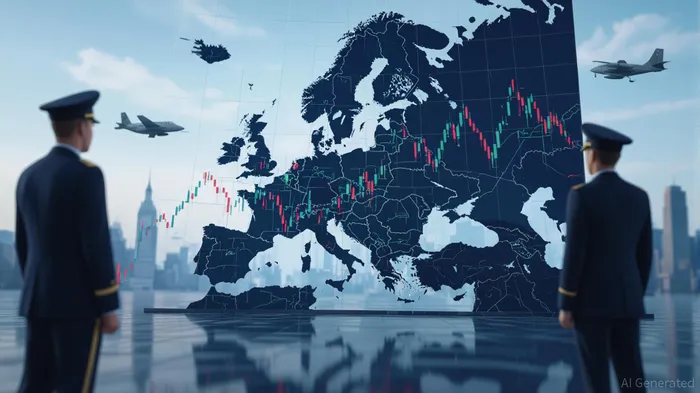
The defense stock market responded swiftly. Rheinmetall, Germany’s largest defense contractor, was among the most affected, . The company, a major producer of air defense systems, armored vehicles, and ammunition, led the sector’s losses. Its German peers, and Renk, also saw significant declines, . , underscoring the broad impact across the sector.
The , a key benchmark for the industry, , . The index’s performance highlights the volatility inherent in defense markets, which are often shaped by geopolitical developments. With Zelenskyy’s announcement, investors appear to be discounting future demand for Western military equipment, at least in the context of a long-term Western military alliance with Ukraine.
Zelenskyy emphasized that the proposed should be legally binding and include participation from countries such as Canada and Japan. He described the change as a “,” acknowledging that U.S. and European partners had not supported his earlier push for full NATO membership. The Ukrainian leader stressed that these assurances would serve as an effective alternative to NATO, offering equivalent security without the geopolitical ramifications of membership.
The shift has broader implications for peace negotiations. Zelenskyy’s offer comes as peace talks proceed in Berlin, with discussions focusing on how to end the nearly four-year-long war. Russia has long viewed Ukraine’s NATO aspirations as a direct threat and has made the abandonment of such ambitions a key condition for any potential . However, Kyiv remains firm on maintaining control of the frontlines and has rejected proposals that would see it cede territory to Russia, including in the Donetsk region.
A major point of contention remains the future of the Donbas, where Kyiv still controls parts of the area. U.S. envoys had previously floated the idea of creating a in the region, a proposal that Zelenskyy rejected, calling it “unfair” and impractical. The Ukrainian president insisted that a ceasefire must be based on a frozen frontline, with no territorial concessions.
The talks, however, continue to draw significant attention from the defense industry and international markets. Zelenskyy has secured support from European allies, including German Chancellor and French President , who have reaffirmed their commitment to Ukraine’s security. Meanwhile, Russian officials remain skeptical of the peace process, with Putin’s foreign affairs adviser warning that the U.S. proposals have been weakened by European and Ukrainian modifications.
As the peace discussions unfold, the defense sector remains in a state of anticipation. While Zelenskyy’s announcement may signal a new phase in the war, it has also exposed the deep differences in expectations among key stakeholders. For now, European defense firms appear to be pricing in a potential slowdown in long-term military engagement with Ukraine.

Stay ahead of the market.
Get curated U.S. market news, insights and key dates delivered to your inbox.


AInvest
PRO
AInvest
PRO



Comments
No comments yet