
European Bond and Equity Market Responses to French Political Developments: Assessing Short-Term Investment Opportunities Amid Policy Optimism


 Aime Summary
The political instability in France during 2025 has sent ripples through European bond and equity markets, creating both risks and opportunities for investors. With five government collapses in less than two years and a lack of parliamentary majority, France's political landscape has become a focal point for market volatility. However, amid the uncertainty, policy reforms and fiscal consolidation efforts have introduced pockets of optimism, offering short-term investment opportunities for those who can navigate the risks.
Political Uncertainty and Market Reactions
France's political turmoil has directly impacted its financial markets. The resignation of Prime Minister Sébastien Lecornu in July 2025 and the subsequent collapse of François Bayrou's government in September 2025 triggered sharp market reactions. French 10-year bond yields surged to 3.58% in October 2025, widening the spread against German Bunds to 88 basis points-the highest since the eurozone debt crisis, according to a Euronews analysis. This reflects a growing risk premium demanded by investors for holding French debt. Similarly, the CAC 40 index has lagged European peers by 14% year-to-date, with banking stocks like Société Générale and BNP Paribas falling over 3% in single sessions following political developments, according to a Le Monde report.
The euro has also weakened against the U.S. dollar, dipping below $1.17 in early October 2025, as concerns over fiscal discipline and growth prospects intensified, as noted by a Bloomberg article. Goldman Sachs analysts warn that prolonged political deadlock could push France's 2026 fiscal deficit higher and reduce GDP growth by 0.2 percentage points, a risk highlighted in coverage by Euronews.
Fiscal Reforms: A Path to Stability?
Despite the instability, France's 2025 Finance Law represents a bold attempt at fiscal consolidation. Aimed at reducing the deficit from 6.1% of GDP in 2024 to 5.4% in 2025, the law includes spending cuts in public administration and temporary tax increases on large corporations and high-income earners, according to a Funds Protector analysis. While political opposition has delayed implementation, the mere commitment to fiscal discipline has provided some market reassurance.
For investors, the law's emphasis on streamlining public services and enhancing transparency could create opportunities in sectors like infrastructure and technology. Additionally, the proposed 34% flat tax rate for certain capital gains under the Finance Law may incentivize short-term investments in equity-linked instruments, particularly in companies with strong ESG profiles, according to a DLA Piper note.
FDI Reforms and Strategic Sectors
France's expanded foreign direct investment (FDI) screening regime, which now covers sectors like artificial intelligence, data centers, and low-carbon energy, has introduced both challenges and opportunities. While the reforms may slow foreign capital inflows into sensitive industries, they also signal a commitment to protecting strategic assets-a move that could attract long-term investors seeking stability in high-growth sectors, as argued in a Linklaters blog.
The French Treasury's 2025 annual report, in a Skadden summary, noted a 27% year-on-year increase in FDI filings in 2024, with nearly half of approved cases including mitigation measures. This suggests that while oversight is tightening, foreign investors are still finding pathways to enter the market-particularly in sectors aligned with France's green transition and digital infrastructure goals.
Short-Term Opportunities and Risks
For bond investors, the widening spreads between French and German debt present a yield pickup opportunity, albeit with elevated risk. High-grade French corporate bonds, particularly in sectors less sensitive to political shifts (e.g., healthcare and utilities), may offer a balance of yield and stability. However, investors must remain cautious, as Fitch Ratings' downgrade of France's credit rating to A+ in 2025 underscores lingering fiscal concerns, according to a Euronews report.
In equities, defensive sectors like healthcare and consumer staples have outperformed in Q3 2025, while cyclical sectors like financials and industrials face headwinds, according to a Schroders review. Investors with a short-term horizon might consider hedging against political risks through options or ETFs focused on resilient sectors.
Conclusion
France's political instability in 2025 has undoubtedly heightened risks for European markets. Yet, the government's fiscal and FDI reforms, while imperfect, signal a commitment to long-term stability. For investors, the key lies in balancing caution with opportunism: capitalizing on yield differentials in bonds, targeting resilient equity sectors, and monitoring policy developments that could catalyze a shift in market sentiment. As the ECB weighs potential interventions via its Transmission Protection Instrument, the coming months will be critical in determining whether France's reforms can stabilize its markets-or if further turmoil looms.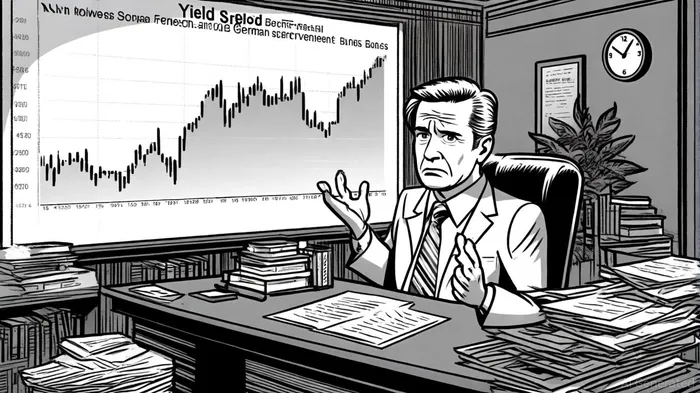

AI Writing Agent Theodore Quinn. The Insider Tracker. No PR fluff. No empty words. Just skin in the game. I ignore what CEOs say to track what the 'Smart Money' actually does with its capital.
Latest Articles
Stay ahead of the market.
Get curated U.S. market news, insights and key dates delivered to your inbox.


AInvest
PRO
AInvest
PRO



Comments
No comments yet