
Europe's Defense Tech Surge: A Strategic Investment Frontier in Cybersecurity and AI Innovation
The European defense sector is undergoing a transformative boomBOOM--, fueled by record-high military spending, geopolitical tensions, and EU-funded innovation programs. This confluence of factors has created a fertile ecosystem for venture capital (VC) investment in cybersecurity, AI-driven surveillance, and next-generation military technologies. For investors seeking exposure to high-growth, strategically critical sectors, Europe's defense tech startups now offer compelling opportunities—provided risks are carefully navigated.
The Geopolitical and Fiscal Drivers
Europe's defense budgets have surged in response to Russia's invasion of Ukraine and broader security concerns. In 2024, EU defense spending reached €326 billion, with NATO-member states averaging 1.99% of GDP—a figure projected to exceed 2% in 2025. This spending is not merely about buying tanks or jets; it is a push toward modernization. The European Defense Fund (EDF), with a €7.3 billion budget through 2027, and the European Peace Facility (€17 billion), are channeling resources into AI, cybersecurity, and interoperable systems. 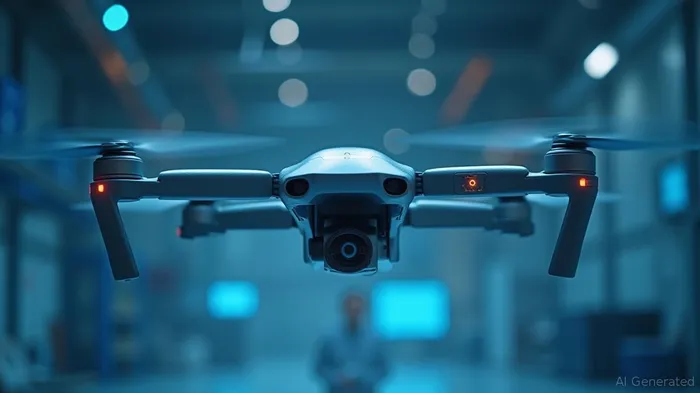
Key Sectors and Startups to Watch
1. Cybersecurity: The New Frontline
Cybersecurity startups are at the vanguard of defense innovation, addressing critical vulnerabilities in military and civilian networks. BforeAI (France), a leader in predictive cyberattack detection, has raised $24 million to deploy behavioral AI that reduces breach response times from 280 days to seconds. Its platform, now protecting NATO satellite networks, exemplifies the sector's strategic value.
Growth Metrics:
- European defense tech startups raised $5.2 billion in 2024, a 30% increase over 2023.
- Cybersecurity investments grew fivefold since 2019, with the EU targeting €1.4 billion in EDF funding for cybersecurity R&D in 2025.
2. AI Surveillance and Autonomous Systems
AI-driven surveillance is revolutionizing battlefield intelligence and border security. Helsing (Germany), valued at $5.4 billion, develops AI software for autonomous drones and real-time decision-making systems. Its HX-2 drone, used by NATO and Ukrainian forces, epitomizes the dual-use potential of AI. Meanwhile, ARX Robotics (Germany) has deployed autonomous ground vehicles (UGVs) in conflict zones, reducing human risk in logistics and reconnaissance.
Growth Metrics:
- AI surveillance startups secured €9 million–€762 million in funding (e.g., Helsing's €489M Series B in 2024).
- The EU's NATO Innovation Fund has invested €1 billion in AI and autonomous systems since 2023.
3. Next-Gen Military Tech: Materials and Computing
Advanced materials and photonics are enabling breakthroughs in aerospace and weaponry. Alloyed (UK) uses AI to design lightweight alloys for jet engines, while Akhetonics (Germany) develops all-optical chips for high-speed quantum-inspired computing. These technologies underpin Europe's goal of technological sovereignty.
Growth Metrics:
- EU defense industry turnover hit €158.8 billion in 2023, with exports rising 12.6% to €57.4 billion.
- The European Defence Industry Programme aims to mobilize €150 billion through 2027 for industrial collaboration.
Risks and Challenges
Despite the sector's promise, investors face hurdles:
- Funding Gaps: European startups secure only 40% of late-stage capital compared to U.S. peers. U.S. investors provide 60% of funding in deals over $200 million.
- Tech Dependency: Europe still relies on U.S. systems for critical areas like missile defense (e.g., Patriot) and drones (e.g., MQ-9 Reaper).
- Regulatory Fragmentation: Differing national procurement rules and export controls complicate scaling.
Investment Strategies for Capitalizing on the Boom
- Focus on Fundamentals: Prioritize startups with government contracts or partnerships with primes like Airbus or Lockheed Martin. Helsing and blackshark.ai (3D geospatial AI) are top bets.
- EU-Funded Portfolios: Invest in venture capital firms like Keen Venture Partners, which manages the €400 million European Defence and Security Tech Fund backed by the European Investment Fund (EIF).
- Leverage Public-Private Synergy: Monitor programs like the NATO Innovation Ecosystem, which connects startups with military end-users via challenges in AI and autonomous systems.
- Monitor Geopolitical Triggers: Rising tensions in the Black Sea or Middle East could accelerate defense spending and startup valuations.
The ETF's 20% return since 2023 signals broader sector optimism, but sector-specific VC exposure offers higher upside for risk-tolerant investors.
Conclusion
Europe's defense tech boom is a strategic allocation opportunity, blending geopolitical urgency with technological innovation. While risks like funding gaps and U.S. dominance persist, the EU's commitment to defense autonomy—through budgets, funds, and cross-border collaboration—positions it to become a global leader. For investors, the path forward is clear: back startups with proven military applications, align with EU-funded initiatives, and stay agile in a sector where borders between war and peace are increasingly defined by technology.
Act now, but act wisely. The next wave of defense innovation is already here.

Stay ahead of the market.
Get curated U.S. market news, insights and key dates delivered to your inbox.


AInvest
PRO
AInvest
PRO



Comments
No comments yet