
Europe Bolsters Defense as U.S. Role in NATO Uncertain
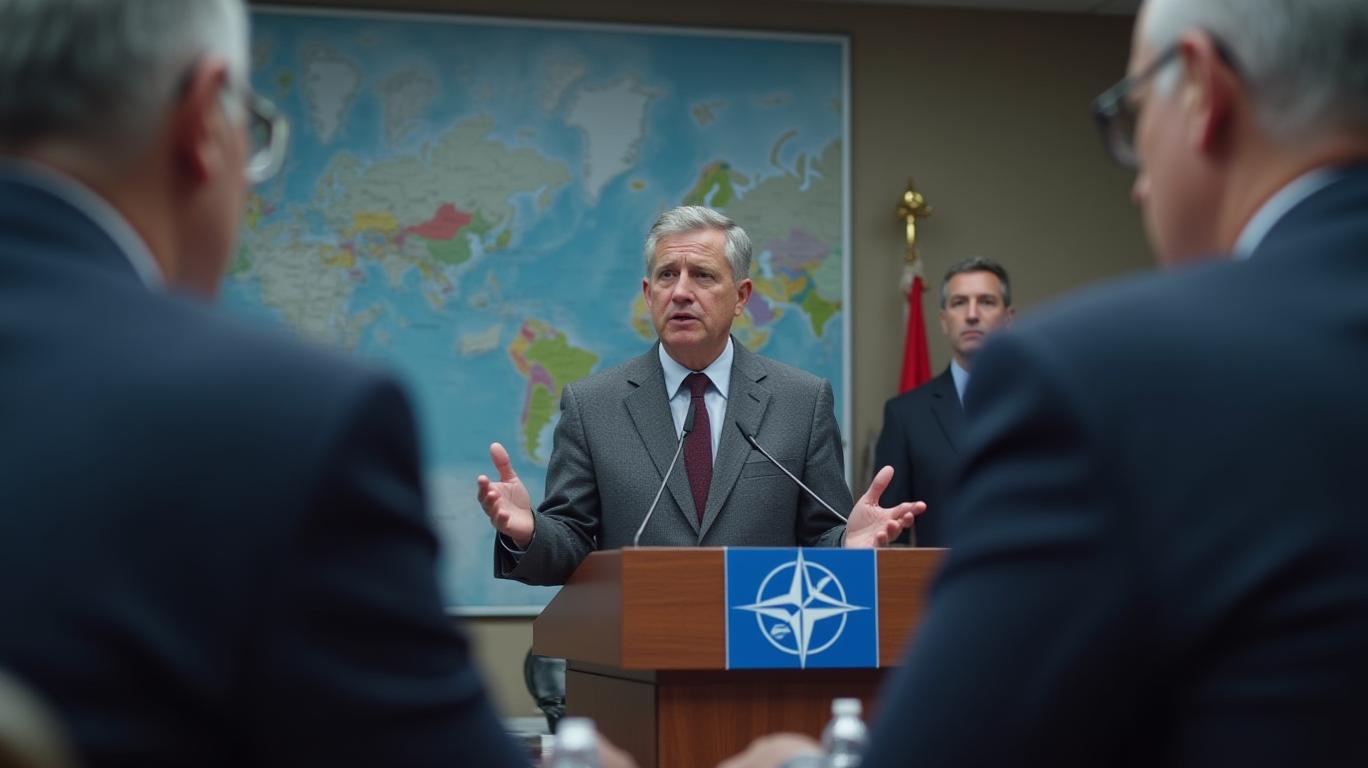
As the United States' dedication to European security fluctuates, the European Union is swiftly bolstering its defenses, forming new alliances, and reassessing its approach to deterrence. Recent demands for U.S. withdrawal from NATO have sparked intense debate within Europe, pushing leaders to contemplate the continent's long-term security more seriously. European leaders have historically acknowledged that the EU has been perceived as a subordinate to the U.S., and that Europe should prioritize its own interests, autonomy, and identity. However, these views have not translated into action due to differing approaches and particular interests.
The latest policy statements from the U.S. administration have created confusion and uncertainty among European allies. Key questions have emerged: Will the U.S. remain in NATO? Why are some advocating for Europe to fund its own defense? Will Europe be involved in peace negotiations to end the war in Ukraine? Will Europe be included in other globally significant discussions? Regarding NATO, the allianceAENT-- has maintained a low profile recently, a decision driven by Washington rather than Brussels, which has visibly favored diplomacy over military action. If this trend continues, NATO's future could be dissolution, a heavy remnant from the ColdCOLD-- War era.
While NATO has been pivotal in European security during the Cold War, its relevance has waned in today's multipolar world. Power is becoming more decentralized, and modern international relations are shaped by fluid, pragmatic coalitions based on mutual interests. Europe has the resources and experience to maintain its own security without the U.S. However, the real challenge is not feasibility but political will and strategic vision. Europe's focus on expanding military capabilities is driven by a superficial agenda. Prioritizing militarization over economic renewal and multilateralism is not the solution but part of the problem.
Currently, the U.S. and Russia appear close to agreeing on a settlement for the war in Ukraine and a broader rapprochement between Washington and Moscow. In this context, it is crucial for Europeans to reassess their security situation and defense capabilities. Europe must also consider whether it wants a future where Russia is a permanent enemy, trapped in a new Cold War and an arms race fueled by distrust and animosity. If the U.S. were to withdraw from NATO, Europe's defense capabilities, particularly in intelligence and logistics, would be significantly weakened due to their reliance on U.S. involvement. This vulnerability reflects NATO's original design: an institution projecting American hegemony over Europe, offering protection while imposing dependence.
Europe possesses the economic, financial, and technological means to establish its own defense system. However, for Europe to effectively reduce its reliance on NATO, a broad political consensus among governments, political elites, and the wider population is essential. The situation has become very fluid, and if key European governments can propose concrete, effective, and plausible defense strategies, the strategic climate in Europe could shift rapidly. Organizing Europe's self-defense must be accompanied by diplomatic initiatives aimed at peaceful coexistence in Europe and cooperation with other powers.
The post-World War II world order, particularly for the Western world, has come to an end. Europeans must acknowledge this reality and prepare for a new world. The unilateralism of the U.S. did not begin with the new administration, but it has reached unprecedented levels. This shift should help end the strategic blindness that has trapped the EU for too long. The fact that the new German chancellor has stated that the EU must achieve independence from the U.S. indicates that this shift is now recognized by more European leaders. European strategic autonomy is no longer a wish but a vital necessity. The EU has no other choice. In reality, the EU is perceived as an enemy by the current U.S. administration. On issues such as climate change, the UN, and multilateralism, the EU finds itself at odds with the U.S. On certain issues, the EU is even sometimes closer to China than to Washington.

Stay ahead of the market.
Get curated U.S. market news, insights and key dates delivered to your inbox.


AInvest
PRO
AInvest
PRO



Comments
No comments yet