
Europe's Ariane 6 Rocket Set to Launch Amid SpaceX Challenge
ByAinvest
Tuesday, Aug 12, 2025 2:08 am ET1min read
BA--
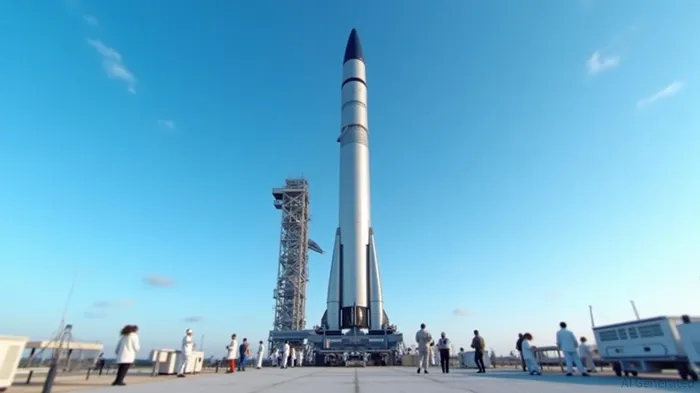
The Ariane 6 rocket, which made its debut in July 2024, is the centerpiece of Europe's efforts to reduce its reliance on SpaceX. The launch is expected to signal a potential break in the launch-services logjam that has been complicating plans for governments and commercial customers seeking alternatives to SpaceX. Clayton Swope, a senior fellow at the Center for Strategic and International Studies, notes that "getting a new rocket off the launchpad the first time is hard, but flipping over to production and launch at scale seems to be even harder" [2].
The Ariane 6's success is crucial for European countries seeking to build up their defense portfolio and compete with SpaceX's Starlink service. The rocket's launch comes on the same day as the scheduled third launch of a new rocket from United Launch Alliance (ULA), the joint venture between Boeing Co. and Lockheed Martin Corp. ULA's Vulcan rocket is also expected to launch on Tuesday, carrying a classified payload into geosynchronous orbit [1].
The European launch vehicle is one of several new rockets that have fallen behind schedule while SpaceX has increased the frequency of flights by its workhorse Falcon 9 rocket. The Ariane 6's success could help Europe chip away at SpaceX's dominance in the global launch market. The launch of the Ariane 6 and ULA's Vulcan rockets could signal a shift in the launch-services landscape, providing more options for governments and commercial customers seeking to build out new satellite networks.
References:
[1] https://www.nasaspaceflight.com/2025/08/vulcan-ariane-starlink-missions/
[2] https://www.bloomberg.com/news/articles/2025-08-12/europe-s-ariane-6-rocket-slated-to-launch-in-spacex-challenge
LMT--
VMC--
WKHS--
The Ariane 6 rocket, a key part of Europe's space ambitions, is set to launch for its third mission. The rocket will send an Airbus-made satellite into orbit for weather forecasting and climate monitoring. The launch comes as SpaceX continues to dominate the global launch market, having conducted over half of all global launches last year. The success of the Ariane 6 is crucial for European countries seeking to build up their defense portfolio and compete with SpaceX's Starlink service.
The European Space Agency's (ESA) Ariane 6 rocket is set to launch its third mission, marking a significant milestone in Europe's space ambitions. The launch, scheduled for Tuesday, August 12, at 8:37 p.m. New York time, will carry an Airbus-made satellite into polar orbit for weather forecasting and climate monitoring. This mission comes as SpaceX continues to dominate the global launch market, having conducted over half of all global launches last year [1].The Ariane 6 rocket, which made its debut in July 2024, is the centerpiece of Europe's efforts to reduce its reliance on SpaceX. The launch is expected to signal a potential break in the launch-services logjam that has been complicating plans for governments and commercial customers seeking alternatives to SpaceX. Clayton Swope, a senior fellow at the Center for Strategic and International Studies, notes that "getting a new rocket off the launchpad the first time is hard, but flipping over to production and launch at scale seems to be even harder" [2].
The Ariane 6's success is crucial for European countries seeking to build up their defense portfolio and compete with SpaceX's Starlink service. The rocket's launch comes on the same day as the scheduled third launch of a new rocket from United Launch Alliance (ULA), the joint venture between Boeing Co. and Lockheed Martin Corp. ULA's Vulcan rocket is also expected to launch on Tuesday, carrying a classified payload into geosynchronous orbit [1].
The European launch vehicle is one of several new rockets that have fallen behind schedule while SpaceX has increased the frequency of flights by its workhorse Falcon 9 rocket. The Ariane 6's success could help Europe chip away at SpaceX's dominance in the global launch market. The launch of the Ariane 6 and ULA's Vulcan rockets could signal a shift in the launch-services landscape, providing more options for governments and commercial customers seeking to build out new satellite networks.
References:
[1] https://www.nasaspaceflight.com/2025/08/vulcan-ariane-starlink-missions/
[2] https://www.bloomberg.com/news/articles/2025-08-12/europe-s-ariane-6-rocket-slated-to-launch-in-spacex-challenge
Stay ahead of the market.
Get curated U.S. market news, insights and key dates delivered to your inbox.
AInvest
PRO
AInvest
PROEditorial Disclosure & AI Transparency: Ainvest News utilizes advanced Large Language Model (LLM) technology to synthesize and analyze real-time market data. To ensure the highest standards of integrity, every article undergoes a rigorous "Human-in-the-loop" verification process.
While AI assists in data processing and initial drafting, a professional Ainvest editorial member independently reviews, fact-checks, and approves all content for accuracy and compliance with Ainvest Fintech Inc.’s editorial standards. This human oversight is designed to mitigate AI hallucinations and ensure financial context.
Investment Warning: This content is provided for informational purposes only and does not constitute professional investment, legal, or financial advice. Markets involve inherent risks. Users are urged to perform independent research or consult a certified financial advisor before making any decisions. Ainvest Fintech Inc. disclaims all liability for actions taken based on this information. Found an error?Report an Issue




Comments
No comments yet