
Europe's AI Crossroads: Reforms or Risk Falling Behind US?


 Aime Summary
Europe stands at a pivotal crossroads as artificial intelligence emerges as a potential catalyst for its next industrial revolution. The International Monetary Fund (IMF) has outlined a strategic roadmap for the continent to harness AI's transformative power, emphasizing that the technology could significantly boost productivity and economic growth-if policymakers act decisively to remove structural barriers. The IMF's analysis, published in late November 2025, underscores that AI adoption could yield cumulative productivity gains of 1.1% over five years in Europe, but this figure could expand substantially with pro-growth reforms.
The IMF's research identifies three key drivers of AI's productivity effects: the exposure of sectors and occupations to AI, the financial incentives for firms to adopt the technology, and the average productivity gains across roles. Unlike past automation waves, AI's impact is concentrated in knowledge-based sectors such as finance, healthcare, and software development, where it can automate complex tasks and augment human capabilities. For instance, AI's potential to streamline pharmaceutical research and development highlights its capacity to drive innovation in industries critical to Europe's economy.
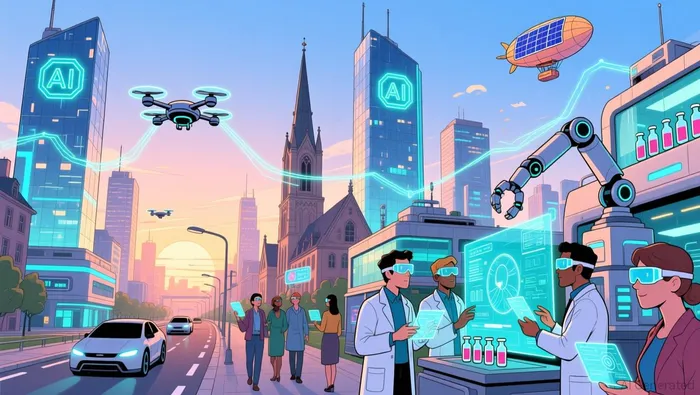
However, the benefits of AI will not be evenly distributed. Higher-income countries like Norway could see gains of up to 5% in the most optimistic scenarios, while lower-income economies such as Romania might only achieve marginal improvements. This disparity risks widening productivity gaps within Europe unless AI systems become more affordable and accessible. The IMF warns that without reforms, the continent may lag behind the United States, where AI is projected to boost annual productivity growth by 1% annually over the long term.
To unlock AI's full potential, the IMF recommends a multi-pronged approach. First, deepening the EU single market is critical to counter fragmentation. Harmonizing standards, removing cross-border service barriers, and opening protected sectors would reduce costs for AI development and adoption. Second, strengthening financial markets-particularly through a unified Capital Markets Union-would channel capital toward high-risk, high-reward AI ventures. Third, flexible labor markets and portable social protections are essential to support workers transitioning to AI-driven industries. Finally, energy markets must evolve to provide affordable, low-carbon electricity for data centers, aligning AI infrastructure with Europe's green transition goals.
The stakes are high. While AI's immediate productivity gains may seem modest compared to Europe's historically weak growth, the long-term implications are profound. The IMF notes that AI could catalyze new industries and value chains, much like the internet did in the 1990s. Yet, achieving this vision requires policymakers to strike a delicate balance between regulation and innovation. Overly rigid rules could stifle growth, while lax oversight risks ethical and data privacy pitfalls.
Europe's ability to act swiftly will determine whether it becomes a leader in the AI-driven economy or lags behind. The IMF's findings make one thing clear: the continent's future prosperity hinges on its willingness to embrace AI as a strategic asset and implement reforms that foster its widespread adoption.

Stay ahead of the market.
Get curated U.S. market news, insights and key dates delivered to your inbox.






Comments
No comments yet