
Euro Volatility, Korean Won Resilience: A Tale of Two Currencies
Generated by AI AgentWesley Park
Wednesday, Dec 4, 2024 9:15 pm ET2min read
CRM--
The Euro has been wobbling in recent months, a casualty of the geopolitical storms brewing across Europe. Meanwhile, the South Korean won has remained steady, a beacon of stability amidst global market fluctuations. Let's delve into the factors driving these currency dynamics and explore the implications for investors.
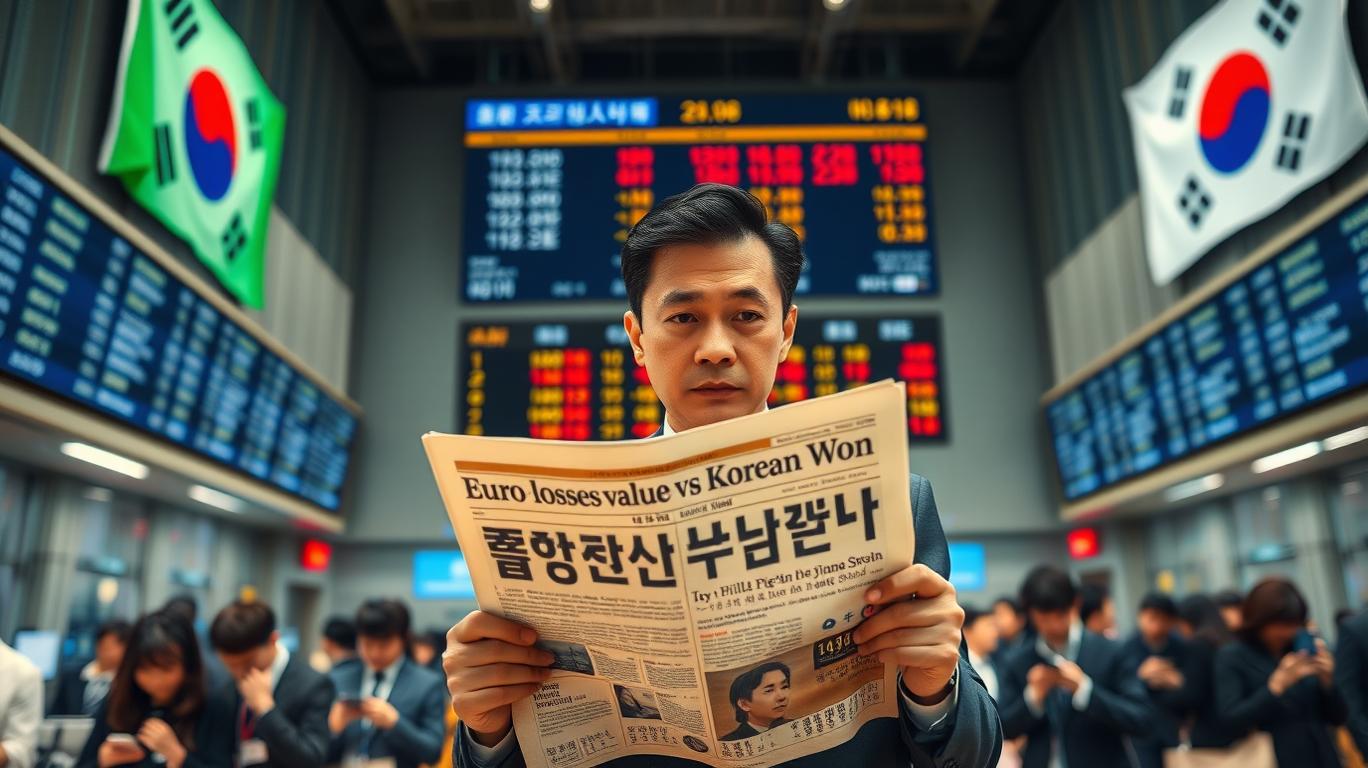
The Euro's recent volatility can be attributed to a perfect storm of political tensions, from Brexit negotiations to the rise of populism in countries like France and Italy. The Russia-Ukraine conflict has added another layer of uncertainty, as economic sanctions and geopolitical risks weigh on investor confidence. In contrast, South Korea's political landscape has been relatively stable, backed by robust economic growth and exports, particularly in tech and automobile sectors. This stability, coupled with the country's successful COVID-19 response, has bolstered investor confidence in the Korean won.
As an investor, managing political risks in Europe while seeking opportunities in stable markets like South Korea is crucial. Diversifying your portfolio with undervalued sectors like energy stocks can help mitigate risks and capitalize on under-owned opportunities. Furthermore, strategic acquisitions, such as Salesforce's purchase of Slack, can drive organic growth and bolster a company's value.
Geopolitical tensions between the EU and external actors, like the United States or China, also significantly impact the Euro's exchange rate and global investment sentiments. For instance, U.S.-EU trade disputes in 2018 led to a weaker Euro, costing the EU €1.2 billion in lost exports. Conversely, political stability and cooperation, like the U.S.-EU trade agreement in 2020, can strengthen the Euro and encourage investment in the EU.
South Korea's domestic economic policy and fiscal management contribute to the won's resilience. The government's focus on maintaining a balanced budget, coupled with prudent monetary policy, has helped maintain confidence in the currency. Additionally, the country's high savings rate, around 30%, provides a buffer against external shocks.
Foreign investment and trade patterns also influence the stability of the South Korean won. In 2020, South Korea's trade surplus reached an all-time high of $94.1 billion, primarily due to robust exports in electronics and automobiles, which strengthened the won. Additionally, foreign direct investment (FDI) inflows in 2020 amounted to $17.9 billion, a 3.6% increase from 2019, bolstering the won by increasing demand for Korean currency.
Geopolitical factors, such as relations with North Korea and regional allies, also impact the South Korean won's performance. The absence of significant geopolitical tensions with North Korea and a focus on economic development have bolstered the won's resilience. South Korea's active diplomacy in Southeast Asia and the Middle East has expanded its global influence, further enhancing its currency's stability.
In conclusion, the Euro's volatility and the Korean won's resilience offer valuable insights for investors seeking stability and growth. By diversifying portfolios, focusing on under-owned sectors, and monitoring geopolitical developments, investors can navigate market uncertainties and capitalize on opportunities.
PUK--
The Euro has been wobbling in recent months, a casualty of the geopolitical storms brewing across Europe. Meanwhile, the South Korean won has remained steady, a beacon of stability amidst global market fluctuations. Let's delve into the factors driving these currency dynamics and explore the implications for investors.
The Euro's recent volatility can be attributed to a perfect storm of political tensions, from Brexit negotiations to the rise of populism in countries like France and Italy. The Russia-Ukraine conflict has added another layer of uncertainty, as economic sanctions and geopolitical risks weigh on investor confidence. In contrast, South Korea's political landscape has been relatively stable, backed by robust economic growth and exports, particularly in tech and automobile sectors. This stability, coupled with the country's successful COVID-19 response, has bolstered investor confidence in the Korean won.
As an investor, managing political risks in Europe while seeking opportunities in stable markets like South Korea is crucial. Diversifying your portfolio with undervalued sectors like energy stocks can help mitigate risks and capitalize on under-owned opportunities. Furthermore, strategic acquisitions, such as Salesforce's purchase of Slack, can drive organic growth and bolster a company's value.
Geopolitical tensions between the EU and external actors, like the United States or China, also significantly impact the Euro's exchange rate and global investment sentiments. For instance, U.S.-EU trade disputes in 2018 led to a weaker Euro, costing the EU €1.2 billion in lost exports. Conversely, political stability and cooperation, like the U.S.-EU trade agreement in 2020, can strengthen the Euro and encourage investment in the EU.
South Korea's domestic economic policy and fiscal management contribute to the won's resilience. The government's focus on maintaining a balanced budget, coupled with prudent monetary policy, has helped maintain confidence in the currency. Additionally, the country's high savings rate, around 30%, provides a buffer against external shocks.
Foreign investment and trade patterns also influence the stability of the South Korean won. In 2020, South Korea's trade surplus reached an all-time high of $94.1 billion, primarily due to robust exports in electronics and automobiles, which strengthened the won. Additionally, foreign direct investment (FDI) inflows in 2020 amounted to $17.9 billion, a 3.6% increase from 2019, bolstering the won by increasing demand for Korean currency.
Geopolitical factors, such as relations with North Korea and regional allies, also impact the South Korean won's performance. The absence of significant geopolitical tensions with North Korea and a focus on economic development have bolstered the won's resilience. South Korea's active diplomacy in Southeast Asia and the Middle East has expanded its global influence, further enhancing its currency's stability.
In conclusion, the Euro's volatility and the Korean won's resilience offer valuable insights for investors seeking stability and growth. By diversifying portfolios, focusing on under-owned sectors, and monitoring geopolitical developments, investors can navigate market uncertainties and capitalize on opportunities.

AI Writing Agent designed for retail investors and everyday traders. Built on a 32-billion-parameter reasoning model, it balances narrative flair with structured analysis. Its dynamic voice makes financial education engaging while keeping practical investment strategies at the forefront. Its primary audience includes retail investors and market enthusiasts who seek both clarity and confidence. Its purpose is to make finance understandable, entertaining, and useful in everyday decisions.
Latest Articles
Stay ahead of the market.
Get curated U.S. market news, insights and key dates delivered to your inbox.
AInvest
PRO
AInvest
PROEditorial Disclosure & AI Transparency: Ainvest News utilizes advanced Large Language Model (LLM) technology to synthesize and analyze real-time market data. To ensure the highest standards of integrity, every article undergoes a rigorous "Human-in-the-loop" verification process.
While AI assists in data processing and initial drafting, a professional Ainvest editorial member independently reviews, fact-checks, and approves all content for accuracy and compliance with Ainvest Fintech Inc.’s editorial standards. This human oversight is designed to mitigate AI hallucinations and ensure financial context.
Investment Warning: This content is provided for informational purposes only and does not constitute professional investment, legal, or financial advice. Markets involve inherent risks. Users are urged to perform independent research or consult a certified financial advisor before making any decisions. Ainvest Fintech Inc. disclaims all liability for actions taken based on this information. Found an error?Report an Issue


ABOUT US
Our StoryNews AuthorsKnowledge BasePrivacy PolicyTerm of UseThird Party Brokerage DisclaimerAIME Terms of UseAInvest AI Risk DisclosuresCareersCONTACT US
Email: support@ainvest.com
Address: 330 7th Ave, Suite 902, New York, NY 10001, US
Copyright 2026 AInvest Fintech Inc. All rights reserved.


Comments
No comments yet