
Euro Strength and ECB Policy: Navigating Crosscurrents in Currency Markets
The European Central Bank's (ECB) decision to cut rates in June 2025, despite a strengthening euro, underscores the delicate balancing act central bankers face in an era of shifting inflation dynamics. With the euro nearing parity with the dollar and core inflation edging closer to the ECB's 2% target, the path forward for monetary policy—and its implications for investors—is fraught with uncertainty.
The ECB's Caution: A Data-Dependent Approach
The ECB's June policy meeting marked a pivotal moment. By trimming its deposit facility rate to 2.00%, the ECB acknowledged moderating inflation pressures while signaling no pre-commitment to further cuts. This cautious stance reflects its dual challenge: a euro that has surged 13.2% year-to-date against the dollar and core inflation that remains stubbornly elevated at 2.4% in 2025.
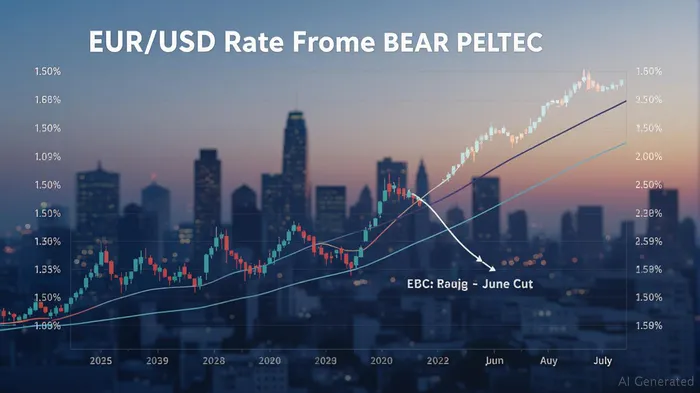
The ECB's inflation projections now assume headline inflation will dip to 1.6% in 2026—a 0.3% downward revision from March—driven by lower energy prices and the euro's appreciation. Yet core inflation,剔除 food and energy, shows less progress, suggesting underlying price pressures remain. This divergence highlights the ECB's dilemma: a strong currency may cool import costs but does little to tackle domestic wage and profit pressures.
Implications for Markets: A Triple Exposure
Foreign Exchange (Forex): The euro's rise to 1.17 USD/EUR as of July 7 has reshaped currency markets. Investors in euro-denominated assets face amplified volatility, especially those holding USD-linked liabilities. A prolonged strong euro could deter speculative inflows, but the ECB's reluctance to engineer depreciation—unlike the Federal Reserve's dollar-supportive rhetoric—means further appreciation is possible.
Bonds: The hunt for yield in Europe grows harder. German 10-year Bund yields, already below 2%, face downward pressure if inflation undershoots. For bond investors, the risk of prolonged low rates—coupled with a strong currency limiting carry-trade returns—requires a reevaluation of risk-adjusted returns.
Equities: Eurozone stocks, particularly export-reliant sectors like automotive and tech, face a double-edged sword. A strong euro can dampen profit margins for multinational firms, while low rates may support valuations. Investors should scrutinize companies' currency hedging practices and geographic diversification.
Risks Lurking Beneath the Surface
- Inflation Undershoot: If core inflation fails to stabilize near 2%, the ECB may face calls to cut rates further, prolonging low yields.
- Geopolitical Volatility: Trade disputes and energy supply risks could disrupt the ECB's inflation forecasts, amplifying market turbulence.
- Low-Yield Trap: Prolonged sub-2% yields in government bonds may force investors into riskier assets, such as high-yield corporates or emerging markets, raising default risks.
Investment Strategies for a Strong Euro World
- Reassess Currency Hedging: Investors with euro exposure should consider dynamic hedging tools to mitigate volatility. ETFs like DBV (WisdomTree Euro Hedged Equity Fund) offer protection while maintaining equity exposure.
- Diversify into Rate-Insensitive Assets:
- Utilities and Infrastructure: Stable cash flows and inflation linkages (e.g., ENEL in Italy, Vattenfall in Sweden).
- Real Assets: Commodities (e.g., gold via GLD) or real estate investment trusts (REITs) like Euro REIT Index ETF (URE), which benefit from inflation and low correlation to rates.
- Global Multinationals with USD Exposure: Firms like LVMH or ASML with pricing power in dollar-heavy markets.
- Monitor ECB Policy Meetings: The July 24 meeting will test the ECB's resolve; a pause or hawkish tone could stabilize the euro, while further cuts might trigger outflows.
Conclusion
The ECB's cautious approach reflects a recognition that monetary policy alone cannot counteract a strong currency or geopolitical risks. For investors, the era of passive euro exposure is over. By prioritizing hedging, diversifying into yield alternatives, and staying agile ahead of policy shifts, portfolios can navigate these crosscurrents without being capsized.
In a world where the euro's strength is both a shield and a sword, prudence—and a well-diversified portfolio—are the best defenses.

Stay ahead of the market.
Get curated U.S. market news, insights and key dates delivered to your inbox.






Comments
No comments yet