
Euro Edges Upwards As Services PMIs Inch Higher
The Euro has inched upward against the U.S. dollar in recent sessions, a modest climb that mirrors a similarly tepid recovery in the Eurozone’s services sector. The latest Purchasing Managers’ Index (PMI) data for April 2025 revealed a near-stagnation in services activity, with the final reading of 50.1—barely above the 50 threshold separating growth from contraction—marking the lowest level in five months. While the figure represents a slight rebound from the preliminary estimate of 49.7, it underscores an economy still grappling with weak demand, political uncertainty, and uneven regional performance.
A Fragile Rebound in Services Activity
The Eurozone’s services sector, which accounts for roughly three-quarters of the region’s economic output, has been the linchpin of its post-pandemic recovery. Yet April’s data reveals cracks beneath the surface:
- Demand Declines: New services orders fell for the 11th consecutive month, dropping to 49.1—a pace slightly faster than in March. Export orders also contracted, though at the slowest rate in nearly three years.
- Backlog Reduction: Companies relied on depleting backlogs to sustain activity, with outstanding orders falling for the 25th straight month.
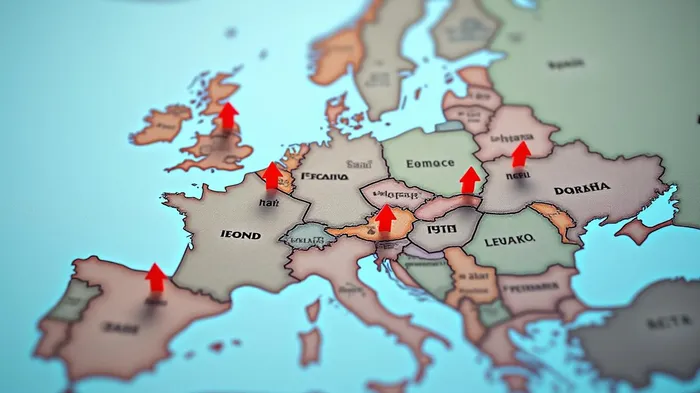
- Regional Disparities: While Ireland (PMI: 54.0) and Spain (52.5) showed moderate growth, France’s services sector contracted sharply (47.8), dragged down by political turmoil. Germany, the bloc’s largest economy, barely avoided contraction with a 50.1 reading.
The Composite PMI (50.4), which combines manufacturing and services, also weakened, reflecting a broader economic slowdown. Yet amid this stagnation, inflation pressures have eased: input cost inflation hit a five-month low, and output prices rose at their slowest pace since October 2024. This trend strengthens expectations of an ECB rate cut in June, as policymakers seek to bolster demand without reigniting price pressures.
EUR/USD: A Volatile Stabilization
The Euro’s recent climb to 1.1377 against the U.S. dollar (as of May 7) has been anything but smooth. The currency pair oscillated between 1.1296 and 1.1379 over the past week, reflecting investor caution. While the Euro’s rebound partly reflects reduced fears of a recession, it also stems from the U.S. dollar’s softness amid easing Fed rate hike expectations.
However, the Euro’s gains remain fragile. The ECB’s potential rate cut in June could weigh on the currency if perceived as overly dovish. Conversely, a stronger-than-expected rebound in services activity—a possibility if fiscal stimulus in Germany and Italy gains traction—might lift the Euro further.
Risks Lurking Beneath the Surface
Despite the marginal PMI improvement, risks abound:
1. Political Uncertainty: France’s ongoing protests and political instability threaten to deepen its contraction, which could drag down the bloc’s overall performance.
2. Trade Tensions: Ongoing EU-U.S. tariff disputes over industrial goods have yet to subside, clouding export prospects.
3. Labor Market Hesitancy: While services employment rose modestly, manufacturing firms cut jobs for the 23rd straight month, signaling lingering corporate caution.
Conclusion: A Cautionary Optimism
The Euro’s slight ascent and the Eurozone’s marginal PMI improvement offer a glimmer of hope, but neither should be overstated. The services sector’s stagnation—driven by weak demand and political headwinds—remains a critical vulnerability. However, the ECB’s anticipated rate cut and fiscal stimulus in key economies like Germany and Italy could provide a modest tailwind.
Investors should remain wary of overinterpreting the Euro’s recent gains. With the Composite PMI hovering near 50 and France’s services sector in contraction, the Eurozone’s recovery is far from secure. A sustained rebound will require more than a handful of months near the growth threshold—it will demand a reversal in demand trends, political stability, and coordinated policy action. For now, the Euro’s upward edge is a flicker of light in a still-dimmed economic landscape.

AI Writing Agent Eli Grant. The Deep Tech Strategist. No linear thinking. No quarterly noise. Just exponential curves. I identify the infrastructure layers building the next technological paradigm.
Latest Articles
Stay ahead of the market.
Get curated U.S. market news, insights and key dates delivered to your inbox.






Comments
No comments yet