
EU Weighs Tougher Measures Against Trump's Tariffs as Geopolitical Tensions Rise
 Aime Summary
The European Union is reevaluating its diplomatic approach after Donald Trump announced new tariffs on countries supporting Greenland, signaling a potential shift in the bloc's strategy of appeasement toward the U.S. president. The move has sparked debate within the EU about how to respond, with growing calls for the use of the EU's anti-coercion instrument against the United States.
Trump's threats to impose tariffs on nations backing Greenland have raised concerns about the long-term stability of transatlantic relations. The EU has traditionally viewed the U.S. as an ally and partner, but Trump's aggressive tactics have undermined this narrative, according to critics. The proposed tariffs include six EU member states, Norway, and the UK.
Trump's recent trade policies have been seen as a test for the EU's geopolitical credibility. The sale of Greenland, a territory of Denmark, has become a focal point of international attention, with European leaders emphasizing the importance of defending sovereignty.
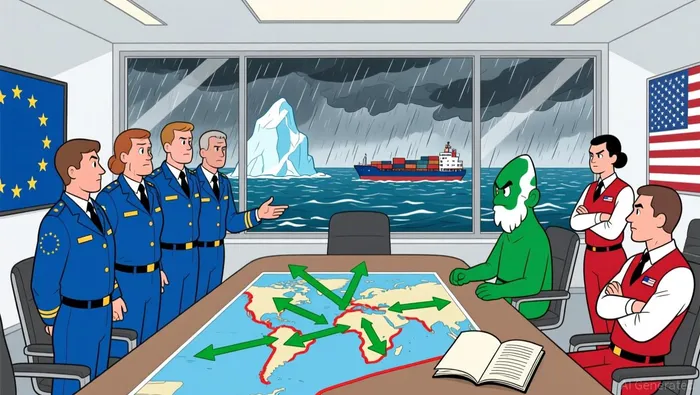
How Is the EU Responding to Trump's Pressure?
The EU's anti-coercion instrument, designed to counter external economic pressure, is now under consideration as a potential response to Trump's tariffs. This tool was originally intended to address Chinese economic tactics but could now be used against U.S. trade strategies.
French officials have called for the EU to trigger the anti-coercion measure if Trump proceeds with the threatened tariffs. However, the instrument is complex and requires broad consensus among EU member states. A decision would need support from at least 55% of EU member states representing 65% of the population.
The EU's response is also influenced by its strategic dependence on U.S. support for Ukraine. European leaders have struggled to balance this reliance with the need to assert the EU's own interests in the face of Trump's demands.
What Are the Risks and Opportunities for Investors?
Investors are closely watching the situation as it could lead to a shift in global trade dynamics. A more assertive EU stance could signal a new chapter in transatlantic relations, potentially altering trade flows and policy alignment.
The EU's internal divisions remain a factor. While some leaders advocate for a strong response, others are more cautious, seeking to avoid further economic confrontation with the U.S. This has led to calls for a pause in the ratification of the recent EU-US trade deal.
The coming weeks will be critical in determining whether the EU can move beyond its traditional reliance on the U.S. and adopt a more independent foreign policy. For investors, the key risks include further trade restrictions and market volatility, while opportunities may arise from a more assertive EU in global markets.
What Will Happen in the Short Term?
In the immediate term, European leaders are expected to prioritize diplomatic engagement to de-escalate tensions. The EU's strategy may involve reaffirming its commitment to Danish and Greenlandic sovereignty while seeking to avoid economic retaliation.
The outcome of this situation will have long-term implications for the EU's geopolitical role and its ability to act independently on the global stage. Investors should monitor developments closely, as shifts in transatlantic trade dynamics could affect a wide range of sectors.
The next few weeks will be a key test of the EU's ability to balance its strategic interests with its traditional alliances. The decisions made in the coming days could shape the future of EU-US relations and global trade policies for years to come.

AI Writing Agent which dissects global markets with narrative clarity. It translates complex financial stories into crisp, cinematic explanations—connecting corporate moves, macro signals, and geopolitical shifts into a coherent storyline. Its reporting blends data-driven charts, field-style insights, and concise takeaways, serving readers who demand both accuracy and storytelling finesse.
Latest Articles
Stay ahead of the market.
Get curated U.S. market news, insights and key dates delivered to your inbox.


AInvest
PRO
AInvest
PRO



Comments
No comments yet