
EU Unveils Quantum Blueprint Aiming 2030 Leadership
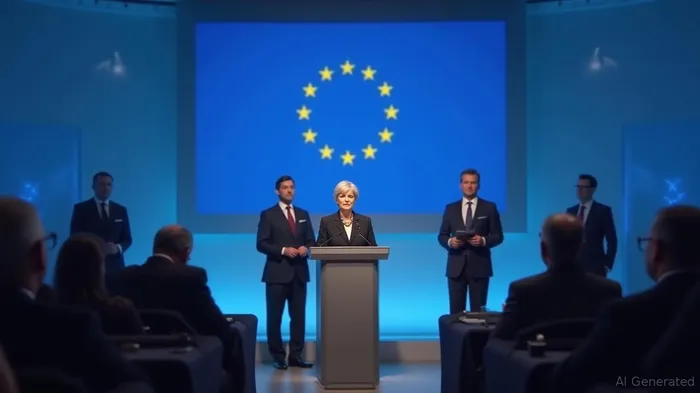
The European Union (EU) has unveiled its first quantumQMCO-- blueprint, aiming to establish a leadership position in quantum technology by 2030 and reduce its dependence on the US and China. Executive Vice-President Henna Virkkunen highlighted that while Europe has a strong history of public investment, totaling over €11 billion in the past five years, it must now attract significant private capital to compete effectively in this field.
The EU Quantum Strategy emphasizes the need for member states to collaborate on research, share advanced infrastructure, and foster a dynamic ecosystem of startups and scale-ups. The focus will be on dual-use applications that benefit both civilian and defense sectors. Virkkunen noted that quantum technology is already a reality, with the potential to transform the economy, enhance security, and solve complex problems.
Some of the earliest practical applications of quantum technology are already being developed in medicine. Next-generation radio scanners, enhanced by quantum algorithms, promise to deliver cancer and neurological scans with unprecedented precision and at earlier stages than current techniques. Beyond medical applications, quantum gravimeter devices are being used to map underground aquifers and monitor seismic shifts with high sensitivity, which could revolutionize water-resource management and earthquake early-warning systems.
Additionally, Brussels is developing a continent-wide quantum communication network to protect sensitive data from future hacking methods. By leveraging entanglement and unbreakable key-distribution protocols, Europe aims to secure financial transactions and defense communications.
Virkkunen pointed out that European quantum startups, while innovative, are vulnerable to being acquired by better-funded foreign rivals or relocating to regions with richer venture-capital markets. To address this, the Commission plans to introduce a "Quantum Act" in 2026, which will establish a legal framework for accelerating private investment, improving cross-border coordination, and scaling up shared infrastructure, such as pilot lines for quantum chips and pan-EU computing facilities.
Despite housing roughly a third of the world’s quantum startups and leading in scholarly output, Europe lags in translating breakthroughs into marketable products. Fragmented national strategies and a lack of industrial early adopters are cited as major obstacles. Virkkunen emphasized the urgency of scaling up production and applications to ensure Europe leads in this critical field.
Several member states have already launched their own quantum initiatives. France’s €1.8 billion quantum plan, launched in 2021, aims for global leadership by 2025, while Germany committed €2.8 billion in 2023 to accelerate development and industrial uptake. Other countries, including the Netherlands, Finland, and Austria, have smaller, more focused initiatives targeting communication, sensing, and infrastructure.
The new EU strategy aims to unify these efforts, creating a cohesive path to ensure Europe not only keeps pace but leads in quantum technology. Virkkunen concluded by stressing the importance of scaling production and driving real-world applications before rival blocs pull too far ahead.

Stay ahead of the market.
Get curated U.S. market news, insights and key dates delivered to your inbox.






Comments
No comments yet