
U.S.-EU Trade Policy Shifts Under Trump: A Sectoral Analysis of Automotive and Industrial Manufacturing Stocks
 Aime Summary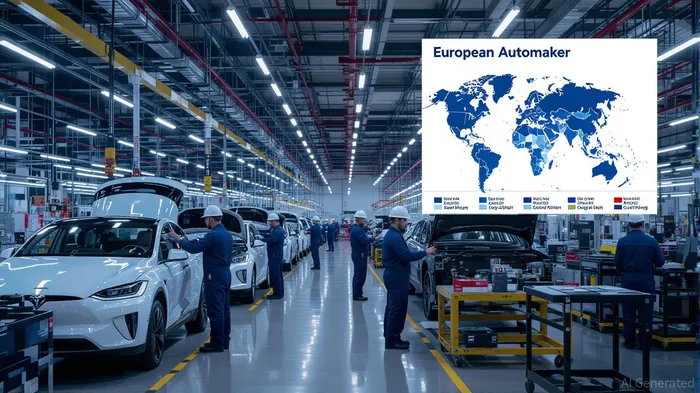
The U.S.-EU trade agreement finalized in July 2025 has reshaped the economic landscape for global manufacturing, particularly in the automotive and industrial sectors. With a 15% tariff on EU car exports to the U.S. and exemptions for key industrial goods like aviation parts, the deal marks a pivotal shift in transatlantic trade dynamics. For investors, the implications are profound: stock valuations, supply chain strategies, and sectoral resilience are now under intense scrutiny. This analysis unpacks the immediate impacts of these policy changes and offers a strategic outlook for those navigating this evolving terrain.
Automotive Sector: Tariff Adjustments and Strategic Realignments
The 15% tariff on EU automotive exports, while a reduction from the previously threatened 30%, remains a significant drag on profitability for European automakers. Companies like Volkswagen (VOW3.F), BMW (BMW.X), and Mercedes-Benz (MBG.X) face direct financial strain. Volkswagen, for instance, reported a 29% drop in Q2 2025 operating profit, with tariffs costing €1.3 billion in the first half of the year. The company has responded by halting imports from its Mexican plant and accelerating U.S. battery production to offset costs.
Porsche, which ships 100% of its U.S. units from Europe, has also pivoted aggressively, investing in U.S. battery production. Despite these moves, the sector's stock valuations reflect lingering uncertainty. The Stoxx Europe Autos Index trades at 9.8 times forward earnings—a 15% premium to its long-term average—highlighting both optimism about electrification and skepticism about tariff-driven margin compression.
Investment Insight: Investors should prioritize automakers with diversified production footprints and strong U.S. manufacturing capabilities. BMW's $1 billion South Carolina plant and Volkswagen's nearshoring bets position them better than peers reliant on EU-based imports. However, caution is warranted for companies like Mercedes-Benz, which face structural challenges in the U.S. van market.
Industrial Manufacturing: Steel, Aluminum, and Supply Chain Disruptions
The Trump administration's 50% tariffs on steel and aluminum imports have created a dual-edged sword for industrial manufacturers. While U.S. domestic producers initially benefit from reduced foreign competition, the ripple effects—higher input costs, supply chain bottlenecks, and retaliatory measures—threaten broader industrial activity.
For example, Independent Can (ICAN), a major producer of food-grade tins, has raised prices to offset steel cost hikes. Similarly, Ford (F) faces potential vehicle price increases of $2,000–$4,000 per unit due to higher steel costs. The broader manufacturing sector is already contracting: the ISM Manufacturing PMI dropped to 48.5 in May 2025, signaling a slowdown.
Investment Insight: Industrial manufacturers with vertically integrated supply chains or access to alternative materials (e.g., aluminum recycling) may outperform. However, companies reliant on imported steel—such as those in construction or machinery—risk margin erosion. Diversification into tariff-exempt sectors like aviation parts (e.g., Airbus (AC.MC)) could offer a hedge.
Strategic Outlook for Investors
The U.S.-EU trade deal's immediate impacts are clear:
1. Automotive: Near-term volatility is likely as companies adjust to localized production and EV transitions. Watch for U.S. manufacturing announcements from Volkswagen and BMW.
2. Industrial Manufacturing: Monitor service center inventories and PMI data for signs of sectoral resilience or contraction.
Long-Term Positioning:
- Short-Term Bets: Consider undervalued automakers with U.S. production capacity (e.g., BMW) and industrial firms with alternative sourcing strategies.
- Risk Mitigation: Diversify across sectors less exposed to tariffs, such as EV infrastructure or hydrogen energy.
- Geopolitical Timing: Anticipate further executive actions from Trump, which could trigger sectoral rotations.
Conclusion
The 2025 U.S.-EU trade agreement has created a complex landscape for investors. While tariff reductions offer some relief to automotive exporters, the broader industrial sector grapples with elevated costs and supply chain fragility. Success in this environment hinges on agility—whether through localized production, strategic hedging, or sectoral diversification. For those poised to act, the next 12 months present both challenges and opportunities, with the potential to capitalize on mispriced assets and emerging trade realities.

Stay ahead of the market.
Get curated U.S. market news, insights and key dates delivered to your inbox.


AInvest
PRO
AInvest
PRO



Comments
No comments yet