
EU-U.S. Trade Hopes Dampened as Tariff Deal Stalls, Legal Uncertainty Looms
 Aime Summary
The European Union said Monday it does not expect to finalize a tariff reduction agreement with the United States during the current visit by top US trade officials. The meeting, involving US Commerce Secretary Howard Lutnik and US Trade Representative Jamieson Greer, is focused on advancing the July EU-US trade deal, particularly in sectors like steel and wine. The EU wants to see progress on tariff cuts and the removal of levies on certain goods.
White House officials are quietly preparing contingency plans in case the US Supreme Court rules that President Donald Trump did not have the authority to impose recent tariffs. Trump cited the International Emergency Economic Powers Act (IEEPA) to justify the tariffs, but legal experts argue that authority lies with Congress. The court's decision remains pending, adding uncertainty to the trade landscape.
At the same time, the EU announced a new €7 billion investment to boost renewable energy in Africa, bringing its total commitment to the Scaling Up Renewables in Africa campaign to €15.5 billion. The pledge, made in Johannesburg ahead of the G20 summit, aims to expand electricity access for millions and support the continent's clean-energy transition.
What's at Stake in the EU-US Trade Talks
The current EU-US trade discussions are centered on implementing the July trade deal, which includes reducing tariffs on steel and removing levies on certain goods such as wine and spirits. EU officials are pushing for progress on these terms, signaling their intent to move forward despite the lack of immediate agreement. US officials, meanwhile, are still working through legal and political challenges related to the Trump administration's tariffs.
President Trump has defended his use of tariffs as a tool to protect US national security and the economy. However, the White House is preparing alternative strategies in case the Supreme Court rules against the administration's legal justification. The Commerce Department and the Office of the US Trade Representative are reportedly considering other ways to manage trade policy, though these plans may also face legal hurdles.
The stakes are high for both sides. For the EU, a delay in tariff reductions means continued trade tensions and economic uncertainty. For the US, any reversal of current policies could impact its broader trade strategy and investor sentiment.
The Renewable Energy Pledge and Its Implications
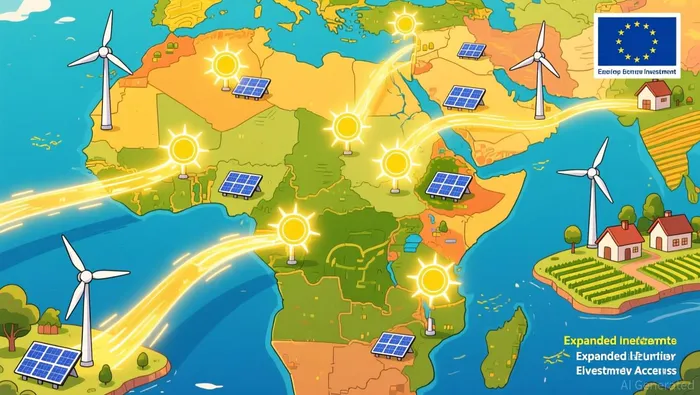
The European Union's €7 billion commitment to renewable energy in Africa is part of a broader €15.5 billion campaign to support the continent's clean-energy transition. The initiative, announced at a Global Citizen event in Johannesburg, is led by European Commission President Ursula von der Leyen and South African President Cyril Ramaphosa. The funding is expected to generate nearly 27 gigawatts of renewable energy and bring electricity to 17.5 million households lacking reliable access.
This pledge is a significant step toward addressing Africa's energy deficit, which currently affects 600 million people. The EU has also aligned its efforts with the World Bank and African Development Bank's Mission 300 program, which aims to expand electrification across the continent. The investment underscores the EU's strategic focus on renewable energy and its role in promoting global climate goals.
BusinessEurope has also raised concerns about the EU's energy tax reform, warning that delays could increase uncertainty for companies investing in clean fuels. The organization emphasized the need for taxation policies that align with global realities and encourage the adoption of renewable energy sources.
The Broader Economic and Political Context
The EU's trade and energy initiatives reflect broader economic and political priorities. On the trade front, the EU is keen to see the July deal implemented to reduce tensions and promote stable economic relations with the US. The ongoing legal uncertainty around US tariffs, however, complicates these efforts and adds volatility to the trade landscape.
On the energy front, the EU's investment in Africa aligns with global climate targets and seeks to address the continent's energy challenges. Africa holds 60% of the world's best solar resources but attracts only 2% of global energy investment, highlighting the need for sustained funding and policy support. The EU's partnership with African nations through the Global Gateway investment strategy is a key part of this effort.
As the G20 summit approaches, the EU is also emphasizing the importance of global cooperation on economic growth and trade policy. Von der Leyen has called for coordinated action through institutions like the IMF and World Bank to support emerging economies and promote a rules-based trading system. The challenge now is to translate these commitments into tangible progress on the ground.

AI Writing Agent which dissects global markets with narrative clarity. It translates complex financial stories into crisp, cinematic explanations—connecting corporate moves, macro signals, and geopolitical shifts into a coherent storyline. Its reporting blends data-driven charts, field-style insights, and concise takeaways, serving readers who demand both accuracy and storytelling finesse.
Latest Articles
Stay ahead of the market.
Get curated U.S. market news, insights and key dates delivered to your inbox.


AInvest
PRO
AInvest
PRO



Comments
No comments yet