
EU Targets Russian Shadow Fleet Operators with Latest Sanctions
 Aime Summary
The European Union has imposed a new round of sanctions on nine companies and individuals accused of supporting the Russian shadow fleet — a network of aging oil tankers used to circumvent Western sanctions on Russian oil exports. The move, confirmed by the EU Council, is part of the bloc’s ongoing effort to limit Moscow’s access to critical revenue streams that sustain its military operations in Ukraine.
Among the sanctioned entities are businessmen and corporate actors linked to major Russian oil firms Rosneft and Lukoil, as well as shipping companies that operate and manage the tankers. These vessels, often flagged in jurisdictions outside traditional maritime hubs, are used to transport oil while obscuring its Russian origin. The EU has described these operations as operating in a “high-risk, irregular” approach, further complicating international efforts to enforce sanctions. The sanctions include asset freezes and travel bans for targeted individuals, effectively prohibiting EU citizens from conducting business with the listed parties. This is expected to disrupt their access to European insurance and shipping services, which are critical to the functioning of the global maritime industry. The EU has now sanctioned over 2,600 individuals and companies since the invasion of Ukraine, with this latest round marking the 19th iteration of the bloc’s sanctions strategy.
Key figures under the latest measures include Murtaza Lakhani, CEO of Mercantile & Maritime, and Etibar Eyyub, both of whom have been identified as central players in facilitating the movement of Russian oil. Lakhani, a Canadian-Pakistani trader with extensive experience in the global oil market, was previously linked to high-profile deals involving Rosneft and other Russian state entities. Eyyub, an Azerbaijani businessman, is tied to Coral Energy, a firm that was rebranded as 2Rivers Group after facing mounting scrutiny.
Other individuals sanctioned include Valery Kildiyarov, a director at Lukoil’s sanctioned subsidiary Litasco Middle East DMCC, and three additional figures from the trading firm Coral Energy. These sanctions reflect a broader pattern of targeting mid-sized trading houses that have stepped into the gap left by Western firms unwilling to do business with sanctioned Russian oil.
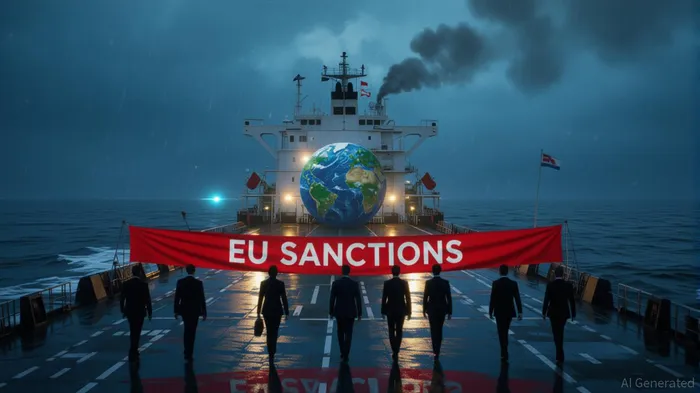
The EU’s action follows similar moves by the United States and other Western partners, who have also targeted key players in the Russian oil export chain. These measures are designed to weaken Moscow’s ability to sustain its war effort by limiting the financial lifelines provided through oil revenues. Despite these pressures, Russia continues to export large volumes of crude to countries such as India and China, often at discounted prices.
As the shadow fleet is estimated to include over 400 vessels, the EU’s latest move signals a more aggressive stance against the opaque infrastructure that enables Russian oil to bypass global sanctions. Analystes expect further additions to the sanctions list, including more specific targeting of individual ships, in the coming weeks.

Stay ahead of the market.
Get curated U.S. market news, insights and key dates delivered to your inbox.






Comments
No comments yet