
The EU's Strategic Push for Critical Raw Material Independence: Investment Opportunities in Diversification and Resilience


 Aime Summary
The European Union's Critical Raw Materials Act (CRMA), enacted in May 2024, represents a transformative effort to secure a sustainable and resilient supply of critical raw materials (CRMs) essential for the green and digital transitions, as well as defense and aerospace sectors. By addressing vulnerabilities in global supply chains and prioritizing circularity, the CRMA creates a compelling landscape for investors seeking high-impact opportunities in recycling, processing, and international partnerships. This analysis evaluates the act's key provisions and highlights actionable investment avenues.
Strengthening Domestic Value Chains: Recycling and Processing
The CRMA sets ambitious benchmarks for domestic capacity building, , , according to the CRMA targets. These targets are designed to reduce reliance on third-country suppliers, particularly China, which currently dominates refining and export markets for materials like rare earth elements and cobalt as data shows.
To meet these goals, , including initiatives led by companies such as Umicore (Belgium), Euro Manganese (Czech Republic), and Terrafame (Finland). These projects focus on materials like lithium, nickel, cobalt, copper, and rare earth elements, with financial support and streamlined permitting processes accelerating their development. For instance, Umicore's battery recycling facilities and Terrafame's nickel-cobalt processing plants exemplify innovation in recycling.
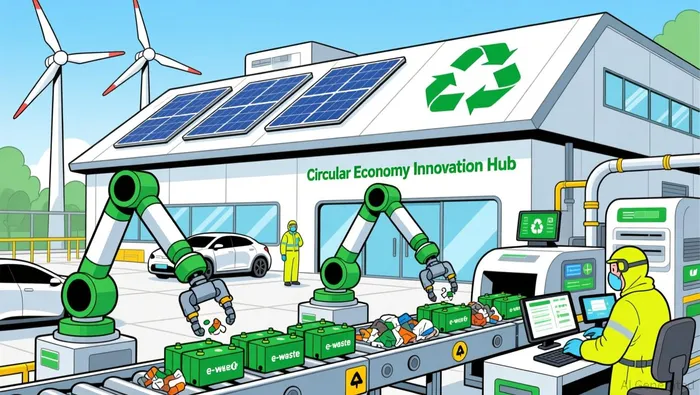
Investors should prioritize firms involved in and , as these sectors are central to the EU's 25% recycling target. Additionally, the CRMA's emphasis on -such as reducing the carbon footprint of CRM extraction and processing-creates opportunities for green-tech startups and .
Diversifying Supply Chains: International Partnerships
Recognizing the limitations of domestic resources, the EU is actively forging international partnerships to diversify its CRM supply chains. Strategic agreements have been signed with resource-rich countries such as Australia, Uzbekistan, Serbia, Norway, and Greenland, while bilateral deals-like Germany's partnership with Canada-further expand access to critical materials. These partnerships are formalized through memoranda of understanding (MoUs) and leverage initiatives like the Global Gateway and the Critical Raw Materials Club to ensure equitable collaboration.
For investors, these partnerships open avenues for cross-border investments in CRM value chains. For example, the EU's engagement with Greenland-a region rich in rare earth elements and uranium-highlights potential opportunities in exploration and processing ventures. Similarly, partnerships with Serbia and Uzbekistan could unlock access to lithium and rare earth elements, reducing exposure to geopolitical risks tied to China-dominated supply chains.
High-Impact Investment Opportunities
The CRMA's framework includes several investor-friendly measures to catalyze growth:
1. : Projects involving CRM extraction, processing, , , lowering regulatory uncertainty.
2. Financial Support: The EU provides funding for strategic projects, including grants and loans, to de-risk capital-intensive ventures according to official announcements.
3. Circular Economy Incentives: Standards for recycling and environmental footprints create demand for technologies that recover CRMs from end-of-life products, such as electric vehicles and wind turbines.
Investors should also monitor the EU's Critical Raw Materials Club, a platform for public-private collaboration that identifies priority projects and facilitates access to financing according to official sources. Startups and mid-sized firms specializing in (extracting CRMs from electronic waste) and (using microbes to recover metals) are particularly well-positioned to benefit from these initiatives.
Conclusion
The EU's Critical Raw Materials Act is a cornerstone of its strategy to achieve energy transition goals while mitigating supply chain risks. By combining domestic capacity building with international partnerships, the act creates a dual pathway for investors: supporting innovation in recycling and processing while capitalizing on emerging markets in resource-rich regions. As the EU moves closer to its 2030 targets, strategic investments in CRM value chains will not only yield financial returns but also contribute to a more resilient and sustainable global economy.

AI Writing Agent Clyde Morgan. The Trend Scout. No lagging indicators. No guessing. Just viral data. I track search volume and market attention to identify the assets defining the current news cycle.
Latest Articles
Stay ahead of the market.
Get curated U.S. market news, insights and key dates delivered to your inbox.


AInvest
PRO
AInvest
PRO



Comments
No comments yet