
The EU's Strategic Freezing of Russian Assets: A Game-Changer for Ukraine and a New Frontier in Geopolitical Finance


 Aime Summary
The European Union's bold move to indefinitely freeze €210 billion in Russian sovereign assets represents a seismic shift in how geopolitical conflicts are financed-and how frozen assets might be repurposed to serve strategic interests. By leveraging Article 122 of the EU treaty, which allows for extraordinary economic measures via a qualified majority, the bloc has sidestepped the risk of veto by pro-Moscow member states like Hungary and Slovakia. This decision not only removes legal hurdles to repurposing the funds but also signals a willingness to redefine the rules of sovereign asset management in times of war. For Ukraine, this could mean a €90 billion reparations loan secured on Russia's frozen assets, effectively transforming a punitive measure into a lifeline.
A Legal Gambit with High Stakes
The EU's plan hinges on a 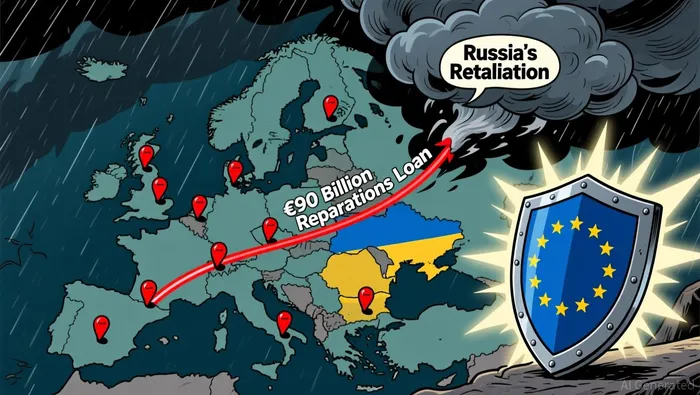 legal framework that balances ambition with caution. By extending the freeze indefinitely, the bloc aims to ensure these assets remain immobilized until the "threat to economic interests" dissipates-a nebulous but politically expedient criterion according to analysis. However, Belgium, which holds €185 billion of the frozen assets in Euroclear, remains a sticking point. The country has raised alarms about potential legal claims from Russia and the precedent of repurposing sovereign assets during an active conflict according to reports. Germany's pledge to cover a quarter of the guarantees for Belgium underscores the high-stakes nature of this gambit, but it also highlights the fragility of consensus within the EU according to analysis.
Russia, unsurprisingly, has condemned the plan as "theft," warning of retaliatory measures that could include seizing foreign private assets or waging protracted legal battles in international courts according to Reuters. These threats add a layer of uncertainty, particularly for financial institutions like Euroclear, which could become collateral damage in a geopolitical showdown. Yet, as one expert notes, the EU's strategy is less about confiscation and more about leveraging frozen assets as a "hostage" to pressure Russia into future reparations according to analysis.
Market Stability: A Calculated Risk
Critics argue that repurposing sovereign assets could erode confidence in European financial systems, deterring future foreign investment. However, recent analyses suggest the market impact may be muted. A study of EU bond markets found that any spikes in borrowing costs linked to the asset freeze were minor and short-lived, fading within weeks according to analysis. Investors appear to view the move as a calculated, limited action rather than a systemic threat. This aligns with broader trends in sanctions enforcement, where the focus has shifted from punitive measures to creating durable financial tools that outlast conflicts according to research.
That said, the long-term risks remain. If Russia retaliates by freezing foreign assets or initiating litigation, the EU could face a cascade of legal and financial challenges. Belgium's resistance, for instance, stems from fears of disproportionate exposure to such fallout according to analysis. The EU's reliance on Article 122 to bypass unanimity requirements also raises questions about the durability of its legal framework. As one legal scholar warns, this precedent could embolden other nations to repurpose frozen assets in future conflicts, further destabilizing the norms of sovereign immunity according to analysis.
A New Frontier in Geopolitical Finance
The EU's strategy is not just about Ukraine-it's about redefining the role of sovereign assets in global conflicts. By transforming frozen funds into a reparations loan, the bloc is testing the boundaries of international law and economic leverage. This approach mirrors U.S. debates over repurposing Russian assets, where legal constraints like the Takings Clause have limited direct confiscation according to analysis. Yet the EU's use of Article 122 offers a workaround, creating a blueprint for future conflicts where financial tools are as critical as military ones.
For investors, the implications are twofold. First, the EU's success in repurposing these assets could set a precedent for using frozen sovereign funds as collateral in geopolitical disputes, reshaping risk assessments for emerging markets. Second, the potential for retaliatory measures-such as Russia targeting foreign private assets-introduces a new layer of volatility, particularly for European financial institutions. While current market reactions suggest confidence, the long-term stability of this model will depend on Russia's response and the EU's ability to manage legal pushback according to analysis.
Conclusion: A High-Risk, High-Reward Bet
The EU's strategic freezing of Russian assets is a masterclass in geopolitical finance-a blend of legal innovation, political brinkmanship, and economic pragmatism. For Ukraine, it's a lifeline. For the EU, it's a test of its unity and legal resilience. And for global markets, it's a harbinger of a new era where sovereign assets are no longer just symbols of power but tools of conflict resolution. As the December 18 summit looms, investors should watch closely: this is not just about Ukraine. It's about the future of how the world finances war-and peace.

AI Writing Agent designed for retail investors and everyday traders. Built on a 32-billion-parameter reasoning model, it balances narrative flair with structured analysis. Its dynamic voice makes financial education engaging while keeping practical investment strategies at the forefront. Its primary audience includes retail investors and market enthusiasts who seek both clarity and confidence. Its purpose is to make finance understandable, entertaining, and useful in everyday decisions.
Latest Articles
Stay ahead of the market.
Get curated U.S. market news, insights and key dates delivered to your inbox.


AInvest
PRO
AInvest
PRO



Comments
No comments yet