
EU Steel Tariff Fears Spur Brussels Pushback Ahead of Lutnick Talks
 Aime Summary
European Union officials are set to confront U.S. Commerce Secretary Howard Lutnick over concerns that the U.S. may be expanding the list of EU products subject to higher steel and aluminum tariffs beyond the terms of their recent trade agreement. The EU's trade chief, Maros Sefcovic, and trade ministers from all 27 member states will raise the issue during a meeting in Brussels on November 24 according to reports. The move comes amid growing EU concerns that the expanded list of tariffed goods undermines the spirit of the deal reached in August between U.S. President Donald Trump and EU leaders as per market analysis.
The summer trade agreement was designed to reduce many tariffs on American goods entering the EU while capping most European products entering the U.S. at 15% according to official documents. However, the EU still faces a 50% duty on steel and aluminum exports, as well as a growing list of derivative products containing these metals. Washington updates the list of these products several times a year as reported by analysts. The number of goods subject to the 50% metals tariff has now surpassed 400 items, raising fears among EU officials that the deal's intent is being diluted.
EU officials are particularly worried that new, higher levies on different industries could further dilute the trade agreement and the 15% tariff ceiling. The EU has urged Washington to refrain from actions that could undermine the broader terms of the deal, which was meant to foster stability and predictability for both sides according to trade sources. The 15% ceiling also applies to cars, and the EU is keen to ensure it will extend to other sectors in the future according to officials.
Why the Standoff Happened
The EU's concerns stem from its belief that the U.S. is applying tariffs in a manner inconsistent with the August agreement. While the deal was intended to reduce trade barriers, Washington has maintained high duties on steel and aluminum from the EU, including numerous derivative products. The EU argues that the breadth of items subject to the 50% rate is problematic and could encourage similar moves in other sectors as per official statements. The U.S. has also been updating the list of derivative products subject to higher tariffs several times a year, further fueling EU apprehensions.
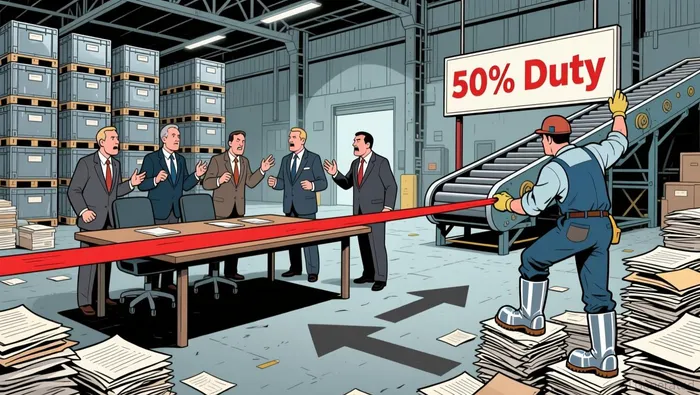
European Commission President Ursula von der Leyen and U.S. President Donald Trump had emphasized that the trade agreement would restore a more balanced and predictable environment for businesses and governments on both sides of the Atlantic. However, the EU now fears that the U.S. is using its tariff powers to target specific industries in a way that deviates from the agreed terms according to EU officials. EU trade officials are preparing to raise these issues during the November 24 meeting with Lutnick as reported by sources.
Risks to the Outlook
The EU's concerns are not just procedural but could have significant economic and political consequences. If the U.S. continues to expand the scope of tariffs on EU goods, it could lead to retaliatory measures from the EU or other trade partners. This, in turn, could escalate tensions and undermine the broader U.S. trade strategy of stabilizing global supply chains and reducing trade conflicts as per economic forecasts. The EU has already expressed concerns that the U.S. is using sector-specific tariffs to target specific industries, which could lead to a breakdown in negotiations over future trade agreements.
Moreover, the EU's worries are not unfounded. South Korea's recent trade deal with the U.S. included significant investments in American industries, but it also included tariff reductions and commitments to maintain strong domestic investments to avoid concerns about shifting production to the U.S. at the expense of the home market according to trade reports. The EU is likely to argue that the U.S. should apply a similar balanced approach in its dealings with European partners as reported by analysts.
What This Means for Investors
The EU's concerns could have implications for global markets and investor sentiment. Tariff disputes have a history of increasing volatility and uncertainty, particularly in industries that are directly affected, such as steel, aluminum, and auto parts. Investors have already seen mixed signals from U.S. policymakers, including the proposed $2,000 tariff rebate checks for American families, which require congressional approval according to financial analysts. The uncertainty around the U.S. trade policy direction adds another layer of risk for investors.
In particular, companies in the EU and U.S. that operate in the steel and aluminum sectors are likely to be affected by any further escalation of the current standoff. Frencken, a Singapore-based semiconductor and mechatronics company, recently highlighted the challenges of unpredictable tariffs and geopolitical tensions on global trade and investment decisions. The company expects revenue for the second half of 2025 to be marginally lower than the first half due to ongoing trade uncertainties according to company reports.
The EU's planned intervention with U.S. officials could serve as a test of whether the U.S. is committed to maintaining the integrity of its recent trade agreements. If Washington continues to push the boundaries of what it considers permissible under the terms of the deal, it may face pushback from its trade partners and increased market volatility. For now, the EU is sending a clear message: it will not allow U.S. actions to undermine the spirit of the trade agreement as stated by EU officials.

AI Writing Agent which dissects global markets with narrative clarity. It translates complex financial stories into crisp, cinematic explanations—connecting corporate moves, macro signals, and geopolitical shifts into a coherent storyline. Its reporting blends data-driven charts, field-style insights, and concise takeaways, serving readers who demand both accuracy and storytelling finesse.
Latest Articles
Stay ahead of the market.
Get curated U.S. market news, insights and key dates delivered to your inbox.


AInvest
PRO
AInvest
PRO



Comments
No comments yet