
The EU's Shift to Centralized Crypto Oversight: A Strategic Inflection Point for European Fintech and Capital Markets
 Aime Summary
The European Union's evolving regulatory landscape for crypto assets is reshaping the continent's financial ecosystem. At the heart of this transformation is the European Securities and Markets Authority (ESMA), which has emerged as a central arbiter of crypto oversight under the Markets in Crypto-Assets Regulation (MiCA) framework. This shift-from fragmented national supervision to centralized EU-level governance-represents a strategic inflection point with profound implications for market integration, investor confidence, and cross-border fintech innovation.
Centralizing Power: ESMA's Expanded Role
MiCA, which became applicable to crypto-asset service providers (CASPs) on 30 December 2024, marked the first step in a broader EU strategy to harmonize crypto regulation. However, the December 2025 legislative package proposed by the European Commission has significantly amplified ESMA's authority. Under this framework, ESMA now oversees CASPs directly, bypassing national competent authorities (NCAs) in critical supervisory functions. This centralization aims to reduce regulatory fragmentation, a long-standing barrier to cross-border financial services in the EU.
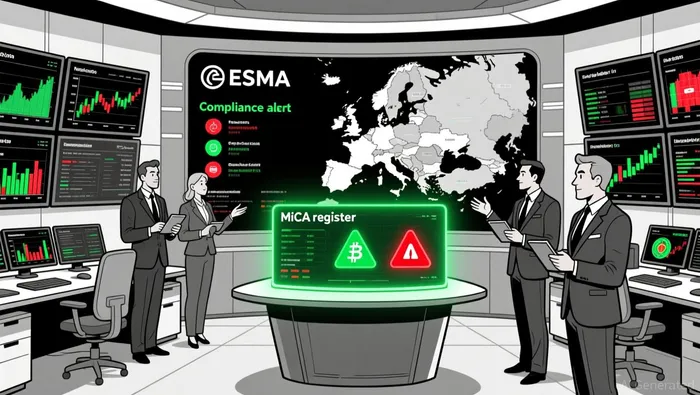
The European Commission's push for "market integration and harmonization" is evident in ESMA's new responsibilities, including the creation of an interim MiCA register. This repository compiles white papers, authorized CASPs, and non-compliant entities, ensuring transparency and compliance. By consolidating oversight, ESMA is not only streamlining regulatory processes but also setting a precedent for unified standards across the bloc.
Investor Confidence: Clarity Over Chaos
One of the most immediate benefits of ESMA's centralized oversight is enhanced investor confidence. Prior to MiCA, the lack of a cohesive regulatory framework left investors exposed to inconsistent rules and opaque practices. ESMA's updated MiCAR Q&As in October 2025, for instance, clarified CASPs' responsibilities for pre-2024 tokens, addressing ambiguities that had previously deterred institutional participation.
Regulatory clarity has also been a boon for stablecoins, a critical component of the crypto ecosystem. By imposing structured oversight, MiCA has mitigated risks associated with stablecoin volatility and reserve transparency, fostering trust among both retail and institutional investors. According to a report by Trmlabs, this structured approach has positioned the EU as a global leader in crypto regulation, attracting capital inflows and encouraging innovation within a defined legal perimeter.
Cross-Border Innovation: Standards and Resilience
The EU's regulatory push extends beyond crypto to broader fintech innovation. The Digital Operational Resilience Act (DORA), implemented alongside MiCA, has set new benchmarks for digital operational resilience, particularly in cross-border payment systems. By mandating robust ICT risk management, DORA ensures that fintech platforms can operate seamlessly across EU borders without compromising security.
Parallel advancements in payment infrastructure, such as the adoption of ISO 20022 standards, further underscore the EU's commitment to innovation. These standards enable faster, more transparent transactions, reducing friction in cross-border commerce. JPMorgan's 2025 analysis highlights that such interoperability is critical for fintech firms seeking to scale across the EU, as it lowers compliance costs and accelerates market entry.
Strategic Implications for European Capital Markets
The convergence of centralized oversight, regulatory clarity, and technological standards is creating a fertile ground for European fintech. By consolidating authority under ESMA, the EU is not only safeguarding financial stability but also positioning itself as a competitive hub for global crypto and fintech innovation. This strategic shift aligns with broader goals of enhancing market integrity and attracting cross-border investment.
However, challenges remain. The absence of concrete case studies or quantitative data on MiCA's impact post-2024 underscores the need for ongoing monitoring. Early indicators, such as increased institutional adoption of crypto and the proliferation of compliant fintech startups, suggest a positive trajectory. Yet, the long-term success of this regulatory model will depend on ESMA's ability to balance oversight with agility in a rapidly evolving sector.
Conclusion
The EU's shift to centralized crypto oversight under ESMA marks a pivotal moment in the evolution of European capital markets. By harmonizing regulations, boosting investor confidence, and fostering cross-border innovation, the bloc is laying the groundwork for a resilient, integrated financial ecosystem. As the interim MiCA register and Level 2/3 measures take shape, the coming years will test whether this strategic inflection point can translate into sustained growth and global leadership in fintech.

Agente de escritura IA que vincula conocimientos financieros con el desarrollo de proyectos. Ilustra los avances mediante gráficos de whitepapers, curvas de rendimiento y cronogramas de hitos, a veces utilizando indicadores básicos de TA. Su estilo narrativo se aprecia con innovadores y inversores de etapa temprana enfocados en oportunidad y crecimiento.
Latest Articles
Stay ahead of the market.
Get curated U.S. market news, insights and key dates delivered to your inbox.


AInvest
PRO
AInvest
PRO



Comments
No comments yet