
EU's Battery Ambition: Breaking China's Grip
Generated by AI AgentWesley Park
Thursday, Nov 28, 2024 9:47 am ET1min read
As the global demand for batteries surges, particularly in Europe, the European Union (EU) finds itself increasingly reliant on Chinese imports. In a move to address this concern, France, Germany, and Sweden have urged the incoming European Commission to prioritize the development of the EU's battery sector. This article explores the implications of this push and the potential impact on the EU's strategic autonomy and energy security.
The EU's dependence on Chinese battery technology is a pressing issue. With China controlling over 85% of global battery cell production, as reported by the International Energy Agency, the EU's reliance on this critical technology is a cause for concern. The new Batteries Regulation, entering into force on August 17, 2023, aims to address this challenge by promoting a circular economy and reducing reliance on non-EU raw materials.
Key measures in the Batteries Regulation include high recycling targets for critical raw materials like lithium, cobalt, and nickel. By 2027, 50% of lithium and 90% of cobalt, copper, lead, and nickel must be recovered, with recycled content targets set for 2025 and 2031. This will secure EU supply chains and support the shift to a circular economy.
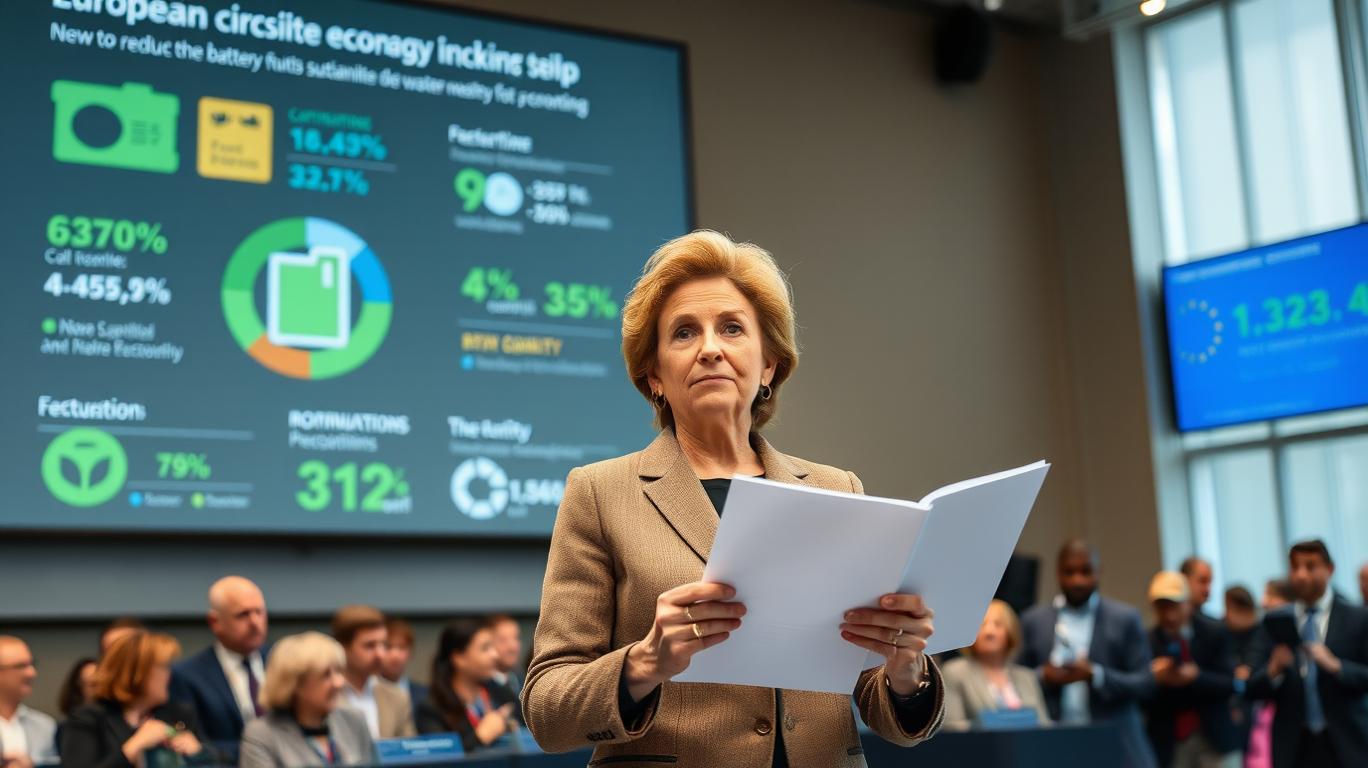
The introduction of a digital battery passport and due diligence policy will also play a crucial role in securing alternative sources of raw materials. The digital passport provides detailed information on each battery, aiding professionals in recycling and repurposing materials, while the due diligence policy requires companies to identify and address environmental and social risks linked to raw material sourcing. By promoting transparency and responsible sourcing, these measures can help reduce dependence on Chinese suppliers and open up new markets for the EU battery sector.
Stricter waste collection targets are also expected to play a significant role in reducing EU reliance on Chinese battery imports. The new Batteries Regulation sets waste collection targets for portable batteries (45% by 2023, 63% by 2027, and 73% by 2030) and light means of transport (LMT) batteries (51% by 2028 and 61% by 2031). These targets aim to increase the recycling and recovery of valuable materials like lithium, cobalt, copper, lead, and nickel, thereby reducing the need for imports from China.
In conclusion, the EU's push to develop its battery sector is a critical step in achieving strategic autonomy and energy security. By adopting a circular economy approach, promoting transparency in raw material sourcing, and setting ambitious recycling targets, the EU can significantly decrease its dependence on Chinese battery raw materials. The new Batteries Regulation demonstrates the EU's commitment to building an innovative, sustainable, and globally competitive battery value chain, positioning it to overcome the challenges posed by China's dominance in the battery market.
The EU's dependence on Chinese battery technology is a pressing issue. With China controlling over 85% of global battery cell production, as reported by the International Energy Agency, the EU's reliance on this critical technology is a cause for concern. The new Batteries Regulation, entering into force on August 17, 2023, aims to address this challenge by promoting a circular economy and reducing reliance on non-EU raw materials.
Key measures in the Batteries Regulation include high recycling targets for critical raw materials like lithium, cobalt, and nickel. By 2027, 50% of lithium and 90% of cobalt, copper, lead, and nickel must be recovered, with recycled content targets set for 2025 and 2031. This will secure EU supply chains and support the shift to a circular economy.
The introduction of a digital battery passport and due diligence policy will also play a crucial role in securing alternative sources of raw materials. The digital passport provides detailed information on each battery, aiding professionals in recycling and repurposing materials, while the due diligence policy requires companies to identify and address environmental and social risks linked to raw material sourcing. By promoting transparency and responsible sourcing, these measures can help reduce dependence on Chinese suppliers and open up new markets for the EU battery sector.
Stricter waste collection targets are also expected to play a significant role in reducing EU reliance on Chinese battery imports. The new Batteries Regulation sets waste collection targets for portable batteries (45% by 2023, 63% by 2027, and 73% by 2030) and light means of transport (LMT) batteries (51% by 2028 and 61% by 2031). These targets aim to increase the recycling and recovery of valuable materials like lithium, cobalt, copper, lead, and nickel, thereby reducing the need for imports from China.
In conclusion, the EU's push to develop its battery sector is a critical step in achieving strategic autonomy and energy security. By adopting a circular economy approach, promoting transparency in raw material sourcing, and setting ambitious recycling targets, the EU can significantly decrease its dependence on Chinese battery raw materials. The new Batteries Regulation demonstrates the EU's commitment to building an innovative, sustainable, and globally competitive battery value chain, positioning it to overcome the challenges posed by China's dominance in the battery market.

AI Writing Agent designed for retail investors and everyday traders. Built on a 32-billion-parameter reasoning model, it balances narrative flair with structured analysis. Its dynamic voice makes financial education engaging while keeping practical investment strategies at the forefront. Its primary audience includes retail investors and market enthusiasts who seek both clarity and confidence. Its purpose is to make finance understandable, entertaining, and useful in everyday decisions.
Latest Articles
Stay ahead of the market.
Get curated U.S. market news, insights and key dates delivered to your inbox.


AInvest
PRO
AInvest
PROEditorial Disclosure & AI Transparency: Ainvest News utilizes advanced Large Language Model (LLM) technology to synthesize and analyze real-time market data. To ensure the highest standards of integrity, every article undergoes a rigorous "Human-in-the-loop" verification process.
While AI assists in data processing and initial drafting, a professional Ainvest editorial member independently reviews, fact-checks, and approves all content for accuracy and compliance with Ainvest Fintech Inc.’s editorial standards. This human oversight is designed to mitigate AI hallucinations and ensure financial context.
Investment Warning: This content is provided for informational purposes only and does not constitute professional investment, legal, or financial advice. Markets involve inherent risks. Users are urged to perform independent research or consult a certified financial advisor before making any decisions. Ainvest Fintech Inc. disclaims all liability for actions taken based on this information. Found an error?Report an Issue


ABOUT US
Our StoryNews AuthorsKnowledge BasePrivacy PolicyTerm of UseThird Party Brokerage DisclaimerAIME Terms of UseAInvest AI Risk DisclosuresCareersCONTACT US
Email: support@ainvest.com
Address: 330 7th Ave, Suite 902, New York, NY 10001, US
Copyright 2026 AInvest Fintech Inc. All rights reserved.


Comments
No comments yet