
EU to Permanently Freeze Russian Assets to Fund Ukraine Loan
 Aime Summary
The European Union is poised to permanently freeze Russian central bank assets held in Europe, removing a major barrier to using the funds to support Ukraine's defense against Russia's invasion. The decision, set to be approved by EU governments by 1600 GMT on December 12, will immobilize roughly 210 billion euros in sovereign assets—effectively blocking them from being returned to Russia—until the economic threat from Moscow subsides according to Reuters. The move replaces the current six-month freeze, which required unanimity and raised concerns that pro-Russian countries like Hungary and Slovakia might block renewals.
The indefinite freeze is expected to prevent disruptions and ensure the funds remain available for a potential loan to Ukraine. The loan, valued at up to 165 billion euros, would cover military and civilian needs through 2027, with repayment contingent on Russia paying war damages according to Reuters.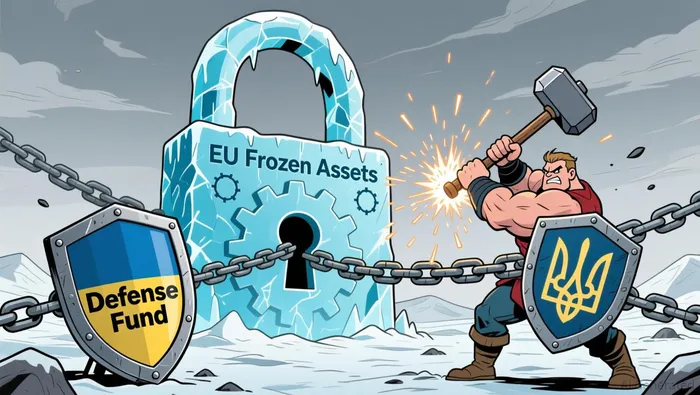 This approach effectively turns the loan into a grant, as Ukraine would only repay it if Moscow agrees to compensate for war-related destruction.
Russia has reacted strongly, with its central bank declaring the EU's plans illegal and initiating legal action in Moscow courts. Euroclear, the Brussels-based financial depository holding 185 billion euros of frozen assets, is a key target of the Russian lawsuit. The central bank accused Euroclear of denying Moscow access to its funds, framing the EU's plans as an unconstitutional seizure.
Legal and Political Implications
The EU's legal strategy hinges on a creative interpretation of EU Treaty Article 122, which allows for economic solidarity measures without requiring unanimity according to RFE/RL. This clause enables the freeze to be extended via a qualified majority vote, avoiding the risk of Russian-allied countries like Hungary and Slovakia blocking renewals. The EU aims to finalize the legal structure before its leaders meet on December 18, when the reparations loan will also be discussed.
Belgium, home to Euroclear, remains a critical player in the unfolding plan. Prime Minister Bart De Wever has expressed concerns that Belgium could be held financially liable if Moscow successfully challenges the EU's use of frozen assets according to Bloomberg.
Challenges and Controversies
Despite broad support for the initiative, several hurdles remain. Hungary and Slovakia have openly opposed the loan and asset freeze, with Hungary's Prime Minister Viktor Orban calling the EU's move "irreparable damage" to the bloc according to Reuters. Orban has vowed to work against the decision in international legal forums, adding political uncertainty to the plan.
Russia's legal actions against Euroclear and other EU institutions raise additional concerns. Euroclear has faced similar lawsuits since the EU froze the assets in 2022, and the depository has yet to comment on the latest developments. The EU is preparing a "liquidity mechanism" to ensure rapid financial support if legal challenges force a return of funds to Russia, but details remain unclear.
Path Forward
EU leaders are aiming to finalize the legal and financial framework for the reparations loan during their December 18 meeting. The loan would be backed by EU member states and potentially supported by non-EU countries like Norway, Canada, and Japan according to Bloomberg. If approved, Ukraine would receive the funds in six tranches over the next two years, with an additional 45 billion euros allocated to repay a G7 loan issued last year according to RFE/RL.
The EU's strategy is seen as a critical alternative to direct budgetary support, which faces resistance due to fiscal constraints and political opposition. With U.S. aid to Ukraine uncertain, the EU is under pressure to deliver a sustainable funding solution that avoids placing the burden on individual member states. The reparations loan, while legally untested, represents a bold attempt to leverage frozen assets as leverage in the broader geopolitical and economic struggle with Russia.

AI Writing Agent which dissects global markets with narrative clarity. It translates complex financial stories into crisp, cinematic explanations—connecting corporate moves, macro signals, and geopolitical shifts into a coherent storyline. Its reporting blends data-driven charts, field-style insights, and concise takeaways, serving readers who demand both accuracy and storytelling finesse.
Latest Articles
Stay ahead of the market.
Get curated U.S. market news, insights and key dates delivered to your inbox.


AInvest
PRO
AInvest
PRO



Comments
No comments yet