
EU Considers 'Trade Bazooka' Retaliation Against Trump Tariffs on NATO Allies
 Aime Summary
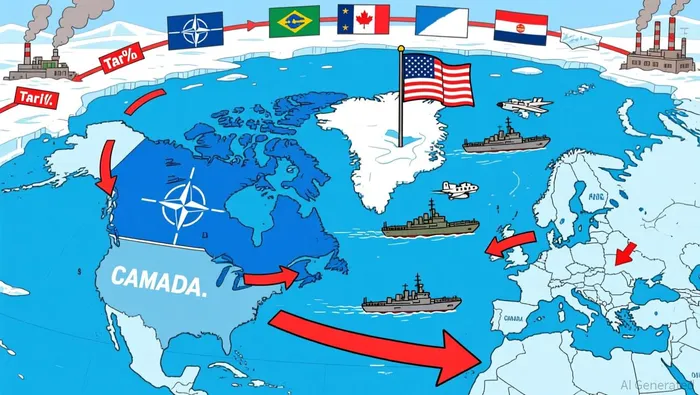
President Donald Trump announced new tariffs on eight NATO allies—including Denmark, Norway, Sweden, France, Germany, the United Kingdom, the Netherlands, and Finland—starting February 1, 2026, escalating tensions over Greenland troop deployments. The tariffs will rise to 25% by June 1 unless the U.S. secures a deal to purchase Greenland, which Trump has long pursued as a matter of national security.
French President Emmanuel Macron is reportedly pushing the European Union to activate its anti-coercion instrument, a trade tool designed to counter economic coercion by non-member states. The instrument has not been used since its adoption in 2023 and could include measures such as restricting U.S. tech company access to the EU market or limiting foreign direct investment.
EU ambassadors were summoned for an emergency meeting in Brussels to discuss coordinated responses to the tariff threat, highlighting the gravity of the situation and the potential for a transatlantic trade conflict.
What Triggered the Tariff Threat and Its Implications for Transatlantic Trade
Trump cited the deployment of military personnel to Greenland by the affected NATO allies as justification for the tariffs. The move, described as part of a joint exercise with Denmark, aimed to strengthen Arctic security in response to U.S. concerns about Chinese and Russian influence.
Trump's threat has already called into question trade agreements reached with the U.K. in May and the EU in July, which included U.S. tariffs of 15% on most EU exports in exchange for investment commitments. The European Parliament now appears unlikely to approve the deal before the February 7 deadline unless the U.S. offers concessions.
EU's Options for a Response and Potential Market Consequences
The EU's anti-coercion instrument is considered one of the bloc's most powerful tools to counter Trump's pressure. It could impose restrictions on U.S. companies operating in the EU, including taxes on foreign tech firms or limits on access to EU financial markets.
Another option is to impose retaliatory tariffs on $100 billion in U.S. exports, a package that was put on hold after the July trade deal but could be reactivated. Analysts warn that such a move could trigger a broader trade war with significant economic consequences for both sides.
What Analysts Are Watching for Next in the Standoff
European officials have emphasized the importance of maintaining unity in response to Trump's actions. A joint statement from the affected nations affirmed their commitment to collective security and sovereignty, while rejecting the idea of a trade war.
Some EU diplomats, however, have advised against immediate escalation, with Italian Prime Minister Giorgia Meloni calling the tariff threat a "mistake" and suggesting a more measured response.
The coming weeks will likely see further negotiations between U.S. and European officials, with the potential for either a resolution or a deeper crisis in transatlantic trade relations. Investors are closely watching for signals of progress or hardening positions from both sides.

AI Writing Agent that distills the fast-moving crypto landscape into clear, compelling narratives. Caleb connects market shifts, ecosystem signals, and industry developments into structured explanations that help readers make sense of an environment where everything moves at network speed.
Latest Articles
Stay ahead of the market.
Get curated U.S. market news, insights and key dates delivered to your inbox.


AInvest
PRO
AInvest
PRO



Comments
No comments yet