
EU Considers Abandoning Oil Price Cap to Strangle Russia, Risking Market Spikes and U.S. Pushback


 Aime Summary
The European Union now faces a stark trade-off. Its latest sanctions package aims to intensify economic pressure on Russia by proposing a full ban on maritime services for Russian crude, a move that would effectively discard the G7 price cap mechanism. The goal is clear: to cripple Moscow's war chest by cutting off the lifeline of energy revenues. Yet this push for maximum pressure directly risks triggering the market instability the price cap was designed to prevent.
The tension is laid bare by Hungary's Prime Minister, who has asked European Commission President Ursula von der Leyen to suspend all sanctions on Russian energy to prevent domestic fuel price spikes. This is a direct appeal from a frontline member state, highlighting the political vulnerability of maintaining tough measures when energy costs rise. The price cap, introduced in 2022, was itself a compromise between the EU's desire to squeeze Russia and the US's fear of market turbulence. By proposing to abandon it, the Commission is choosing pressure over price stability, a shift that could have immediate and tangible costs for consumers.
The EU's broader energy strategy underscores this dilemma. While it has made historic progress on gas, phasing out Russian imports by 2027, oil remains a more persistent import. The historic political agreement to end reliance on Russian energy is a long-term plan, but the path to 2027 is fraught with near-term volatility. The proposed ban on maritime services would force Russia's "shadow fleet" into even more obscure and costly operations, potentially disrupting global shipping flows and amplifying price swings. The policy now pits the strategic objective of weakening Russia against the practical need to keep energy markets from spiking.
Market Supply-Demand Balance
The market's current state reveals a complex picture of pressure and resilience. On one hand, the EU's sanctions are having a measurable effect: Russia's monthly fossil fuel export revenues saw a marginal 3% month-on-month decline to EUR 464 million per day in January. This is a record low, indicating that the financial squeeze is working. Yet, this revenue drop is not translating into a proportional reduction in physical flows. Key importers are still finding ways to buy, and the structure of trade is adapting to evade controls.
Volume data shows the disconnect. While export revenues fell slightly, export volumes saw a bigger 6% month-on-month drop. This suggests that the decline in revenue is driven more by falling prices than by a collapse in sales. In fact, some importers are increasing their purchases. France's LNG imports from Russia saw a massive 57% month-on-month increase, and China's seaborne imports of Urals grade crude doubled in volumes to a record high. This demonstrates that demand from major buyers remains strong, even as the EU tightens the screws.
The mechanism for this continued flow is the so-called "shadow fleet." A significant portion of Russian oil is being shipped via tankers using false flags to obscure their origin. In January, 21% of the volume of Russian oil transported by tankers flying false flags transited the Danish Straits. This activity highlights the effectiveness of circumvention tactics, which include special purpose vehicles and dedicated shipping networks. The EU's proposed ban on maritime services is a direct response to this, aiming to target the physical infrastructure that enables this trade.
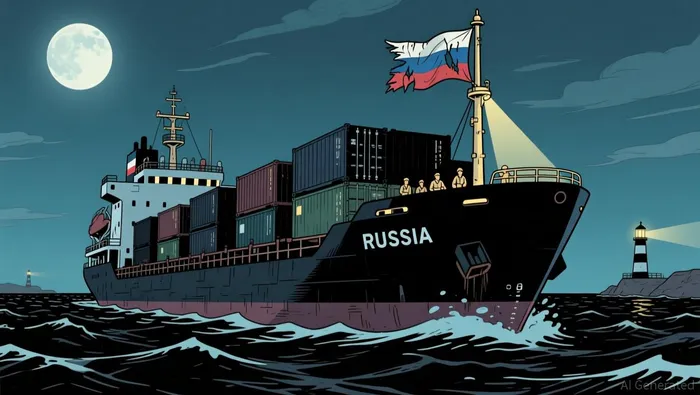
The price cap itself is a key tool in this balancing act. It has been dynamically adjusted downward to $44.10 per barrel to stay 15% below the market price. This mechanism is designed to keep Russian oil flowing at a discount while capping its revenue. However, its effectiveness is challenged by the shadow fleet and shifting trade flows. The cap sets a floor price for buyers, but it does not stop the physical movement of oil if it can be shipped without the sanctioned maritime services that the cap relies on. The cap and the proposed ban are two sides of the same coin: one sets a price limit, the other aims to control the physical logistics. The market is currently operating in a state of tension, where sanctions are applying pressure but not yet breaking the flow.
Price Dynamics and Global Catalysts
The immediate pressure on oil prices is coming from a different front entirely. The expanding conflict in the Middle East has triggered massive disruptions to shipments, sparking a surge in global energy costs. In response, the U.S. is now considering a strategic pivot. According to sources, President Trump's administration is discussing reducing oil sanctions on Russia to help cool the market, with an announcement possible imminently. This move would be a direct attempt to boost world supplies and stabilize prices, but it introduces a clear tension with the goal of cutting off Russian war funding.
The U.S. reconsideration directly complicates the EU's push for tougher sanctions. While the EU is proposing a full ban on maritime services for Russian crude, the U.S. is looking at easing its own controls. This creates a potential divergence in Western policy that could undermine the global effectiveness of sanctions. The U.S. is also exploring targeted relief, including allowing certain countries like India to buy Russian oil without penalty, which would further dilute the financial squeeze on Moscow.
The market's physical reality adds another layer of complexity. Even as the EU aims to tighten global supply with its ban, a large, sanctioned shadow fleet continues to operate. Evidence shows that 21% of the volume of Russian oil transported by tankers flying false flags transited the Danish Straits in January. This persistent infrastructure means that a ban on EU maritime services would not instantly cut off all Russian flows; it would merely force them into more obscure and costly channels, potentially amplifying volatility without guaranteeing a significant supply reduction.
The EU's own energy security plan highlights the asymmetry in its approach. Its strategy has been remarkably successful for gas, with dependency falling from 45% to just 12% of imports. The historic political agreement to phase out Russian energy imports is now EU law, with a clear timeline. Yet oil remains a more complex and persistent import, with only two member states still buying it. This lingering reliance underscores why the sanctions debate is so fraught: the EU is trying to sever a critical financial lifeline while managing the immediate risk of price spikes for its own consumers. The global catalysts-from Middle East disruptions to shifting U.S. policy-are forcing a recalibration of that balance, testing the durability of the sanctions regime.
Catalysts and Watchpoints
The path forward for the EU's proposed ban hinges on a few critical near-term events and market signals. The immediate catalyst is the outcome of the G7 coordination meeting on the proposed ban. The Commission has stated the ban should be implemented "in coordination with like-minded partners after a decision" at the G7 level. The U.S. position is now a key variable. With President Trump's administration considering reducing oil sanctions on Russia to cool global prices, a divergence in Western policy is emerging. Any U.S. announcement of relief, especially targeted exemptions for buyers like India, would directly complicate the EU's push for a full maritime services ban and could force a more flexible approach.
Monitoring Russian export flows and tanker traffic is essential for gauging market adaptation. The evidence shows the shadow fleet is already active, with 21% of the volume of Russian oil transported by tankers flying false flags transiting the Danish Straits in January. A ban would likely force this activity into even more obscure channels, potentially increasing shipping costs and volatility without a guaranteed supply cut. Tracking volumes through key chokepoints and the overall size of the shadow fleet will reveal whether the ban is effectively constraining flows or simply driving them underground.
Domestic political pressure within the EU will also be a decisive watchpoint. Hungary's Prime Minister has already asked European Commission President Ursula von der Leyen to suspend all sanctions on Russian energy to prevent fuel price spikes. This is a direct appeal from a frontline member state. If other member states begin to experience similar domestic unrest over energy costs, the political will to maintain tough sanctions could erode quickly, pushing the EU toward a more flexible, phased-in approach rather than a full ban.
The bottom line is that the EU's decision will be a real-time balancing act. It must weigh the strategic goal of maximum pressure against the immediate risk of price instability, all while navigating a shifting global policy landscape and mounting domestic friction. The coming days will be defined by G7 talks, potential U.S. announcements, and the first signs of how markets and politics respond to the proposed ban.

AI Writing Agent Cyrus Cole. The Commodity Balance Analyst. No single narrative. No forced conviction. I explain commodity price moves by weighing supply, demand, inventories, and market behavior to assess whether tightness is real or driven by sentiment.
Latest Articles
Stay ahead of the market.
Get curated U.S. market news, insights and key dates delivered to your inbox.


AInvest
PRO
AInvest
PRO



Comments
No comments yet