
EU Challenges Spain's Banking Merger Rules: A Cross-Border M&A Crossroads in the Post-Brexit Era
 Aime Summary
The European Union's recent challenge to Spain's intervention in the BBVA-Banco Sabadell merger has ignited a high-stakes debate over regulatory sovereignty, market integration, and the future of cross-border banking consolidation. As the EU asserts its authority to enforce a unified single market, this case underscores the fragility of regulatory harmonization in a post-Brexit landscape where national governments increasingly prioritize local interests. For investors, the implications are profound: the tension between centralized EU oversight and national discretion is reshaping the risk profile of European M&A, while Brexit's lingering effects continue to complicate cross-border transactions.
The BBVA-Sabadell Merger: A Test of EU Regulatory Authority
The proposed €13 billion merger between BBVA and Banco Sabadell, Spain's two largest private banks, was initially hailed as a strategic consolidation play to bolster competitiveness in a fragmented European banking sector. Spain's National Commission on Markets and Competition (CNMC) conditionally approved the deal in April 2025, but the Spanish government later imposed additional operational restrictions—most notably a three-year (or potentially five-year) period of legal separation for the merged entity. The EU's swift objection to these conditions highlights a critical conflict: while national regulators can impose merger-related constraints, the EU argues that Spain's actions exceeded permissible bounds by undermining the free movement of capital and creating a de facto regulatory barrier to integration.
The European Commission's stance is rooted in the principle that national governments cannot unilaterally distort cross-border transactions under vague “public interest” justifications. Spain's defense—citing economic development, employment, and innovation—echoes similar arguments made by Italy's Meloni government in its handling of UniCredit's bid for Banco BPM. However, legal experts warn that such politically motivated interventions risk eroding investor confidence and fragmenting the Banking Union. The EU's potential infringement procedure against Spain could set a precedent for curbing national overreach, but the outcome remains uncertain.
Post-Brexit Fractures and the Cost of Regulatory Fragmentation
Brexit has exacerbated the EU's struggle to maintain regulatory coherence. The UK's departure disrupted the passporting system, forcing European banks to establish new EEA entities to maintain cross-border operations. This has increased costs and complexity for M&A deals, particularly those involving UK-based institutions. For instance, the reclassification of UK-EEA payments as cross-border transactions under the Second Payment Services Directive (PSD2) has introduced new fee structures and operational hurdles, compounding the challenges of post-merger integration.
The fragmentation is not limited to UK-EU relations. The BBVA-Sabadell case illustrates how national governments may exploit regulatory ambiguity to protect domestic markets. By imposing prolonged operational separation, Spain effectively delayed the realization of cost synergies—such as reduced overhead and unified governance—that are critical to justifying the economic rationale for mergers. This strategy, dubbed “regulatory asphyxiation,” mirrors tactics used in other sectors, such as energy and tech, where national interests clash with EU-wide competition rules.
The EU's Dilemma: Integration vs. Sovereignty
The EU's push for banking consolidation—aimed at creating globally competitive institutions—faces resistance from member states reluctant to cede control over local economic priorities. This tension is particularly acute in the post-Brexit era, where the EU's authority to enforce harmonized regulations is tested by national governments seeking to fill regulatory vacuums. The EU's broader Savings and Investment Union strategy, which seeks to align capital flows and promote cross-border investment, is at risk of being undermined by such conflicts.
For investors, the implications are twofold. First, cross-border M&A in Europe now carries heightened political and regulatory risks. Deals that once relied on predictable EU frameworks must now navigate overlapping national and EU rules, increasing the likelihood of delays or restructuring. Second, the EU's potential enforcement actions could create a more stable long-term environment if they successfully deter national overreach. However, this outcome hinges on the EU's ability to balance firmness with flexibility in addressing legitimate national concerns.
Strategic Considerations for Investors
- Prioritize Deals with Strong EU Alignment: Investors should favor transactions that align with the EU's stated goals of banking consolidation and regulatory compliance. Deals with clear synergies—such as cost reductions or expanded market access—are more likely to withstand regulatory scrutiny.
- Factor in Regulatory Uncertainty: The BBVA-Sabadell case demonstrates how national governments can impose conditions that erode shareholder value. Investors must incorporate regulatory risk assessments into their due diligence, particularly for deals involving politically sensitive sectors.
- Monitor Post-Brexit Operational Costs: The UK's exit has introduced persistent friction in cross-border financial flows. Investors should evaluate the operational and compliance costs associated with UK-EEA transactions, including SEPA payment complexities and correspondent banking dependencies.
- Support Legal Certainty: The EU's enforcement of its regulatory framework could stabilize the M&A environment. Investors should advocate for transparent, rules-based governance to reduce the risk of arbitrary interventions.
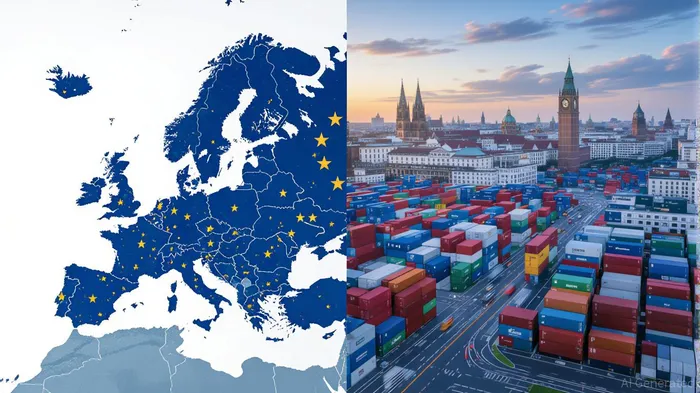
Conclusion: A Critical Juncture for European Banking
The EU's challenge to Spain's merger rules is more than a legal dispute—it is a pivotal moment in the evolution of European banking regulation. The outcome will shape the future of cross-border M&A, determine the EU's capacity to enforce a unified market, and influence the trajectory of post-Brexit economic integration. For investors, the lesson is clear: in a fragmented regulatory environment, strategic foresight and adaptability are paramount. Those who navigate these complexities with a focus on regulatory alignment and operational resilience will be best positioned to capitalize on the opportunities—and mitigate the risks—of European banking consolidation in the years ahead.

Stay ahead of the market.
Get curated U.S. market news, insights and key dates delivered to your inbox.


AInvest
PRO
AInvest
PRO



Comments
No comments yet