
EU-US Auto Tariff Talks: Navigating Cross-Border Trade for Investment Gains
As the EU and the US race to avoid a July 9 deadline that could trigger 50% tariffs on EU goods, automakers stand at the center of a geopolitical chess match with significant implications for investors. The stakes are high: a collapse in negotiations could send auto prices soaring, while a deal could unlock value for companies exposed to tariff relief and cross-border capital flows.
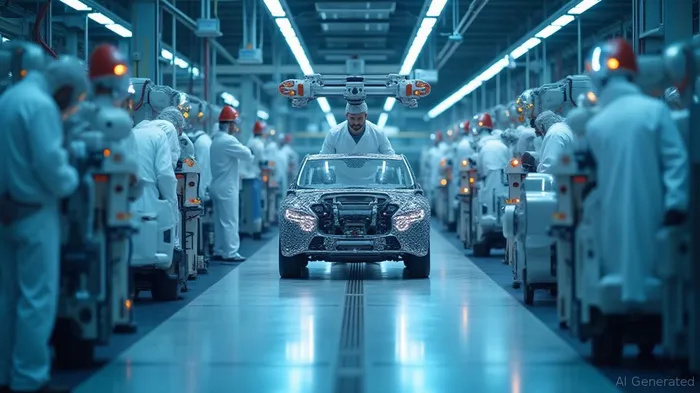
The Tariff Tightrope: What's at Stake for Automakers
The current impasse centers on automotive tariffs. The US currently imposes a 25% tariff on European cars and parts, while EU exports face a 10% baseline tariff. A provisional deal under discussion would freeze the 10% rate but leaves automotive tariffs unresolved. For European automakers—Volkswagen (VOWG_p.DE), BMW (BMW.MU), and StellantisSTLA-- (STLA)—a reduction in the 25% auto tariff would directly boost margins. Meanwhile, U.S. automakers like Ford (F) and General MotorsGM-- (GM) could gain from reduced costs for imported parts.
The negotiations also hinge on the "offsets rule," where the EU proposes tariff reductions in exchange for increased U.S. production investments by European firms. This could create opportunities for automakers expanding U.S. manufacturing, such as TeslaTSLA-- (TSLA), which recently announced a $5 billion expansion in Texas.
Key Investment Plays: Winners and Losers
1. European Automakers with U.S. Exposure
Companies with significant U.S. sales or manufacturing capacity stand to benefit most from tariff relief. Volkswagen, for instance, derives ~20% of its revenue from North America. A deal reducing its 25% tariff burden could add 3-5% to its operating margin, assuming no price pass-through. Investors should also monitor Stellantis, which is integrating its U.S. operations post-Fiat Chrysler merger, and BMW, which has been expanding its U.S. supply chain.
2. Cross-Border Capital Allocators
The "offsets rule" could accelerate U.S. investments by European firms to qualify for tariff breaks. Tesla's Texas expansion exemplifies this dynamic, but traditional automakers like Renault (RENA.PA) and Daimler (DAI.GR) may follow suit, creating value in their U.S. subsidiaries or joint ventures.
3. Semiconductor and Supply Chain Firms
Auto tariffs indirectly affect suppliers. A deal could ease pressure on companies like Continental AG (CONG.DE), which relies on EU-U.S. trade for automotive electronics. Conversely, U.S. semiconductor firms (e.g., IntelINTC-- (INTC), AMDAMD-- (AMD)) might gain if cross-border auto production ramps up.
Risks and Uncertainties
- No Deal Scenario: A failure to agree would trigger 50% tariffs on EU goods, devastating automakers. European car prices in the U.S. could rise 13-15%, per analyses, squeezing demand and profits.
- Sectoral Exemptions: Even with a deal, automotive tariffs may remain at 25% unless explicitly addressed. Investors should scrutinize the final text for carve-outs.
- Currency Fluctuations: A strong euro (EUR/USD) could negate tariff relief benefits for European exporters.
Investment Strategy: Timing the Tariff Talks
- Aggressive Play: Buy European automakers now if you believe a deal is likely. A 10% tariff freeze removes the near-term threat, and any sectoral auto relief could be a catalyst.
- Wait-and-See Approach: Hold off until the July 9 deadline passes. A last-minute deal might spark a short-term rally, but lingering non-tariff barriers (e.g., regulatory differences) could limit long-term gains.
- Hedged Portfolio: Pair European automakers with U.S. steel producers (e.g., NucorNUE-- (NUE)) if steel tariffs are also addressed.
Final Take
The EU-U.S. auto talks are a microcosm of global trade tensions reshaping automotive value chains. Investors should prioritize companies with flexible supply chains, U.S. production footprints, and exposure to tariff-sensitive sectors. While a deal is probable, the devil lies in the details—specifically automotive tariffs and offsets. Monitor these closely to capitalize on the next phase of trade normalization.
In short, the auto sector's post-tariff landscape could reward bold investors who position early—but remain agile enough to pivot if the geopolitical winds shift.

Stay ahead of the market.
Get curated U.S. market news, insights and key dates delivered to your inbox.
AInvest
PRO
AInvest
PRO



Comments
No comments yet