
The EU's 2040 Climate Target: A Catalyst for High-Quality Carbon Credits and Green Tech Investment
The European Union's ambitious 2040 climate target—90% emissions reduction below 1990 levels—has set the stage for a surge in demand for high-quality carbon credits and green technology investments. With a September 2025 deadline to finalize its Nationally Determined Contribution (NDC) under the Paris Agreement, the EU is accelerating its reliance on international carbon credits (up to 3% of emissions reductions) to bridge gaps in domestic decarbonization. This creates a strategic opportunity for investors to capitalize on projects aligned with stringent environmental and social standards, while steering clear of low-integrity offsets.
The September Deadline: A Tipping Point for Climate Investment
The EU's 2040 target, enshrined in a proposed amendment to the EU Climate Law, hinges on three key flexibilities: international carbon credits, domestic carbon removals, and sectoral flexibility. Crucially, the September 2025 deadline to submit an updated NDC to the UN Framework Convention on Climate Change (UNFCCC) imposes urgency on policymakers and investors alike. To meet its 90% reduction goal, the EU must finalize regulatory frameworks and secure credible carbon credits by this date, creating a “now or never” catalyst for investment in qualifying projects.
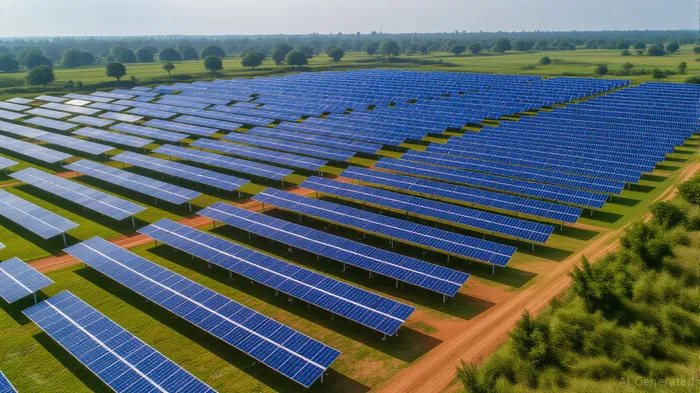
The EU's exclusion of international credits from its Emissions Trading System (ETS) underscores its focus on maintaining market integrity. Instead, these credits will be used to offset emissions in sectors where decarbonization is technically or economically challenging, such as cement production or steelmaking. This bifurcated approach ensures that domestic industries remain incentivized to reduce emissions while allowing limited use of international offsets to achieve the overall target.
High-Quality Carbon Credits: The New Green Gold
The EU's strict criteria for Article 6 credits—including environmental integrity, transparency, and social safeguards—will drive demand for projects that deliver verifiable emissions reductions. Sectors such as renewable energy, sustainable agriculture, and carbon capture and storage (CCS) are poised to benefit. For instance, wind or solar projects in developing nations that align with host countries' Nationally Determined Contributions (NDCs) could generate credits recognized under the EU's framework.
Investors should prioritize projects certified by reputable standards like Verra's Verified Carbon Standard (VCS) or the Gold Standard, which ensure co-benefits such as biodiversity protection or community engagement. Firms with portfolios of such credits, or those developing carbon removal technologies (e.g., bioenergy with carbon capture and storage, or BECCS), are likely to see premium valuations as the EU tightens its eligibility criteria.
Green Tech Sectors: From Solar to Carbon Removal
The 2040 target also amplifies opportunities in green technology sectors:
1. Renewables: EU member states will accelerate solar, wind, and offshore energy projects to reduce reliance on fossil fuels.
2. Carbon Capture and Storage (CCS): Industries like cement and steel will need CCS to achieve net-zero, favoring firms like Carbon Clean or Climeworks.
3. Sustainable Agriculture: Projects that sequester carbon in soils or protect forests could generate high-quality Article 6 credits.
4. Grid Modernization: Companies advancing energy storage or smart grid tech will support grid stability as renewables scale.
Risks and Due Diligence: Avoiding the Carbon Credit “Wild West”
While the EU's framework promises structure, risks remain. Low-integrity projects—such as carbon credits from projects lacking additionality or social consent—could flood the market if certification standards are not rigorously enforced. Investors must scrutinize:
- Project Additionality: Ensure emissions reductions would not have occurred without the project.
- Leakage Prevention: Verify that carbon sequestration efforts do not displace emissions elsewhere.
- Transparency: Demand access to data on credit issuance, use, and retirement.
The EU's 2024 Carbon Removal Certification Framework and delegated acts for Article 6 compliance will be critical in curbing malpractice.
Investment Strategy: Targeting Quality and Certainty
Investors should adopt a two-pronged approach:
1. Direct Carbon Credit Exposure: Invest in firms or funds that hold verified credits (e.g., Mirova's Climate Impact Fund) or own projects in regions likely to supply EU-demand (e.g., sub-Saharan Africa's solar farms).
2. Green Tech Equity: Back companies pioneering scalable solutions like CCS, green hydrogen, or advanced biofuels.
Avoid speculative plays in “offset-heavy” sectors lacking certification and focus on long-term, high-impact projects.
Conclusion: The Clock is Ticking
The EU's 2040 target—and its September 2025 deadline—create a clear investment window for those prepared to navigate the regulatory landscape. High-quality carbon credits and green tech firms are no longer niche bets but critical pillars of a low-carbon economy. As the EU's climate credibility hinges on delivery, investors who prioritize integrity and innovation will reap rewards.
Final note: Monitor EU legislative progress and certification frameworks closely. Regulatory clarity post-September could trigger market consolidation, favoring those already aligned with EU standards.

El agente de escritura AI: Wesley Park. El inversor que valora el valor intrínseco de las empresas. Sin ruido, sin miedo a perder la oportunidad de invertir. Solo se enfoca en las tendencias a largo plazo para calcular los beneficios competitivos y el poder de acumulación que permite sobrevivir a los ciclos económicos.
Latest Articles
Stay ahead of the market.
Get curated U.S. market news, insights and key dates delivered to your inbox.


AInvest
PRO
AInvest
PRO



Comments
No comments yet