
EU's 18th Russia Sanctions and the Reshaping of Europe's Energy Landscape: Opportunities in Alternative Energy
 Aime Summary
The European Union's 18th sanctions package against Russia, enacted in July 2025, represents a pivotal moment in the bloc's energy strategy. By targeting Russia's energy infrastructure and revenue streams—particularly through a $47.6 per barrel oil price cap and restrictions on shadow fleets—the EU has not only constrained Moscow's war financing but also accelerated a long-term shift toward alternative energy. For investors, this geopolitical recalibration creates both risks and opportunities, as Europe's energy infrastructure evolves to meet climate goals and geopolitical realities.
The Immediate Impact: Disruption of Russian Energy Revenues
The sanctions have delivered a direct blow to Russia's energy-dependent economy. Russian fossil fuel revenues dropped 18% year-on-year in June 2025, despite an 8% rise in export volumes, as the price cap and enforcement measures reduced earnings by €0.55 billion. The EU's focus on blocking ship-to-ship transfers and sanctioning 400+ tankers has further curtailed Russia's ability to circumvent restrictions. While Urals crude prices briefly exceeded the cap in June, the widening discount to Brent crude signals waning competitiveness for Russian oil.
Long-Term Infrastructure Shifts: Decarbonization and Diversification
The EU's REPowerEU Plan, launched in response to the 2022 invasion, has become the cornerstone of its energy transition. By 2025, the bloc has reduced Russian gas imports from 45% in 2021 to 19%, while renewables now account for 50% of electricity generation. Key initiatives include:
- Green Hydrogen Expansion: The EU's IPCEI Hy2Tech project, involving 35 companies and 41 projects, aims to scale hydrogen production for industrial decarbonization.
- Grid Modernization: €300 billion in funding has been allocated to upgrade transmission networks, address bottlenecks, and integrate intermittent renewables.
- Methane Regulations: Stricter EU methane rules are reshaping global LNG markets, favoring producers with cleaner technologies.
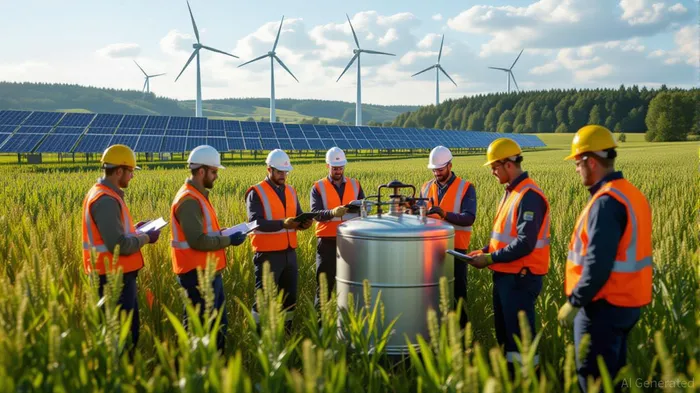
Investment Opportunities: Regional Hotspots and Emerging Technologies
The sanctions-driven energy transition is creating fertile ground for investment in specific regions and technologies:
Southern Europe: Solar Power and Storage
Spain, Italy, and Greece remain solar hotspots, with 30%+ annual capacity growth. Companies like Iberdrola and Enel are expanding utility-scale projects, while battery storage demand is surging to manage intermittency. Investors should monitor solar PV manufacturers and grid storage firms.Northern Europe: Offshore Wind and Hydrogen Hubs
Denmark, Germany, and the Netherlands are leading offshore wind development, with projects like North Sea Wind Power Hub aiming for 100 GW by 2050. Meanwhile, green hydrogen hubs in the North Sea (e.g., NortH2) are attracting €20 billion in private capital.Eastern Europe: Onshore Wind and Grid Upgrades
Poland and Romania are fast-tracking onshore wind projects to replace coal. However, grid bottlenecks in the region present opportunities for infrastructure investors.Hydrogen Technologies:
The EU's hydrogen strategy hinges on cost reductions via electrolyzer scale and efficiency gains. Startups focused on iron-air batteries and enhanced geothermal systems (EGS) are also gaining traction as long-duration storage solutions.
Challenges and Strategic Considerations
While the EU's energy transition is robust, challenges persist:
- Supply Chain Constraints: Transformer shortages and high component costs (up 200% in a decade) could delay projects.
- Market Volatility: Electricity prices remain elevated, with Q1 2025 averages hitting €100/MWh, driven by gas demand and curtailment issues in Spain and Ireland.
- Policy Risks: U.S. tax credit guidance and potential regulatory shifts under new administrations could impact hydrogen and renewable markets.
Conclusion: Navigating the New Energy Paradigm
The EU's 18th sanctions package has catalyzed a dual shift: reducing Russia's geopolitical influence while accelerating decarbonization. For investors, this means prioritizing sectors poised to benefit from infrastructure upgrades, hydrogen scaling, and regional diversification. Southern Europe's solar boom, Northern Europe's offshore wind, and the EU's hydrogen hubs are the most compelling opportunities. However, success will require patience to navigate permitting delays and supply chain bottlenecks.
As the EU moves toward its 45% renewable target by 2030, the energy transition is no longer a hypothetical—it's a market reality. For those willing to align with this trajectory, the rewards are clear.

Stay ahead of the market.
Get curated U.S. market news, insights and key dates delivered to your inbox.


AInvest
PRO
AInvest
PRO



Comments
No comments yet