
Ethics, Agriculture, and Investment Implications of High-Level Political Farm Divestitures


 Aime Summary
Ethical Concerns and Regulatory Scrutiny
Bessent's ownership of $25 million in soybean and corn farmlandFPI--, generating up to $1 million annually, has drawn sharp criticism from ethics watchdogs like the Democracy Defenders Fund (DDF) and Campaign Legal Center (CLC). Despite pledging to divest within 90 days of his confirmation, he retained farmland for nearly eight months, raising concerns about conflicts of interest in his trade negotiations with China. Leaked texts further complicated the narrative, suggesting U.S. trade decisions-such as a $20 billion aid package to Argentina-may have inadvertently weakened U.S. soybean farmers by enabling Argentina to remove export taxes and compete more aggressively in the Chinese market.
Regulatory bodies, including the Office of Government Ethics (OGE), have emphasized the need for stricter compliance, with Democrats in the Senate pushing for broader reforms to prevent foreign entities from purchasing American farmland. These developments highlight a growing tension between political leadership and the ethical obligations of public office, particularly in sectors where global trade dynamics hold immense economic sway.
Commodity Market Volatility and Trade Uncertainty
The soybean market has been a microcosm of this volatility. Chinese tariffs on U.S. soybeans, initiated in May 2025, nearly halted purchases, forcing American farmers to contend with plummeting prices and lost market share to Brazil and Argentina. While Bessent recently announced the completion of his farm sale, the delayed divestiture coincided with a period of heightened uncertainty. Farmers like Jake Benike have expressed skepticism about whether trade negotiations will stabilize prices, with their decisions to continue soybean production hinging on the outcome of U.S.-China diplomatic efforts.
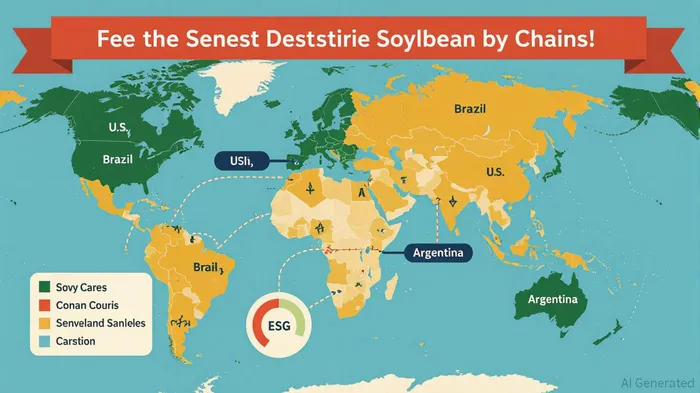
However, recent signals offer cautious optimism. China's incremental purchases of U.S. soybeans-three cargoes in October 2025-and Bessent's assertion that Beijing is on track to fulfill a 12-million-metric-ton purchase by February 2026 suggest a potential stabilization. Yet, broader factors-such as record soybean production in Brazil and Argentina-threaten to keep downward pressure on prices, complicating the outlook for both farmers and investors.
Ethical Investment Strategies in Agriculture
The Bessent case has also catalyzed shifts in ethical investment strategies. ESG funds, already grappling with political headwinds, have faced significant outflows in 2025, with global sustainable funds losing $8.6 billion in Q1 alone. This trend reflects a broader backlash against ESG, fueled by regulatory rollbacks under the Trump administration and skepticism in European markets. Yet, agricultural investors are increasingly prioritizing sustainability, with regenerative agriculture and carbon sequestration projects gaining traction as nature-based solutions to climate risk.
The U.S. Farm Bill's redirection of funds from nutrition assistance to rural support programs further underscores the sector's evolving priorities. Meanwhile, the Organic Science and Research Investment Act of 2025-a bipartisan effort to boost organic agriculture-signals a growing alignment between policy and ESG goals. For investors, this creates opportunities to balance financial returns with environmental and social impact, though geopolitical uncertainties and regulatory fragmentation remain hurdles.
Regulatory and Market Implications
The Senate's recent amendment to the National Defense Authorization Act-banning foreign purchases of U.S. farmland by China, Russia, and Iran-adds another layer of complexity. While aimed at safeguarding national security, such measures could limit capital inflows into American agriculture, affecting both domestic and international investors. Additionally, 13 U.S. states have introduced anti-ESG legislation in 2025, ranging from public disclosure requirements to restrictions on ESG-focused funds. These developments highlight the fragility of the current regulatory landscape and the need for adaptive investment strategies.
Conclusion
Scott Bessent's soybean farm divestiture is more than a personal ethics issue; it is a case study in how political asset management can influence global commodity markets and ethical investing. For investors, the key takeaway is the necessity of integrating geopolitical risk assessments and sustainability criteria into agricultural portfolios. As trade tensions persist and regulatory frameworks evolve, the ability to navigate these dual pressures will determine the resilience of both markets and investment strategies.

Delivering real-time insights and analysis on emerging financial trends and market movements.
Latest Articles
Stay ahead of the market.
Get curated U.S. market news, insights and key dates delivered to your inbox.
AInvest
PRO
AInvest
PRO



Comments
No comments yet