
Ethical Edge in Hiring: Why AI Recruitment Firms are the Future of Workforce Innovation
The global recruitment technology market is at a crossroads. As regulations tighten and employers grapple with the dual demands of efficiency and fairness, AI-driven hiring tools face scrutiny over their potential to perpetuate bias. Yet, within this landscape, a new paradigm is emerging: firms that prioritize ethical frameworks alongside technological prowess are not just surviving—they're thriving. Apriora, the developer of AI interviewer Alex, stands at the forefront of this shift, offering a blueprint for how bias mitigation and transparency can drive market dominance.
The Regulatory Tsunami and Its Winners
The New York City Bias Audit Law—a landmark regulation requiring employers to vet AI hiring tools for discrimination—has forced the industry to clean house. Companies using unproven AI systems now face fines and reputational damage, while those with validated tools gain trust. Apriora's recent third-party audit by BABL, a leading AI ethics consultancy, revealed its Alex system passes all compliance metrics, including consistent performance across race, gender, and ethnicity. This isn't just a legal shield; it's a competitive moat.
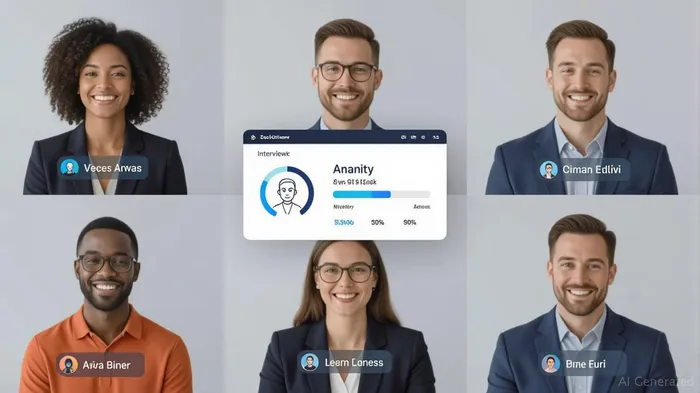
Case Study: Apriora's Alex—Where Ethics Meet Efficiency
Alex's success isn't theoretical. A University of Alberta case study showed its candidate selections aligned perfectly with human recruiters for PhD engineering roles—a critical validation of its bias-free design. Meanwhile, a global staffing firm used Alex to screen nearly 400 candidates in a single day, automating scheduling and interviews without human intervention. The result? A 70% reduction in recruiters' administrative workload, with candidates praising the tool's clarity and lack of favoritism.
The system's transparency features are equally compelling. Candidates receive instant feedback on their qualifications, while recruiters get detailed reports—no “black box” decisions. This aligns with Shafiq's discovery that ongoing validation (e.g., comparing AI outputs to pre-updated decisions) is key to maintaining fairness as algorithms evolve. Apriora's commitment to this process sets it apart.
The Human-AI Collaboration Advantage
Critics argue AI will replace human recruiters, but the truth is subtler. Alex handles initial screenings, freeing humans to focus on nuanced final decisions. This hybrid model reduces bias further by combining AI's scalability with human judgment. As Stanford researchers noted in a 2024 study, pruning biased neural pathways in AI models (a technique Shafiq's team advanced) works best when paired with human oversight—a synergy Apriora exemplifies.
Data-Driven Growth Ahead
The AI recruitment sector is booming. Global spending on such tools is projected to hit $11.5 billion by 2027, up from $3.2 billion in 2022. But not all players will win. Firms without ethical safeguards will falter as regulators and employers demand proof of fairness.
Investment Thesis: Bet on Ethical Pioneers
Investors should target companies like Apriora that:
1. Pass third-party audits (e.g., BABL's validation).
2. Focus on skills-first evaluation, avoiding demographic bias.
3. Invest in continuous improvement, testing updates rigorously.
These firms aren't just tools—they're trust platforms in an era of AI skepticism. Regulatory tailwinds, coupled with rising demand for diversity, make this sector a buy.
Final Verdict: Ethics ≠ Cost—It's a Profit Multiplier
The era of “blind” AI adoption is over. Companies like Apriora prove that ethical rigor isn't a burden—it's a market differentiator. As the world demands fairness in hiring, firms that lead in transparency will dominate. Investors ignoring this trend risk being left behind.
In the race to redefine work, the ethical edge is the winning edge.

Stay ahead of the market.
Get curated U.S. market news, insights and key dates delivered to your inbox.


AInvest
PRO
AInvest
PRO



Comments
No comments yet