
The Ethical and Economic Risks of Fossil-Fuel-Based Plastic Production: A Call for ESG-Driven Investment Shifts


 Aime Summary
The global plastics industry stands at a crossroads. By 2060, plastic production is projected to triple, exacerbating environmental degradation and resource depletion. Yet, the economic and ethical risks of relying on fossil-fuel-based plastics are becoming impossible to ignore. Regulatory pressures, shifting consumer behavior, and the rise of sustainable alternatives are reshaping the investment landscape. For investors, the question is no longer whether to act but how to align capital with long-term value creation and ESG (Environmental, Social, and Governance) principles.
Regulatory Pressures: A Ticking Clock for Petrochemical Giants
The past two years have seen a seismic shift in global plastic regulation. The European Union's Packaging and Packaging Waste Regulation (PPWR), enacted in February 2025, mandates that all packaging be recyclable “in practice and at scale” by 2030. In the U.S., 14 states have implemented or are advancing Extended Producer Responsibility (EPR) laws, requiring manufacturers to fund recycling and redesign packaging for sustainability. These policies are not just legal hurdles—they are existential threats to legacy petrochemical producers.
Consider the financial implications: EPR programs in the U.S. alone could generate $4.7 billion in fees by 2026. Companies like ExxonMobil and SABIC must now invest heavily in supply chain transparency and packaging redesign to comply. Meanwhile, the EU's PPWR demands that 10% of beverage and food packaging be reusable by 2030, a target that will require systemic overhauls in production and distribution. For investors, these regulations signal a high-risk, high-cost environment for traditional players.
Consumer Behavior: The Demand for Sustainability is No Longer Niche
Consumer preferences are accelerating the transition away from fossil-based plastics. In 2025, 39% of global consumers consider environmental impact “extremely or very important,” with younger demographics—Millennials and Gen Z—leading the charge. A striking 59% of Millennials and 56% of Gen Z have consciously purchased sustainable packaging in the past six months, and 39% have switched brands due to eco-friendly credentials.
This shift is not just about awareness—it's about action. Companies that fail to adapt risk losing market share to competitors offering circular solutions. For example, Amazon's 2025 rollout of bio-based grocery bags in Spain and Ontex Group's bio-based diapers highlight how sustainability is becoming a competitive differentiator. Meanwhile, 70% of consumers demand clear sustainability labeling, yet only 20% always notice such claims. This gap underscores the need for transparency—a challenge for petrochemical giants still reliant on opaque supply chains.
Market Dynamics: The Rise of Sustainable Alternatives
While fossil-based plastics dominate the market—particularly in polyethylene (PE) and polypropylene (PP) segments—the rise of bio-based and recyclable alternatives is gaining momentum. Innovations like mono-material packaging (e.g., Mondi Group's recyclable films) and lightweighting (e.g., Coca-Cola's 15% thinner PET bottles) are reducing waste and carbon footprints. Bio-based plastics, derived from sugarcane and cassava, are also gaining traction in markets like Brazil and Thailand, where production costs are competitive.
However, the transition is not without challenges. Fossil-based producers are investing in AI-driven production efficiency and hybrid strategies to integrate sustainability into their operations. For instance, the Dhunseri Group in India is expanding its plastic packaging capacity while incorporating advanced BOPET and BOPP films. Yet, these efforts may not be enough to offset the long-term risks of regulatory non-compliance and consumer disengagement.
ESG-Driven Opportunities: Where to Allocate Capital
The sustainable packaging sector is now a prime ESG-aligned investment opportunity. Key areas include:
1. Mono-Material Packaging: Simplifying recycling and improving recyclability rates.
2. Lightweighting: Reducing material use and transportation emissions.
3. Bio-Based Plastics: Leveraging renewable feedstocks to replace fossil-derived polymers.
4. Chemical Recycling: Advancing technologies to process hard-to-recycle plastics.
5. Reusable Systems: Scaling refill and return programs to close the loop.
Companies like AmcorAMCR--, Cellugy, and Forum Recycling are leading in these spaces, backed by robust ESG frameworks and scalable business models. For example, Forum Recycling's 2024 breakthrough in CO2-based biodegradable plastics demonstrates the potential for innovation to drive both profit and planetary health.
The Investment Imperative: Divest from Legacy, Invest in the Future
The ethical and economic risks of fossil-fuel-based plastic production are clear. Petrochemical companies face escalating compliance costs, reputational damage, and declining consumer trust. In contrast, sustainable packaging and recycling innovators are positioned to capitalize on regulatory tailwinds, consumer demand, and technological advancements.
For investors, the path forward is straightforward: divest from legacy producers and allocate capital to ESG-aligned solutions. This is not just a moral obligation—it's a strategic imperative. As the plastics industry evolves, those who fail to adapt will be left behind, while those who embrace sustainability will define the next era of value creation.
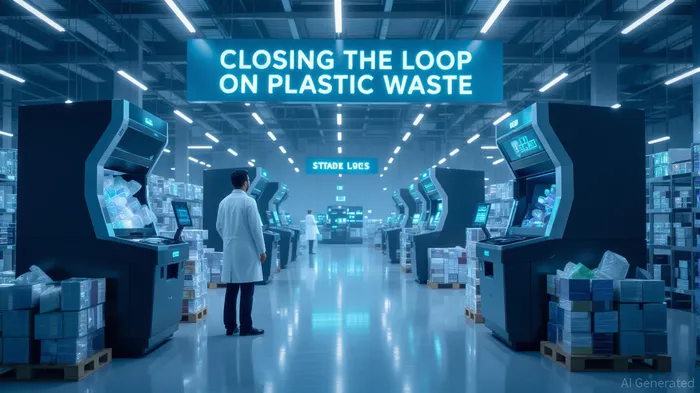
The time to act is now. The future of the plastics industry—and the planet—depends on it.

Delivering real-time insights and analysis on emerging financial trends and market movements.
Latest Articles
Stay ahead of the market.
Get curated U.S. market news, insights and key dates delivered to your inbox.
AInvest
PRO
AInvest
PRO



Comments
No comments yet