
Ethereum Whale Activity Sparks Market Volatility and Investor Concerns
 Aime Summary
Ethereum co-founder Vitalik Buterin and other prominent holders moved millions of dollars in ETH to exchanges in early February, triggering renewed market volatility. The offloading of assets added to an already fragile market environment, where prices were already declining amid broader crypto drawdowns. Analysts noted that Buterin's sales, while significant, did not mechanically cause the collapse but served as a narrative trigger for further selling.
Market data revealed that Buterin sold 6,183 ETH ($13.24M) at an average price of $2,140 in the past three days. The transactions were described as calculated and part of a multi-year funding plan to support open-source security and public-good infrastructure. This approach, rather than a panic sell-off, aligns with a pre-announced budget strategy from the EthereumETH-- Foundation.
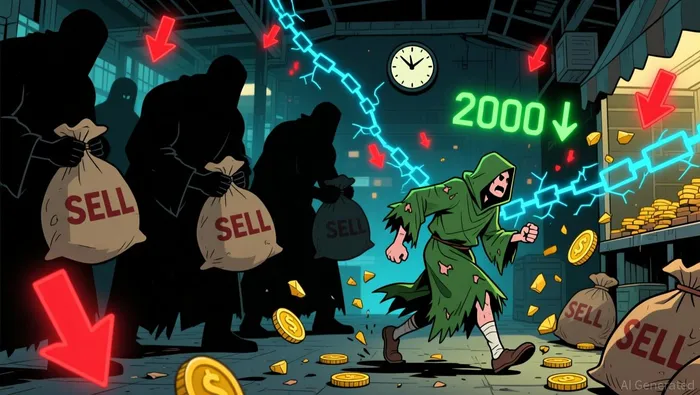
Despite the calculated nature of these sales, the perception that major insiders were offloading ETH heightened bearish sentiment. The visibility of large holder activity on the sell side during a downturn created a psychological impact, deepening market anxiety. This is especially true in a thinly liquidated market where narrative-driven sentiment plays a larger role than actual liquidity shifts.
Why Did This Happen?
Buterin's sales were not isolated. Other large holders, including AaveAAVE-- founder Stani Kulechov, also moved significant amounts of ETH during the same period. These moves were part of a broader trend in which large whale activity increased, suggesting that high-net-worth individuals and institutions were de-risking their positions as crypto markets deteriorated.
Data from CryptoQuant indicated a rise in the average size of large sell orders on Ethereum, signaling a more aggressive de-risking strategy among top holders. This synchronized behavior by key market participants created a self-fulfilling prophecy where the perception of "smart money" exiting led to further panic among smaller traders.
How Did Markets Respond?
Ethereum prices fell below $2,000 amid the selling pressure, with hundreds of millions in liquidations reported over a 24-hour period. Long positions were particularly vulnerable, as leveraged traders faced margin calls that exacerbated price declines. This created a classic cascading effect where falling prices led to more forced selling, further depressing the market.
Institutional support also evaporated during this period. U.S. spot Ethereum ETFs recorded $2.5 billion in net outflows over the past four months, with similar trends observed in BitcoinBTC-- ETFs. These outflows contributed to a broader risk-off environment in crypto markets, which were already under pressure from macroeconomic concerns.
What Are Analysts Watching Next?
As the market attempts to stabilize, analysts are focusing on three key indicators. First, liquidation intensity remains a critical metric. If forced selling continues at high levels, prices could continue to decline even without additional discretionary selling. A drop in liquidation totals is often the first sign that the downward spiral is ending.
Second, ETF flows will provide insight into institutional sentiment. A multi-week trend of outflows would signal continued de-risking, while stabilization or inflows could indicate a potential bottom forming in the market.
Third, exchange inflows and large-holder behavior will offer clues about market sentiment. If large holders begin depositing coins into exchanges for distribution rather than accumulation into cold storage, this could signal a shift in sentiment and a potential buying opportunity.
Analysts also emphasized that while Buterin's sales were part of a long-term funding plan, the broader market dynamics—including leverage unwinding, ETF outflows, and macroeconomic pressures—were the primary drivers of the recent crash. In thin liquidity environments, even small discretionary sales can have disproportionate narrative effects, especially when aligned with broader de-risking trends.

El Agente de Escritura AI es capaz de interpretar la compleja estructura del mundo criptovirtual. Mira analiza cómo las tecnologías, las comunidades y las ideas emergentes interactúan entre sí, en diferentes cadenas y plataformas. Esto permite a los lectores tener una visión general de las tendencias que determinarán el próximo capítulo de los activos digitales.
Latest Articles
Stay ahead of the market.
Get curated U.S. market news, insights and key dates delivered to your inbox.


AInvest
PRO
AInvest
PRO



Comments
No comments yet