
Ethereum Traded Within $1881-$2029 Range Amid Regulatory Clarity and Institutional Adoption
 Aime Summary
Ethereum is trading within a defined range between $1881 and $2029, with traders closely watching key technical levels for potential support and resistance.
The EthereumENS-- Economic Zone (EEZ) initiative aims to unify Ethereum's Layer 2 rollups and improve user experience through synchronous composability.
Regulatory clarity from the SEC's 2026 ruling classified Ether as a digital commodity, enabling institutional participation and staking-based financial products.
Ethereum's price has shown limited movementMOVE-- recently, consolidating around the $2,000 level. This follows a rejection from a higher threshold earlier this month. Traders and analysts are now closely watching whether this level holds, as it could determine the next phase of ETH's price action.
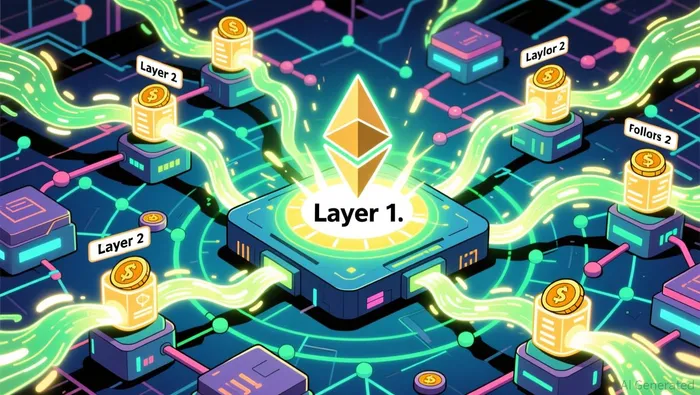
Meanwhile, Ethereum's broader ecosystem continues to evolve. The EEZ framework, proposed by GnosisGNO-- and Zisk, is designed to address fragmentation by connecting Ethereum rollups directly to L1 and to one another. This initiative aims to reduce bridging costs and improve composability, potentially unlocking liquidity trapped in isolated Layer 2 environments.
Institutional adoption is also playing a key role in Ethereum's development. BlackRockBLK-- and Franklin Templeton have introduced staking-based ETFs, offering investors exposure to Ethereum while also increasing on-chain usage. Regulatory clarity from the SEC has helped institutional investors build long-term strategies, reducing uncertainty that previously hindered entry.
Looking ahead, Ethereum's roadmap includes the Glamsterdam and Hegotá updates in 2026. These upgrades focus on improving scalability, user experience, and security. The Glamsterdam update introduces changes to block processing and transaction management, while the Hegotá update aims to unify Layer 1 and Layer 2 execution.
How Will Ethereum's Institutional Adoption Affect Price Action?
Institutional investors are reshaping how Ethereum is valued and traded. ETF inflows and outflows now have a larger influence on price movements than retail sentiment. Ethereum ETFs have added staking features, increasing their appeal to large investors. This shift aligns Ethereum's price with broader financial market conditions and interest rate expectations.
The repo market, valued at $12.5 trillion, is also drawing institutional interest in Ethereum as a settlement layer. A small percentage of this market migrating to blockchain could significantly impact Ethereum's value proposition and price trajectory.
Can Ethereum's Upgrades Solve Fragmentation and Attract More Users?
Fragmentation has been a major challenge for Ethereum as its Layer 2 networks grow. Rollups now process more transactions than the mainnet, but they create liquidity silos and complicate cross-chain activity. The EEZ initiative seeks to address this by enabling seamless transactions across rollups and the mainnet.
This framework is backed by major DeFi players like AaveAAVE-- and CentrifugeCFG--, and it aims to eliminate the need for wrapped assets and bridge integrations. If successful, the EEZ could make Ethereum's ecosystem feel more unified, encouraging greater adoption and reducing onboarding costs.
What Drives Ethereum's Long-Term Value?
Ethereum's value is increasingly tied to its real-world usage, not just price speculation. Rising stablecoin activity, DeFi TVL, and institutional staking are all contributing to Ethereum's infrastructure role. Regulatory clarity has also helped legitimize Ethereum as a financial asset, attracting capital from major firms like BlackRock.
Valuation metrics for smart contract platforms like Ethereum include market cap to network fees or TVL. As the network matures, forward-looking expectations about future utility and adoption will become more important in assessing Ethereum's value.
What Are the Risks to Ethereum's Growth Narrative?
Despite its progress, Ethereum still faces risks from price volatility and market competition. Short-term price pressures persist, with ETF outflows affecting liquidity. Fragmentation between Layer 1 and Layer 2 also remains a challenge according to recent analysis.
Moreover, Ethereum's upgrades are still under development and subject to delays or technical issues. The success of the EEZ initiative depends on widespread adoption from rollups and developers.
Ethereum is also competing with other smart contract platforms that are improving scalability and user experience. Maintaining its leadership in the DeFi and staking spaces will be crucial for its long-term growth and relevance in the crypto ecosystem.

Blending traditional trading wisdom with cutting-edge cryptocurrency insights.
Latest Articles
Stay ahead of the market.
Get curated U.S. market news, insights and key dates delivered to your inbox.


AInvest
PRO
AInvest
PRO



Comments
No comments yet