
Ethereum's Strategic Funding Shift: A Catalyst for Long-Term Ecosystem Dominance


 Aime Summary
Ethereum’s 2025 grant reallocation marks a pivotal shift in its approach to ecosystem development, prioritizing infrastructure, interoperability, and layer-1 (L1) scalability over an open application model. This curated, proactive strategy aims to address operational constraints while aligning resources with Ethereum’s technical roadmap, positioning it as a formidable competitor in the blockchain space. For investors, this reallocation signals a focus on high-leverage initiatives that could solidify Ethereum’s dominance in the long term.
Infrastructure Upgrades: The Bedrock of Scalability
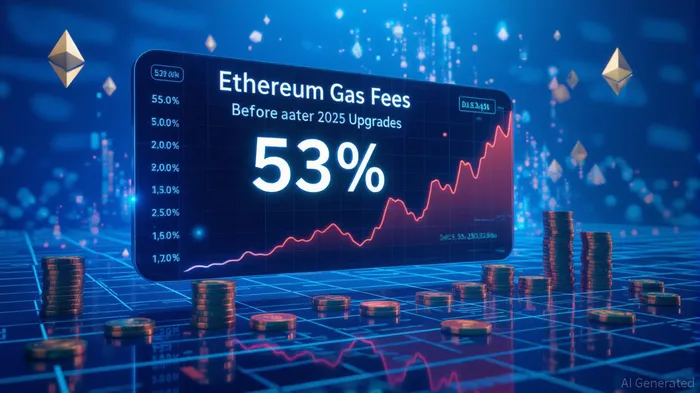
The EthereumETH-- Foundation’s decision to allocate $32.6 million in Q1 2025 to projects like Pectra and Fusaka has already yielded measurable results. These efforts reduced gas fees by 53% quarter-over-quarter and enhanced cross-chain integration, directly improving transaction efficiency [3]. The Dencun upgrade, a cornerstone of this strategy, slashed Layer-2 costs by 90%, enabling a 100x increase in transaction throughput [4]. Such infrastructure advancements are critical for institutional adoption, as they address scalability bottlenecks that have historically hindered Ethereum’s growth.
Interoperability: Bridging Chains, Expanding Utility
Ethereum’s focus on interoperability is exemplified by its support for the Ethereum Interoperability Layer (EIL) and Chainlink’s Cross-Chain Interoperability Protocol (CCIP). These projects aim to create seamless communication between Ethereum and other blockchains, fostering a more interconnected ecosystem. By reducing fragmentation, Ethereum strengthens its role as a foundational blockchain for altcoin innovation, hosting 65% of total value locked (TVL) and enabling high-utility tokens like LILPEPE and Layer Brett (LBRETT) [4]. This cross-chain synergy not only enhances Ethereum’s utility but also positions it as a hub for decentralized finance (DeFi) and institutional-grade applications.
Competitive Positioning: Outpacing Rivals
The strategic reallocation of grants has sharpened Ethereum’s competitive edge against blockchains like SolanaSOL-- and AvalancheAVAX--. By prioritizing zero-knowledge (ZK) cryptography and L1 scalability, Ethereum addresses key pain points—security and throughput—that have allowed rivals to gain traction. Institutional adoption further cements this advantage: $27.6 billion in ETF inflows and 64 public companies holding 2.7 million ETH underscore confidence in Ethereum’s long-term viability [2]. Additionally, Ethereum’s 3–5% staking yields and a 29.6% staking participation rate offer a compelling value proposition for investors seeking both yield and network security [1].
Investor Sentiment and Market Performance
Ethereum’s strategic shifts have resonated with investors, reflected in a sentiment score of 80 out of 100 on major forums—outperforming 72% of its peers [5]. The correction to $3,500–$3,600 in 2025, while initially concerning, catalyzed capital reallocation toward high-impact projects, reinforcing the ecosystem’s resilience. Historical performance also bodes well: Ethereum has averaged a 1% increase in Q3 and 35.5% in the full half of 2025, trends likely to continue with regulatory clarity under the U.S. CLARITY Act [4].
Conclusion: A Foundation for Long-Term Dominance
Ethereum’s proactive grant reallocation is more than a funding strategy—it’s a blueprint for sustained ecosystem dominance. By prioritizing infrastructure, interoperability, and scalability, the Ethereum Foundation is addressing both technical and market challenges, ensuring the network remains a leader in institutional adoption and altcoin innovation. For investors, this translates to a robust ROI potential, supported by measurable improvements in gas efficiency, TVL, and staking yields. As Ethereum continues to evolve, its strategic focus on high-leverage initiatives will likely cement its position as the backbone of the crypto ecosystem.
**Source:[1] Ethereum's Technical Resilience: On-Chain Data and ... [https://www.ainvest.com/news/ethereum-technical-resilience-chain-data-sentiment-converge-altcoin-season-gains-momentum-2508/][2] Ethereum's Correction and the Rise of Utility-Driven Altcoins [https://www.ainvest.com/news/ethereum-correction-rise-utility-driven-altcoins-capital-reallocation-opportunities-2026-2509/][3] Ethereum's Strategic Funding Shift and Its Impact on Long - [https://www.ainvest.com/news/ethereum-strategic-funding-shift-impact-long-term-2508/][4] Ethereum attracts record ETF inflows and 39% fee drop in - [https://cryptoslate.com/ethereum-attracts-record-etf-inflows-and-39-fee-drop-in-q2-supporting-stronger-outlook-for-q3/][5] Ethereum (ETH) Sentiment Statistics 2025 [https://altindex.com/ticker/eth/sentiment]

Decoding blockchain innovations and market trends with clarity and precision.
Latest Articles
Stay ahead of the market.
Get curated U.S. market news, insights and key dates delivered to your inbox.






Comments
No comments yet