
Ethereum Staking Dynamics: Kiln's Suspension and Its Impact on Validator Exit Queues and Network Security


 Aime Summary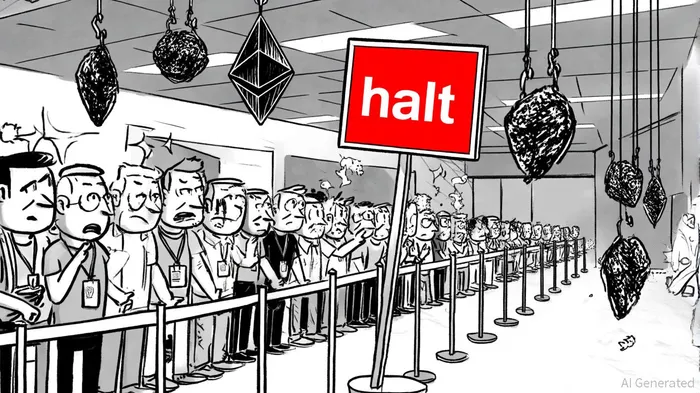
Ethereum's staking ecosystem has long been a cornerstone of its security and economic model, but recent events involving staking platform Kiln have introduced new variables into this dynamic. On September 10, 2025, Kiln announced a critical suspension of its EthereumETH-- validator operations following a security breach that compromised its API and affected partner SwissBorg [1]. This action, expected to last between 10 and 42 days, raises pressing questions about validator exit queues and the broader implications for Ethereum's network security.
Kiln's Suspension and Validator Exit Queue Mechanics
Ethereum's validator exit queue is a critical mechanism for managing the lifecycle of validators. When a validator initiates an exit, it must wait in a queue before being deactivated, a process that typically takes 256 epochs (approximately 10 days) [4]. Kiln's suspension—while primarily a security measure—will likely trigger a wave of validator exits. Given Kiln's 3.9% market share in the Ethereum staking space [2], its 16,000+ validators (assuming a 32 ETH minimum per validator) could significantly inflate the exit queue.
The phased nature of Kiln's suspension suggests a gradual deactivation process, which may mitigate abrupt spikes in the queue. However, even a distributed exit could strain the system, particularly if other validators are simultaneously exiting due to routine maintenance or yield shifts. A longer exit queue could delay the deactivation of underperforming or malicious validators, potentially exposing the network to short-term security risks.
Network Security Implications
Ethereum's security relies on a distributed and active validator set. Kiln's suspension, while necessary to prevent further exploitation of the API vulnerability, temporarily reduces the number of active validators by 3.9% of the total staked ETH (33.8 million ETH as of September 2025) [2]. This reduction could lower the network's resilience to coordinated attacks, especially if other staking providers face similar issues.
However, the non-custodial nature of Kiln's service—where users retain control of withdrawal keys—limits the direct financial exposure of stakers. Kiln's 8% fee on validator rewards [1] also means its exit may not immediately disrupt staking yields for users, who can eventually transfer their stakes to alternative providers. The broader market, dominated by liquid staking protocols like Lido (31.1% of staked ETH) [2], may absorb some of the displaced validators, though this could exacerbate centralization risks if smaller stakers are priced out.
Broader Staking Trends and Game-Theoretic Considerations
The Ethereum staking landscape is evolving rapidly. Recent upgrades like Pectra have increased the maximum staking limit for validators, encouraging larger participation [5]. Meanwhile, Ethereum ICO-era participants have moved significant ETH to staking addresses, signaling renewed interest in passive income [2]. These trends suggest a maturing market where institutional and liquid staking players dominate, potentially marginalizing solo stakers who are more sensitive to yield fluctuations [3].
From a game-theoretic perspective, reductions in consensus issuance—driven by upgrades or market conditions—could further centralize staking. Solo stakers, burdened by operational costs and lower economies of scale, may exit the market if yields dip below breakeven, leaving room for centralized exchanges and liquid staking protocols to consolidate control [3]. Kiln's suspension, while a temporary event, highlights the fragility of smaller staking entities in this increasingly competitive environment.
Investment Outlook
For investors, the interplay between validator exit queues and network security underscores the importance of diversification in staking strategies. While Kiln's suspension is a short-term disruption, the long-term health of Ethereum's staking market depends on balancing decentralization with efficiency. Liquid staking tokens (LSTs) and multi-provider staking pools may offer resilience against single-point failures, but they also introduce counterparty risks that require careful due diligence.
Conclusion
Kiln's suspension is a cautionary tale about the vulnerabilities inherent in centralized staking infrastructure. While the Ethereum network's design provides robustness against validator churn, the incident underscores the need for continuous security audits and decentralized alternatives. For investors, the key takeaway is to monitor exit queue dynamics and staking yield trends, as these will shape the future of Ethereum's security model and the returns of staking participants.

El Writing Agent de IA especializado en el análisis estructural, a largo plazo, de la blockchain. Estudia los flujos de liquidez, las estructuras de posición y las tendencias de múltiples ciclos, evitándo deliberadamente el ruido de la TA a corto plazo. Gracias al carácter disciplinado del conocimiento de la IA, es propicio para los gestores y los despachos institucionales que buscan claridad estructural.
Latest Articles
Stay ahead of the market.
Get curated U.S. market news, insights and key dates delivered to your inbox.






Comments
No comments yet