
Ethereum Price Drivers and Technical Roadmap Outline 2026 Outlook
 Aime Summary
- Ethereum ranks as the second-largest cryptocurrency by market capitalization, valued at approximately $233 billion as of September 2026.
- The current EthereumETH-- Fear and Greed Index stands at 54/100 (Neutral), indicating market in consolidation after indecision over the past three days.
- A modular roadmap is actively reducing Layer 2 transaction costs through upgrades like Dencun, with future forks targeting parallel execution and censorship resistance.
- Long-term value is supported by Ethereum’s utility as a foundational layer for decentralized finance, despite short-term volatility driven by macroeconomic conditions and regulatory shifts.
- Key risks include competition from other smart contract platforms and potential liquidity pressures indicated by extreme fear among whale investors.
Ethereum maintains its position as a critical asset for global digital investors, functioning as both a decentralized computing platform and a store of value. The network’s dual role distinguishes it from BitcoinBTC--, which primarily serves as digital gold, while Ethereum powers applications for borrowing, lending, and trading. As of September 2026, the asset is valued at approximately $233 billion, reflecting its enduring relevance in the cryptocurrency market.
Market sentiment currently reflects a state of neutrality, with the Fear and Greed Index reading 54 out of 100. This neutral zone suggests that traders are awaiting clearer directional signals before committing to high-conviction trades. The index combines ten weighted signals, including price action, volatility, and whale activity, to provide a composite gauge of crowd emotion.
Short-term price movements are heavily influenced by investor speculation and trader sentiment. Medium-term drivers include network usage and the adoption of decentralized finance applications. When network activity increases, demand for ETH rises, supporting the asset’s utility thesis.
Economic health also plays a significant role in price dynamics. Improved economic conditions often lead to increased investment in alternative assets like Ethereum. However, economic downturns can trigger sharp declines, as seen in early 2026 due to recession concerns.
How Is Ethereum Scaling Its Network?
Ethereum is executing a modular roadmap to enhance scalability and security, transitioning from a monolithic to a modular blockchain architecture. This strategic shift relies on Layer 2 rollups for transaction execution while Ethereum Layer 1 serves as the secure settlement and data availability layer.
Recent upgrades have significantly improved network efficiency. The Dencun upgrade, introduced in 2024, added blob transactions to lower transaction costs for Layer 2 rollups. This improvement addresses previous bottlenecks and supports the growing demand for decentralized applications.
Future upgrades continue to refine the network’s capabilities. The Pectra upgrade, implemented in May 2025, enhanced account abstraction and increased validator efficiency. Subsequent upgrades like Fusaka introduced peer data availability sampling, making node operation more accessible.
Looking ahead, the Glamsterdam upgrade in 2026 aims to scale Layer 1 through parallel execution. The Hegota upgrade in 2027 will focus on censorship resistance via enforced inclusion lists. These developments underscore Ethereum’s commitment to long-term scalability and security.
What Risks and Opportunities Define Ethereum’s Market Position?
Ethereum faces competition from other smart contract platforms like Solana and AvalancheAVAX--. This competition affects Ethereum’s long-term value proposition, particularly regarding transaction speed and cost. However, Ethereum’s established ecosystem and developer activity provide a strong competitive moat.
Regulatory developments remain a key factor in market stability. Evolving crypto regulations can significantly impact investor confidence and network adoption. Investors must monitor regulatory shifts as they navigate the asset’s volatility.
Sentiment analysis reveals mixed signals among market participants. While the price score indicates greed, whale activity shows extreme fear, suggesting potential liquidity pressures. This divergence highlights the importance of using sentiment indices as risk gauges rather than standalone trading signals.
The transition to proof-of-stake in 2022 reduced energy consumption while maintaining network security. This shift has stabilized the staking ecosystem, allowing users to earn rewards for validating transactions. The network’s utility as a foundational layer for financial apps supports its long-term investment thesis.
Investors are advised to compare sentiment readings with price action and liquidity to assess market one-sidedness. Extreme readings below 25 or above 75 can signal risk or opportunity, but should be used in conjunction with other metrics. The neutral sentiment zone currently suggests a period of consolidation before the next major price direction.
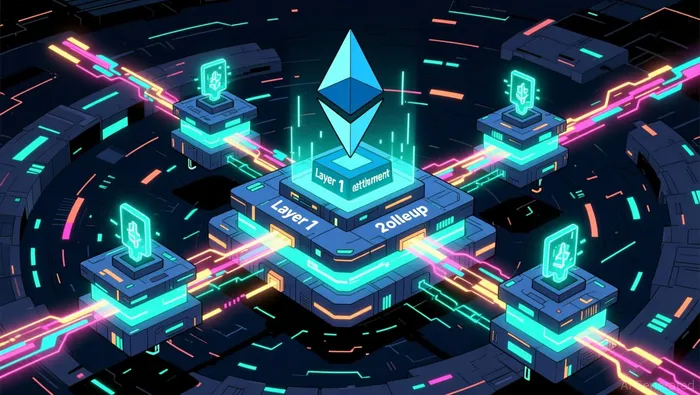
Ethereum’s modular roadmap and strong developer community continue to drive innovation in the decentralized finance space. The network’s ability to adapt to scaling challenges positions it as a resilient asset in the evolving digital asset landscape. Investors should consider the interplay between technical upgrades, market sentiment, and macroeconomic conditions when evaluating Ethereum’s prospects.

Blending traditional trading wisdom with cutting-edge cryptocurrency insights.
Latest Articles
Stay ahead of the market.
Get curated U.S. market news, insights and key dates delivered to your inbox.


AInvest
PRO
AInvest
PRO




Comments
No comments yet