
Ethereum News Today: SEC's Framework Lets Cryptos Graduate to Commodity Status


 Aime Summary
SEC Chair Paul Atkins has unveiled a sweeping regulatory framework for cryptocurrencies that could redefine the U.S. digital asset landscape, exempting major tokens like EthereumETH-- (ETH), SolanaSOL-- (SOL), and XRPXRP-- from securities classification while emphasizing investor protection and innovation. The new approach, announced at the Federal Reserve Bank of Philadelphia's Fintech Conference on November 12, 2025, marks a stark departure from the previous administration's aggressive enforcement stance under former Chair Gary Gensler. By applying the Howey Test-a legal standard for identifying investment contracts-to determine securities status, Atkins aims to create clarity for market participants and foster a more predictable environment for blockchain development according to the framework.
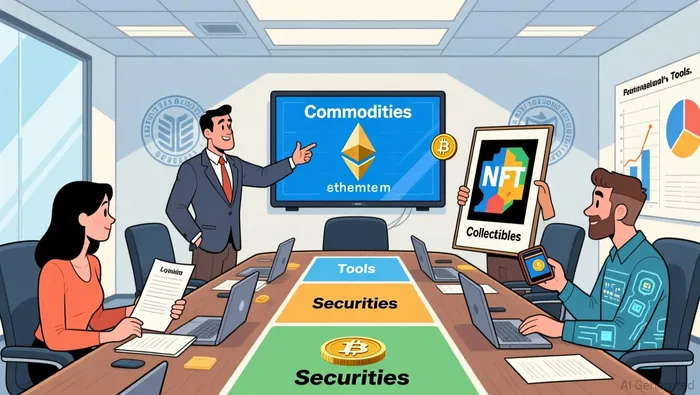
Atkins' framework categorizes crypto assets into four primary groups: securities, commodities, collectibles, and tools. Network tokens-such as those underpinning decentralized blockchains-will generally not qualify as securities once their ecosystems mature, as users typically engage with them for utility rather than profit from centralized management according to the framework. This classification includes popular assets like ETHETH--, SOLSOL--, and XRP, which operate in decentralized environments where issuer influence diminishes over time according to the analysis. Similarly, "digital collectibles," such as non-fungible tokens (NFTs) representing media or internet memes, and "digital tools" offering functional benefits like access to platforms or membership rights, are also excluded from securities oversight according to the report.
The framework's core principle hinges on the Howey Test, which evaluates whether an asset involves an investment of money in a common enterprise with profits derived from the efforts of others. Atkins clarified that tokens only qualify as securities if they involve explicit, unambiguous promises of profit tied to managerial efforts. Once these conditions are no longer met-as networks decentralize and tokens transition from investment contracts to functional utilities-they can trade freely as commodities according to the framework. This dynamic approach allows tokens to "graduate" from securities to non-securities status, reducing long-term regulatory burdens while maintaining safeguards against fraud according to the analysis.
 To support innovation, Atkins has also advocated for "super apps"-unregulated platforms where securities and non-securities can coexist. He instructed staff to develop recommendations enabling such platforms to facilitate trading without requiring all assets to adhere to SEC-regulated environments. "Capital formation should remain under SEC oversight, but we shouldn't stifle innovation by restricting where assets trade," Atkins stated, emphasizing the need to avoid regulatory fragmentation according to the report.
The framework includes a six-month grace period for issuers to address compliance gaps, reducing enforcement actions and encouraging proactive adjustments as networks evolve according to the framework. However, tokens marketed with explicit profit promises will remain subject to securities laws, underscoring the SEC's commitment to targeting fraudulent activity.
Analysts have praised the shift as a potential catalyst for institutional investment, with Chainalysis data showing over 80% of major cryptocurrencies now operate in decentralized environments according to the framework. The framework also aligns with broader U.S. policy goals, including the President's Working Group on Financial Markets' findings that unclear rules have hindered domestic crypto growth, with $2.5 trillion in market value developed abroad according to the framework.
Atkins' remarks reflect a broader philosophical stance: the SEC's mandate, established during the Great Depression, should not extend to all digital innovations. "Securities laws address specific problems involving reliance on others' competence," he said. "They weren't designed to regulate every novel form of value" according to the report.

Stay ahead of the market.
Get curated U.S. market news, insights and key dates delivered to your inbox.






Comments
No comments yet